 ultimate-guide
Mobile Home Roof Maintenance in Florida: A Complete Guide
Last Updated: October 25, 2026
Quick Summary
Mobile home roof maintenance in Florida requires regular inspections, prompt sealing repairs, and seasonal maintenance timed to the state's weather patterns. Heat, humidity, and frequent storms accelerate material degradation, making preventive care essential to extend roof lifespan and avoid costly water damage.
- Most mobile home roofs last 15-20 years depending on material and maintenance.
- Water damage from ignored leaks often costs three times the original repair or more.
- Late winter to early spring is the best window for major roof repairs and recoating work.
- Call a licensed professional for active leaks, widespread rust, soft decking, or storm damage.
- Document roof conditions with dated photos before hurricane season for insurance claims.
Table of Contents
- Why Mobile Home Roof Maintenance Matters in Florida
- Understanding Your Mobile Home Roof Inspection Checklist
- Metal Mobile Home Roof Coating: Protection and Longevity
- Mobile Home Roof Leak Repair: Detection and Solutions
- Mobile Home Roof Replacement: When and How
- Seasonal Maintenance Calendar for Florida Mobile Homes
- Storm Damage, Insurance, and Emergency Repairs
- Getting a Roofing Quote and Choosing a Contractor
- Frequently Asked Questions
Why Mobile Home Roof Maintenance Matters in Florida
Mobile home roof maintenance faces relentless demands in Florida's climate. Heat, humidity, and frequent storms accelerate material degradation and water intrusion.
Preventive maintenance extends roof lifespan significantly. Regular inspections catch small problems before they become expensive repairs.
Owners with consistent maintenance routines avoid emergencies. Seasonal inspections, prompt resealing, and proactive coatings protect your investment through Florida's harsh weather cycles.
Understanding Your Mobile Home Roof Inspection Checklist
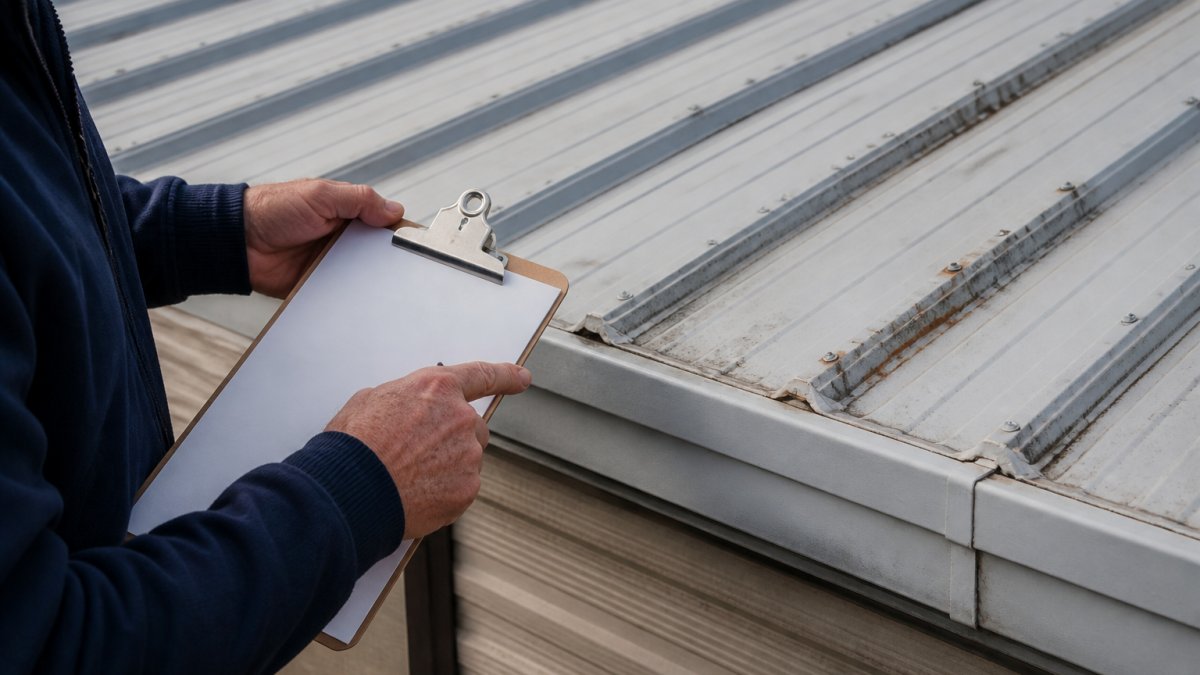
A useful inspection is specific: what to check, on which roof type, with which tools, and when to call a professional. This checklist separates safe DIY work from jobs that belong to a licensed contractor.
Safe DIY Inspection: What You Can Check and How
Start from the ground. Binoculars and a phone camera let you inspect most of the roof without leaving the ground, the safest option, especially on older or storm-damaged roofs.
- Ground-level scan: Walk the full perimeter and look at the roofline for sagging, lifted edges, missing shingles, or panels that appear out of plane. Photograph anything suspicious.
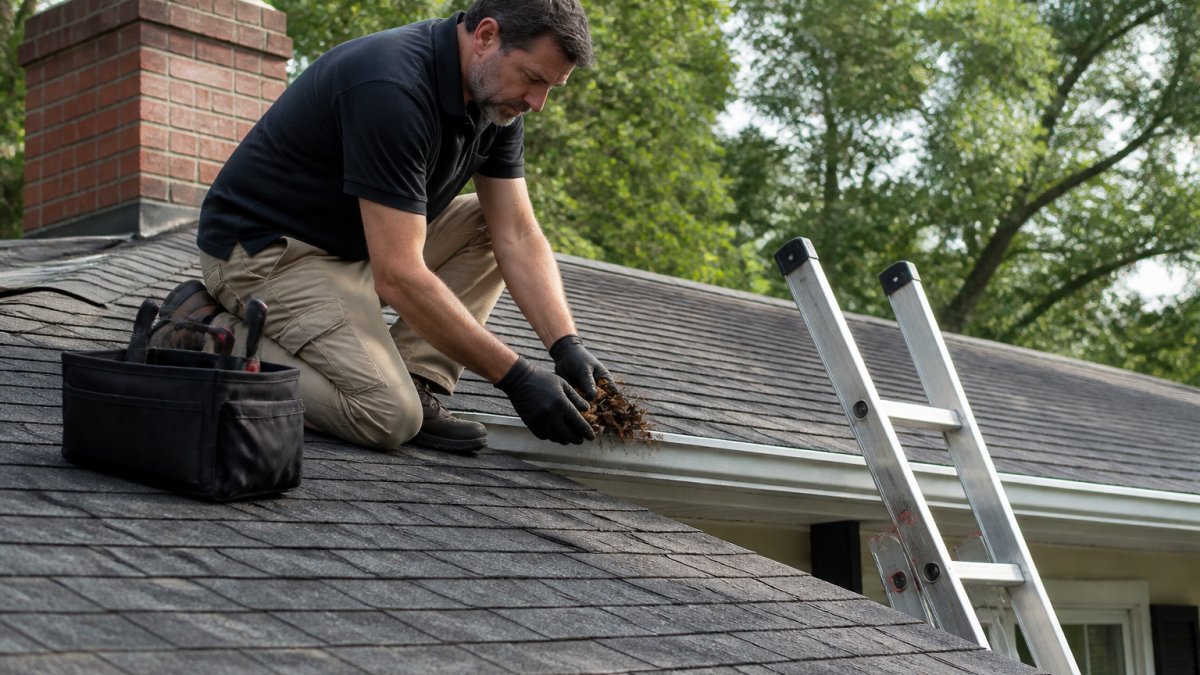
- Ladder work (only if stable and dry): Use a sturdy ladder on level ground, keep three points of contact, and never lean out over the roof. From the ladder you can check gutter attachment, edge flashing, and the first row of fasteners.
- On-roof inspection (only if the roof is dry, sound, and you are comfortable): Walk on the seams or structural lines where the decking is supported, wear soft-soled shoes, and avoid soft spots. If the surface feels spongy or you hear cracking, get off and call a professional.
Roof-Type-Specific Checks
Different mobile home roof systems fail in different places. Match your inspection to the material.
Metal roofs (the most common on manufactured homes):
- Check seams and lap joints for cracked or missing sealant and for fasteners that have backed out.
- Look for rust streaks, white oxidation, and pitting, especially around fasteners and penetrations.
- Confirm panels are still fastened tightly; loose panels rattle in wind and lift at the edges.
Shingle roofs:
- Look for curled, cracked, or missing shingles, and for granules collecting in gutters (a sign of aging).
- Check flashing at vents, skylights, and the roof edge, where leaks most often start.
- Inspect for nail pops and for soft spots that suggest decking damage.
Membrane (single-ply) roofs:
- Check seams for separation and look for blisters, wrinkles, or punctures.
- Confirm the membrane is still adhered and not lifting at edges or penetrations.
- Look for ponding water and for debris that can trap moisture against the membrane.
Tools and Materials That Belong in a DIY Kit
Keep a small kit so you can handle minor issues and document everything:
- Binoculars and a phone with a good camera for dated photos.
- A sturdy ladder, work gloves, and soft-soled shoes.
- Elastomeric or roofing-grade sealant compatible with your roof type, plus a caulk gun.
Use sealant made for your roof material, incompatible products cause adhesion failure. Metal roofs need a sealant rated for metal and UV exposure; membranes need a product approved for that membrane.
When to Call a Professional
Call a licensed roofing contractor if you find active leaks, widespread rust or corrosion, soft or sagging decking, storm damage, or any issue you cannot safely reach. A professional can also assess whether repair or replacement makes more sense and can document conditions for an insurance claim.
Metal Mobile Home Roof Coating: Protection and Longevity
Roof coatings add years to your mobile home roof's life.
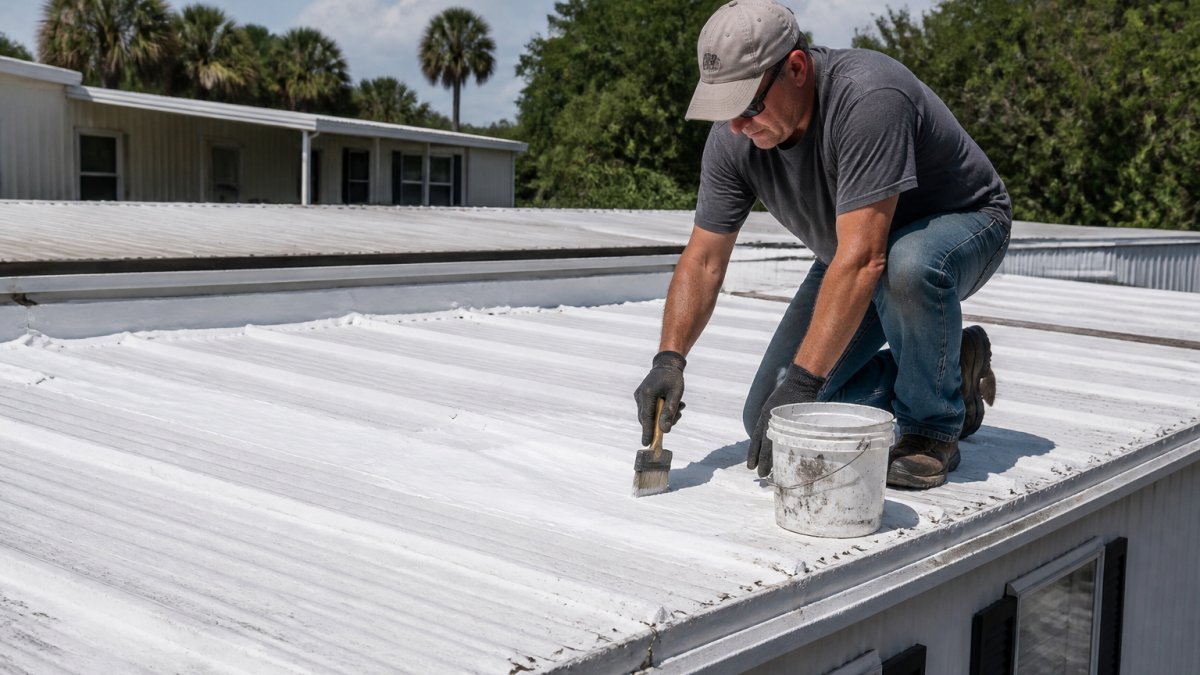
Acrylic coatings are affordable and provide good UV protection. They reflect sunlight effectively, reducing interior heat buildup.
Timing matters. Coat during dry, moderate weather, Florida's rainy season makes application difficult, so plan for spring or fall.
Learn more about 5 best roof coatings for metal mobile homes to understand which system suits your specific roof type and condition.
Mobile Home Roof Leak Repair: Detection and Solutions
Water leaks in mobile homes cause rapid damage because interior spaces are compact and moisture spreads quickly. Finding the source is the critical first step.
Finding the Source of Leaks
Water travels along framing before it drips into living spaces, so the visible leak is often far from the entry point.
Check seams, fasteners, and penetrations above the leak for cracks in the coating, missing sealant, or rust.
During dry weather, have someone spray water on suspect areas while you watch for drips inside. This controlled test helps pinpoint the exact entry point.
Temporary and Permanent Repair Options
For immediate protection, apply roofing cement or temporary sealant around the leak source.
Permanent repairs depend on the damage extent. Small cracks in coating are sealed with elastomeric caulk. Leaking seams are resealed with marine-grade sealant designed for mobile home applications.
For comprehensive guidance, see our mobile home roof leak repair guide to understand repair options specific to your roof type.
Mobile Home Roof Replacement: When and How
Replacement becomes necessary when repair costs approach 50% of replacement cost, the roof reaches the end of its design life, or damage is too extensive for economical repair.
Repair Versus Replacement Decision Framework
Evaluate age first. Most mobile home roofs last 15-20 years depending on material and maintenance.
Compare repair and replacement quotes.
Consider your long-term plans. If you'll stay 5+ years, replacement pays for itself.
Roof-over systems install new roofing over existing materials, reducing labor costs, but add weight and may not address structural issues.
See our complete mobile home roof replacement guide for detailed information on replacement options, materials, and timelines.
Seasonal Maintenance Calendar for Florida Mobile Homes
Generic "inspect seasonally" advice isn't enough. Build your maintenance year around Florida's actual weather: a dry winter and spring, a rainy season from late May through October, and hurricane season from June 1 through November 30.
Late Winter to Early Spring (February-April): The Repair Window
This is your best stretch for roof work: drier skies, moderate temperatures, and coating and sealant that cure properly before the rainy season.
- Full inspection: Walk the perimeter from the ground with binoculars, then get on the roof only if it is safe and dry. Check every seam, fastener, vent collar, and skylight for cracked sealant, rust, or lifted edges.
- Reseal and recoat: Remove loose or failed sealant, clean the surface, and reapply a compatible sealant. If the coating is chalky, peeling, or thin, this is the window to recoat, acrylic, silicone, or polyurethane depending on your roof type.
- Fastener check: Tighten or replace backed-out or rusted screws and check for stripped holes that need a larger fastener or a sealant-filled repair.
Pre-Hurricane Season (May): Harden the Roof
By late May you want the roof in its best condition before the June 1 start of hurricane season.
- Re-check every penetration and seam you sealed in spring; sealant that looked fine in March can crack after a few hot weeks.
- Confirm gutters and downspouts are firmly attached, loose gutters become projectiles in high wind.
- Photograph the entire roof, top and edges, and store the images with your insurance paperwork. A dated pre-season record makes storm claims far easier to support.
Hurricane Season and Rainy Season (June-November): Monitor, Don't Over-Work
Peak heat and humidity make this a poor time for major coating or resealing, coatings may not cure correctly and workers face heat risk. Shift to monitoring and emergency response.
- After each heavy rain event, check interior ceilings and walls for new stains, and look at the roof from the ground for missing shingles, lifted metal panels, or ponding water.
- Keep a small emergency kit: tarp, roofing cement, elastomeric caulk, and gloves, enough to make a temporary patch until a professional can inspect.
- Do not walk a wet or storm-damaged roof. Wet surfaces are slippery and damaged decking may not support weight.
Late Fall to Winter (December-January): Recovery and Planning
After hurricane season, assess what the year did to the roof.
- Inspect for wind-lifted edges, loose fasteners, and debris impact, especially on the windward side of the home.
- Check attic or ceiling areas for condensation, damp insulation, or musty odors that suggest a slow leak or ventilation problem.
- Note repairs that need the dry spring window and budget for them now.
Florida's weather patterns create distinct maintenance windows throughout the year.
| Season | Months | Primary Tasks | Best For |
|---|---|---|---|
| Late Winter to Early Spring | February-April | Full inspection, reseal, recoat, fastener check, drainage, trim trees | Repair and coating work |
| Pre-Hurricane Season | May | Re-check seals, secure gutters, photograph roof, clear debris | Hardening before storms |
| Hurricane and Rainy Season | June-November | Monitor after rain, keep emergency kit, document storm damage | Emergency response only |
| Late Fall to Winter | December-January | Assess storm damage, check attic, note spring repairs, verify gutters | Recovery and planning |
Storm Damage, Insurance, and Emergency Repairs
Storms cause most mobile home roof damage in Florida. Wind lifts or tears roofing materials. Hail creates punctures and cracks.
After a storm, photograph all visible damage from multiple angles and document the date and conditions.
Do not delay emergency repairs. Temporary tarping protects your home from additional water intrusion.
For detailed guidance on storm damage assessment and repair, see our storm damage roof repair guide to understand the process and your next steps.
Getting a Roofing Quote and Choosing a Contractor
A detailed quote protects both you and the contractor. It should itemize labor, materials, and permits, and specify scope, timeline, and payment terms.
Check credentials: verify licensing and insurance, and ask for references from recent mobile home roofing projects.
Ask about warranty coverage.
SunPro Contracting LLC brings over 100 years of combined industry experience to every roofing project.
Frequently Asked Questions
How often should you inspect a mobile home roof?
Inspect your mobile home roof at least twice yearly, once in spring and once in fall, to catch wear before it becomes a leak. After major storms, inspect immediately for wind damage, lost fasteners, or punctures. Regular inspections catch small problems like peeling coating or worn seams early, when repairs are cheaper and easier than full replacement or water intrusion damage.
How do you find a leak in a mobile home roof?
Start from inside: look for water stains, discoloration, or soft spots on the ceiling and interior walls after rain. Trace the stain upward, water often travels along beams before dripping. From outside, look for cracks, peeling coating, gaps around roof penetrations (vents, flashing), or areas where seams are separating. Check the roof after rain when surfaces are still wet; water often pools or drips near the leak source. If you cannot locate it, a licensed contractor can use thermal imaging or dye testing.
When should a mobile home roof be replaced instead of repaired?
Replace your roof if it has multiple leaks in different areas, widespread corrosion or cracks covering more than 20% of the surface, fasteners that are severely rusted or missing, or if the roof is near or past its expected lifespan (typically 15-25 years depending on material and maintenance). If repair costs exceed 50% of replacement cost, replacement often makes financial sense. A licensed contractor can assess whether resealing, coating, or full replacement is the right choice for your situation.
What is the best way to maintain a metal mobile home roof?
Keep your metal roof clean by removing debris, leaves, and standing water after rain to prevent corrosion and mold. Inspect and reseal seams and fasteners annually, especially after storms. Apply a quality roof coating every 5-7 years to protect the metal from humidity and UV exposure. Check flashing around vents and penetrations for gaps or rust. Trim tree branches that hang over the roof to reduce debris and damage risk. These steps extend roof life and prevent costly water intrusion.
How long does a mobile home roof last in Florida?
A well-maintained metal mobile home roof typically lasts 15-25 years in Florida, depending on the material, maintenance schedule, and weather exposure. Roofs exposed to frequent storms, high humidity, and intense UV heat may wear faster. Regular resealing, coating, and prompt leak repair can extend lifespan toward the upper end. Neglected roofs with peeling coating, unchecked leaks, or corroded fasteners may fail sooner. Professional inspections every 2-3 years help identify wear early and keep your roof performing longer.
How much does it cost to repair a mobile home roof?
Mobile home roof repair costs vary widely depending on the damage extent, materials, and labor in your area. Small repairs like resealing a seam or patching a single leak may cost a few hundred dollars, while larger repairs addressing multiple leaks or extensive corrosion can range higher. Request itemized estimates from licensed contractors to compare pricing and understand what is included.
Can you coat a mobile home roof yourself?
DIY roof coating is possible if you have experience working at height safely and follow product instructions exactly. However, poor surface preparation (not cleaning debris, rust, or old peeling coating) is the leading cause of coating failure. If the coating peels or fails within a year, you may pay twice to fix it. Professional contractors have equipment, experience, and product warranties that protect your investment. For peace of mind and lasting results, hiring a licensed contractor is often the smarter choice, especially in Florida's harsh climate.
Is $30,000 too much for a roof?
Whether a specific cost is reasonable depends on roof size, material, and scope. A large replacement on a tile or premium metal roof, or a commercial building roof, could justify a higher cost. For a standard residential mobile home roof, a high figure would typically be on the higher end unless the job includes additional work like structural repairs or extensive flashing replacement. Request itemized quotes from multiple licensed contractors and compare what is included. Verify the contractor is insured and licensed, and ask for references before committing to any estimate.
Mobile home roof maintenance in Florida requires consistent attention and professional expertise. Regular inspections, prompt repairs, and seasonal maintenance protect your investment and prevent costly water damage. When you need professional help, choose a contractor with proven experience in mobile home roofing. Contact us today to schedule an inspection or get a quote for your mobile home roof maintenance needs.