 how-to
Mobile Home Roof Repair: A Complete Guide
Table of Contents
- DIY vs. Professional Mobile Home Roof Repair Assessment
- Signs Your Mobile Home Roof Needs Repair
- Mobile Home Roof Permit Requirements
- Finding a Licensed Roofing Contractor
- Best Roof Coatings for Metal Mobile Homes
- Preventative Maintenance Checklist
- Emergency Roof Repair: What to Do Immediately
- Frequently Asked Questions
Last Updated: September 28, 2026
DIY vs. Professional Mobile Home Roof Repair Assessment
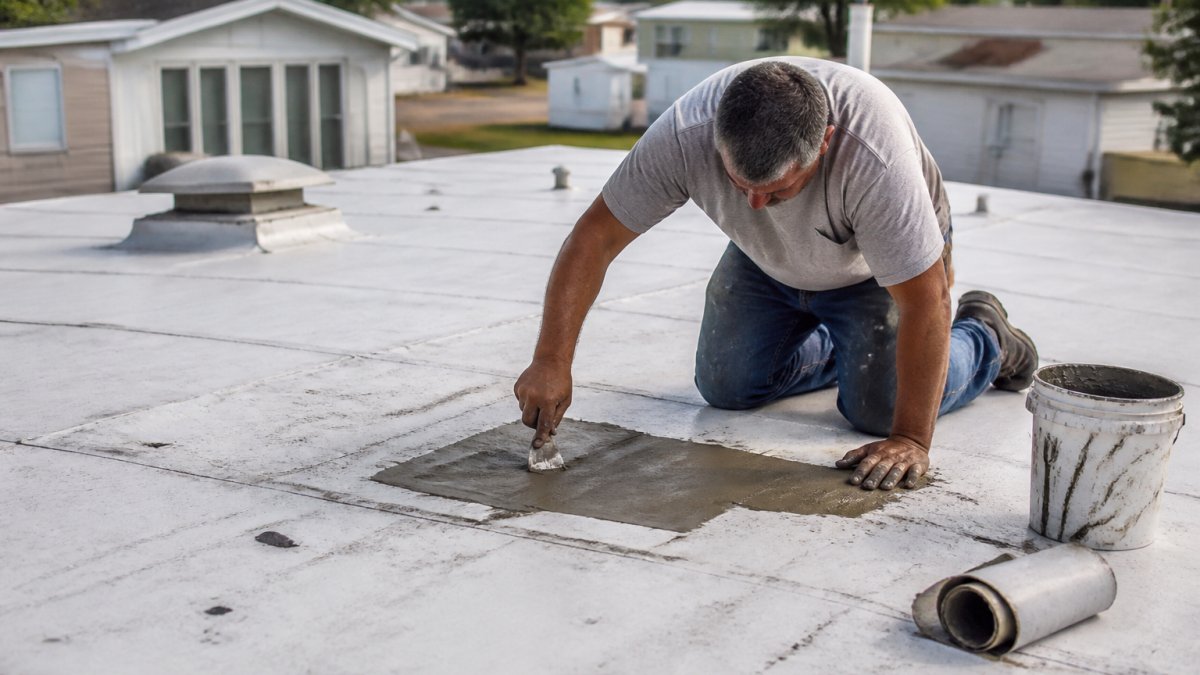
Deciding whether to handle mobile home roof repair yourself or hire a licensed roofing contractor depends on the damage severity, your skill level, and safety considerations. Minor maintenance tasks like clearing debris or applying sealant can be DIY projects. Structural damage, leak detection, or shingle replacement typically requires a professional.
Mobile homes present unique challenges: their thinner roofs sit closer to the ground, making them more vulnerable to wind and debris damage, and improper repairs can void warranties.
Small leaks become major structural issues quickly, what starts as a soft spot can compromise the entire roof frame within months, making professional assessment cost-effective long-term.
Signs Your Mobile Home Roof Needs Repair
Professional attention is needed when you notice water stains on interior ceilings, visible deterioration, or soft spots underfoot, these indicate active leaks or structural compromise.
Identifying soft spots and structural damage
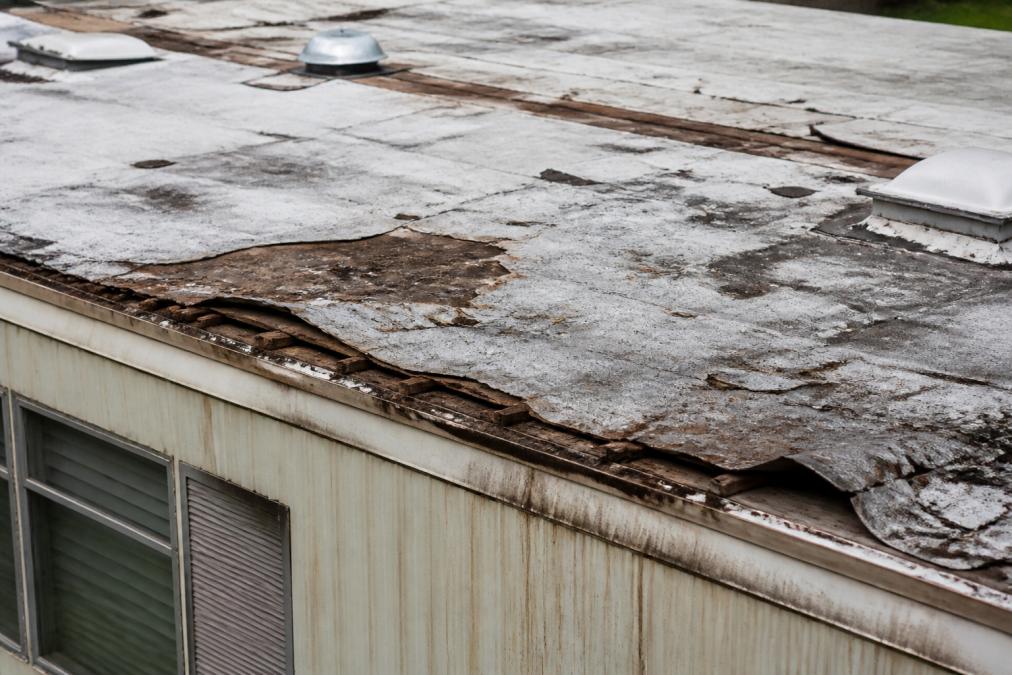
Soft spots indicate water-damaged, rotting roof decking. Walk your roof after heavy rain; if any area feels spongy under your weight, that's a red flag, structural damage spreads quickly in Florida's humid climate.
Look for discolored patches, mold growth, or rust on metal roofing, these indicate moisture penetration. Rust accelerates deterioration and requires coating or replacement.
Check the interior first for water stains on ceiling panels or walls. The stain may be several feet from the actual breach due to how water travels along the decking, this is why professional inspection matters.
Storm damage and leak detection
Storm damage appears suddenly: high winds tear shingles, dent metal roofing, or displace flashing; hail creates punctures; heavy rain exploits these openings and causes immediate leaks.
After severe weather, inspect your roof from the ground using binoculars for missing shingles, bent metal panels, or displaced flashing. Don't wait, water infiltration accelerates structural failure.
Leak detection without visible damage is trickier since interior water stains don't always appear directly below the breach. Professionals use moisture meters and thermal imaging to locate the actual entry point, preventing misplaced patches.
Mobile Home Roof Permit Requirements
Mobile home roof repairs are governed by the Florida Building Code (FBC), which incorporates International Building Code (IBC) standards. Most jurisdictions require a roofing permit for structural repairs, replacements, or coating applications affecting the roof's structural integrity or water-shedding capability.
When permits are mandatory
Permits are required for roof replacement, structural repairs, new flashing/vents, metal roof installation, and repairs exceeding $500. Permits are typically NOT required for routine maintenance, replacing individual shingles, or inspections. Local amendments vary, contact your building department before beginning work.
The permit process and timeline
The permit process involves submission of plans and scope of work (5-10 business days for review), approval and issuance, post-completion inspection (5-7 business days), and final approval. Total timeline typically ranges from 2-3 weeks.
Permit costs and responsibility
Permit fees vary by jurisdiction and project scope, typically ranging from $50-$300 for residential roof permits, or 1-2% of the repair estimate.
Your contractor should include permit fees in their estimate and handle all paperwork. If a contractor suggests "skipping the permit to save money," that's a red flag. Unpermitted work voids warranties, creates liability, complicates insurance claims, results in fines, and may require redoing the work to code.
Insurance and permit documentation
Keep all permit documentation, inspection reports, and certificates of completion, insurance companies require proof that repairs were permitted and completed to code. Permitted work also adds value if you sell your mobile home.
Finding a Licensed Roofing Contractor
A licensed roofing contractor brings expertise, insurance, and accountability. Verify licensing through your state's contractor licensing board before hiring. Ask about their specific experience with mobile home roofing, which differs from traditional home roofing in materials, attachment methods, and structural considerations.
What to ask before hiring
Ask how long the contractor has been in business and request references from recent mobile home projects. Confirm they carry liability insurance and workers' compensation. Ask about warranty terms in writing, a solid warranty shows confidence in workmanship.
Getting itemized estimates and understanding warranty
Get written, itemized estimates from at least three contractors. Be specific about damage and provide photos for accuracy. Ask what's included (permits, debris removal, inspection, disposal). Understand the difference between workmanship warranties (1-5 years) and material warranties, and get all terms in writing.
Best Roof Coatings for Metal Mobile Homes
Metal roofing on mobile homes requires protective coatings to resist Florida's intense UV radiation, high humidity, salt-air corrosion, and temperature cycling. The right coating extends roof life by 5-10 years and prevents rust.
Understanding coating types and Florida performance
Acrylic latex coatings are water-based, affordable ($0.50-$1.50 per square foot), and easy to apply. However, they're the least durable in Florida's climate, lasting 3-5 years before recoating. Acrylic works best for inland mobile homes with lower budgets, but is not recommended for coastal properties.
Silicone coatings are premium water-based products ($1.50-$3.00 per square foot) offering superior water resistance and UV durability.
Coastal air corrosion resistance and salt spray
If your mobile home is within 5 miles of the ocean, salt spray accelerates corrosion. Silicone and polyurethane coatings perform best in coastal environments; acrylic should be avoided; elastomeric is excellent. Professional application typically involves two coats with total dry film thickness of 20-40 mils (acrylic/silicone) or 40-60 mils (polyurethane/elastomeric).
Recoating frequency and maintenance
Recoating intervals depend on climate, coating type, and maintenance:
- Inland mobile homes with acrylic coating: Recoat every 3-5 years
- Inland mobile homes with silicone coating: Recoat every 7-10 years
- Inland mobile homes with polyurethane or elastomeric coating: Recoat every 10-15 years
- Coastal mobile homes with silicone coating: Recoat every 5-7 years
- Coastal mobile homes with polyurethane or elastomeric coating: Recoat every 8-12 years
Regular maintenance extends coating life. Inspect your roof annually for:
- Chalking (white powder on the surface, indicating UV breakdown)
- Peeling or blistering (indicating moisture penetration)
- Rust spots or discoloration (indicating corrosion beginning beneath the coating)
- Cracks or gaps in the coating
If you notice chalking or minor surface degradation but no rust or moisture penetration, cleaning and a single recoat can restore protection. If rust has begun or moisture is penetrating, the old coating must be stripped and the roof recoated completely.
Choosing the right coating for your situation
For budget-conscious inland owners: Silicone coating offers the best value, it costs moderately more than acrylic but lasts 2-3 times longer, reducing long-term maintenance costs.
Preventative Maintenance Checklist
Regular maintenance prevents costly repairs. A simple checklist keeps your mobile home roof in good condition year-round.
| Maintenance Task | Frequency | Why It Matters |
|---|---|---|
| Clear debris from roof | Monthly | Prevents water pooling and debris damage |
| Inspect flashing | Quarterly | Catches seal failures before leaks develop |
| Check for soft spots | After storms | Identifies structural damage early |
| Inspect seals around vents | Quarterly | Prevents water infiltration at penetrations |
| Look for rust or corrosion | Quarterly | Stops deterioration before it spreads |
| Check interior for water stains | Monthly | Detects leaks before structural damage occurs |
| Trim overhanging branches | Seasonally | Prevents branch damage and debris accumulation |
| Inspect roof coating condition | Annually | Identifies when recoating is needed |
Emergency Roof Repair: What to Do Immediately
Active leaks demand immediate action. Water damage accelerates exponentially. What you do in the first hours after discovering a leak affects repair costs significantly.
Frequently Asked Questions
Do you need a permit to fix a mobile home roof in Florida?
Yes, most roof repairs and replacements on mobile homes in Florida require a permit from your local building department. Permits ensure work meets structural and safety codes. The process typically involves submitting plans, paying a fee, and scheduling inspections. Contact your county building department to confirm requirements for your specific repair type and location.
What are the best roof coatings for metal mobile homes?
Metal mobile home roofs benefit from reflective coatings that resist coastal air corrosion and UV damage. Acrylic and silicone-based coatings are popular choices for durability and weather protection. Roof sealing products extend the life of the metal and reduce leak risk. A licensed roofing contractor can recommend the best coating based on your roof's age, condition, and local weather exposure.
Can I repair a mobile home roof leak myself?
Minor leaks around flashing or small holes may be temporarily sealed with roofing caulk or patches, but this is a short-term fix. Structural damage, soft spots, or widespread leaks require professional assessment. DIY repairs often fail because the underlying cause isn't addressed, leading to repeat leaks. A professional inspection identifies whether the damage is fixable with coating and sealing or requires shingle replacement and structural work.
How often should mobile home roofs be inspected?
Inspect your mobile home roof at least twice yearly, ideally in spring and fall. After storms or high winds, inspect for damage immediately. Regular inspections catch soft spots, flashing issues, and early signs of deterioration before they become costly repairs. A licensed roofing contractor can perform a thorough structural integrity assessment and recommend a maintenance schedule based on your roof's age and condition.