 ultimate-guide
Residential Roof Maintenance Checklist 2026
Last Updated: October 27, 2026
Quick Summary
A residential roof maintenance checklist in 2026 is a season-by-season inspection routine that catches small defects before they become structural failures. Inspect your roof at least twice a year, in spring and fall, and add a scan within 48 hours after any named storm. Ground-level and attic checks are the core of safe roof maintenance.
- Walk the full perimeter with binoculars to scan for missing shingles, granule piles, and debris.
- Inside the attic, look for water stains, daylight through the roof surface, and damp insulation.
- Clean gutters and confirm downspouts discharge at least 3 feet from the foundation.
- Trim tree branches back at least 6 feet from the roof surface.
- Photograph each side of the roof from the ground at the same angles every inspection.
Table of Contents
- Your 2026 Residential Roof Maintenance Checklist at a Glance
- The Core Roof Inspection Checklist for Homeowners
- How Often to Inspect a Roof in Central Florida
- Your Seasonal Roof Maintenance Checklist for 2026
- Signs You Need Roof Repair Before Storm Season
- Safe DIY Inspection Boundaries and When to Call a Pro
- Material-Specific Maintenance for Tile, Shingle, and Metal Roofs
- Book Your Roof Maintenance Inspection with SunPro Contracting
- Frequently Asked Questions
Your 2026 Residential Roof Maintenance Checklist at a Glance
A residential roof maintenance checklist in 2026 is a season-by-season inspection routine that catches small defects before they become structural failures. According to RubyHome's roofing statistics, a third of homeowners replace their roofs because of leaks and another third because of storm damage. Nearly all of that damage starts small: a lifted shingle, a clogged downspout, a bead of cracked sealant.
At SunPro Contracting LLC, we have over 100 years of combined industry experience.
This guide gives you a roof maintenance routine: what to check, when to check it, and what you can safely do yourself.
For the broader seasonal routine this checklist builds on, our Residential Roof Maintenance Tips: Florida Guide provides more detail.
The Core Roof Inspection Checklist for Homeowners
Every roof inspection checklist comes down to two passes: one from the ground and one from inside the attic. Together they cover the roof surface, the edge details, and the structural deck underneath.
Exterior Walk-Around: Shingles, Flashing, and Vents
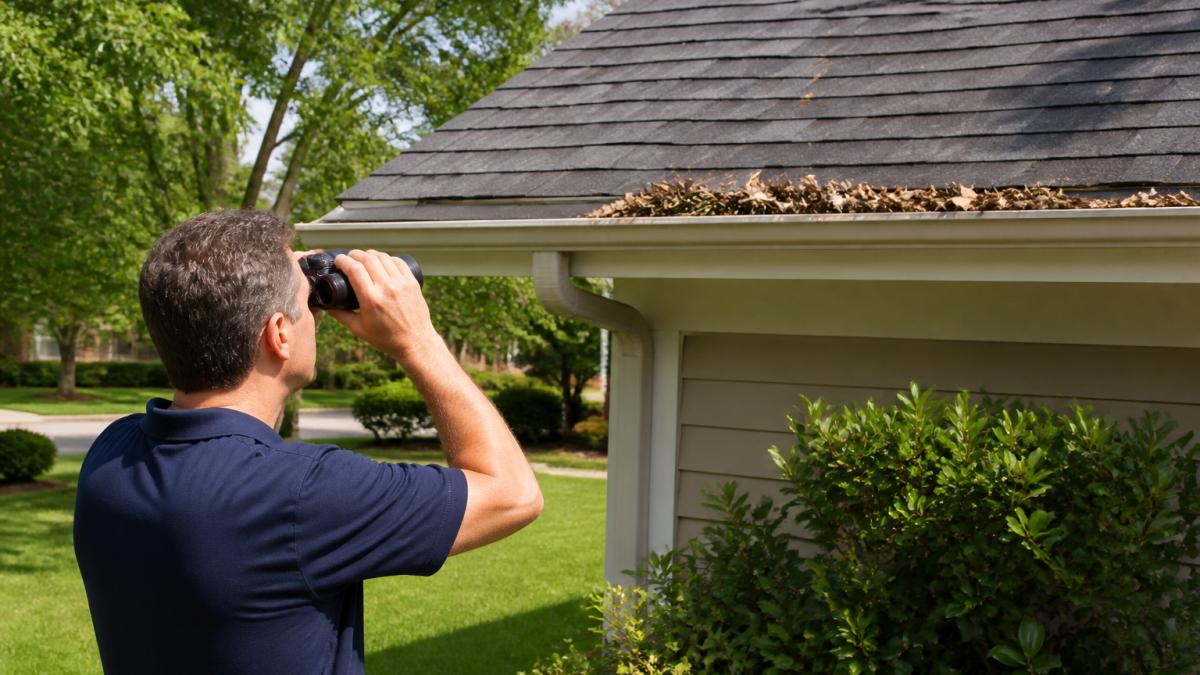
Start on the ground with binoculars. Walk the full perimeter and scan for missing shingles, damaged shingles, granule piles at downspout outlets, and debris or tree branches resting on the roof surface. Check the ridgeline: a straight line signals a healthy structure, while a sagging one signals a problem. Then inspect flashing at chimneys, skylights, and wall intersections, plus the rubber boots around roof penetrations and vents.
Interior Check: Attic, Insulation, and Water Stains
Inside the attic, look for water stains on the decking and rafters, daylight showing through the roof surface, and compressed or damp insulation. Check that attic ventilation is unobstructed at the soffits and ridge. Any staining may warrant further assessment.
How Often to Inspect a Roof in Central Florida
Twice a year is the baseline: once in spring and once in fall. Add an inspection after any significant storm, and after any roofing-adjacent work such as gutter replacement or exterior painting.
Central Florida's climate makes regular roof checks important. Homes under overhanging trees may need additional debris checks.
Your Seasonal Roof Maintenance Checklist for 2026
The calendar below assigns tasks to specific months in 2026, states how often to repeat them, and notes what each task is intended to prevent. Print it, tape it inside the garage door, and initial each row when it is done.
| Month (2026) | Task | Frequency | What It Prevents |
|---|---|---|---|
| January | Attic pass: water stains, damp insulation, blocked soffit vents | Once | Hidden deck rot and ice-dam conditions in cold snaps |
| February | Ground-level binocular scan of shingles, flashing, and ridge line | Once | Small defects growing into spring leaks |
| March | Spring exterior inspection; reseal penetrations and expansion joints | Once | Failed sealant and wind-driven rain intrusion |
| April | Clean gutters and confirm downspouts discharge at least 3 feet from the foundation | Once | Foundation damage and fascia rot |
| May | Trim tree branches back at least 6 feet from the roof surface | Once | Abrasion, debris loading, and pest bridges |
| June | Post-storm exterior scan within 48 hours of any named storm | As needed | Unaddressed storm damage and insurance documentation gaps |
| July | Mid-summer attic check for heat-driven sealant failure and ventilation blockage | Once | Premature shingle aging and attic moisture |
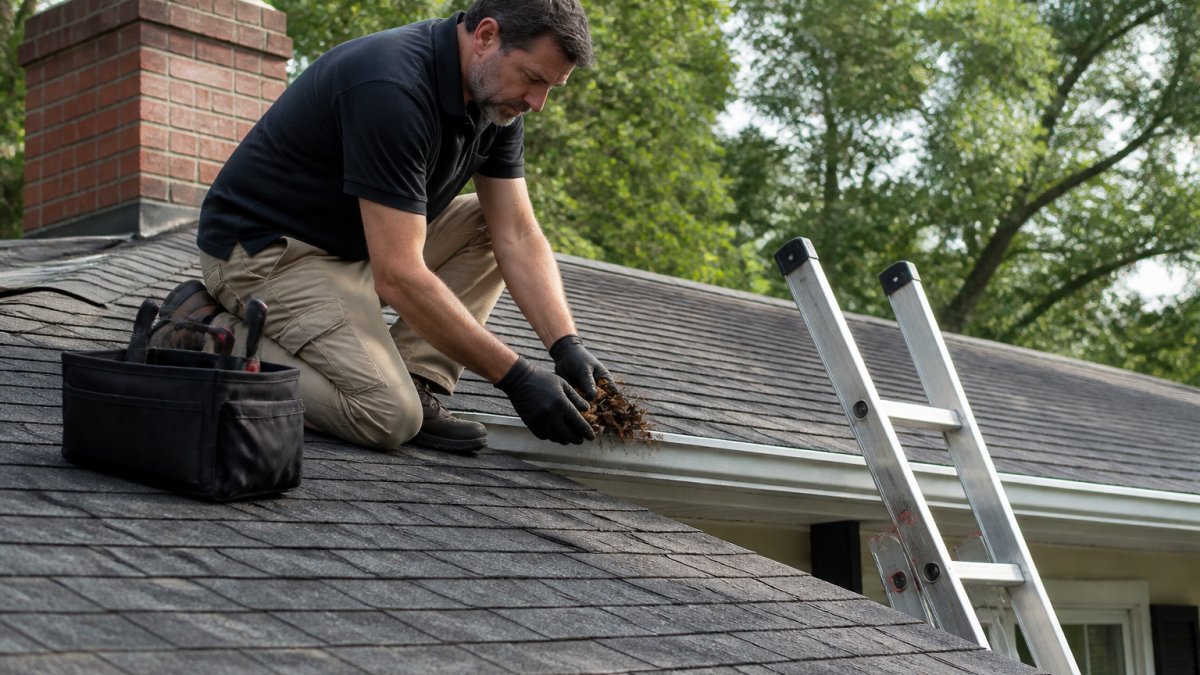
| August | Clear debris from valleys, panel pans, and behind chimneys | Once | Trapped moisture and clogged drainage |
| September | Fall attic inspection; verify insulation is not compressed or damp | Once | Poor attic ventilation and hidden leaks |
| October | Fall exterior inspection; clean gutters before leaf drop peaks | Once | Overflow, ice dams, and fascia rot |
| November | Final debris sweep; check gutter fasteners and downspout screens | Once | Winter overflow and detached gutters |
| December | Review the year's log; schedule any deferred professional work | Once | Deferred maintenance compounding into replacement |
- Twice a year is the floor, not the ceiling. The March and October inspections are the baseline. Homes under overhanging trees, homes with tile or flat roofs, and homes within a few miles of the coast need quarterly checks layered on top.
- Storms reset the clock. Any named storm, hail event, or wind gust strong enough to move patio furniture triggers a post-storm scan within 48 hours, before you file anything with your insurer.
- Write it down. A one-page log with the date, what you saw, photos, and any repair or warranty paperwork is the single most useful maintenance tool you own. It supports insurance claims, proves upkeep at resale, and stops you from re-checking the same corner every month.
For the broader seasonal routine this calendar builds on, our Residential Roof Maintenance Tips: Florida Guide provides more detail.
Signs You Need Roof Repair Before Storm Season
Warning signs to look for include curling or missing shingles, granule accumulation in gutters, interior water stains, sagging deck lines, and daylight visible through the attic roof surface.
Roof age is another factor to consider when assessing whether repair or replacement may be needed.
For a deeper walkthrough, our guide to the signs you need roof repair provides more detail.
Safe DIY Inspection Boundaries and When to Call a Pro
Ground-level and attic checks may be suitable for some homeowners. Walking the roof surface can be hazardous.
Consider contacting a professional when you find an active leak or interior water stain, missing or lifted shingles, sagging decking, storm damage, or anything you cannot see clearly from the ground. If you are hiring help, our guide to hiring reliable roofing contractors provides more detail.
Material-Specific Maintenance for Tile, Shingle, and Metal Roofs
Roof materials can have different maintenance considerations. The table below summarizes considerations for several materials.
| Material | What Fails First | Inspection Cadence | Typical Service Life | Repair-vs-Replace Signal |
|---|---|---|---|---|
| Asphalt shingles | Sealant strips at valleys and edges; granule loss | Twice a year plus after every storm | 20-30 years | Widespread curling or granule loss across more than a small area points to replacement |
| Clay or concrete tile | Cracked or slipped tiles; underlayment aging out long before the tile | Twice a year, ground-level only | Tile 50+ years; underlayment 20-30 years | Scattered cracked tiles are a repair; a brittle, walked-on field of tiles plus an aged underlayment is a replacement |
| Metal (standing seam or exposed fastener) | Backed-out fasteners; failed sealant at seams and penetrations | Twice a year, plus a fastener check after wind events | 40-70 years | A handful of resealed fasteners is a repair; widespread fastener back-out or seam separation is a replacement decision |
| Flat and low-slope (TPO, EPDM, modified bitumen) | Ponding water; seam and flashing failures | Twice a year, plus after any ponding event | 15-25 years | Isolated seam repair is routine; recurring ponding or multiple seam failures signal replacement |
Asphalt shingles. Check for curling, granule loss, and lifted tabs. A granule pile at a downspout outlet may be worth noting.
Tile roofs. Look for cracked or slipped tiles. Avoid walking on the roof surface if you are unsure how to do so safely.
If your inspection turns up a material-specific problem you cannot classify, our residential roof repair service is where to start.
Book Your Roof Maintenance Inspection with SunPro Contracting
SunPro Contracting LLC provides residential and commercial roofing, gutter services, and exterior painting, with expertise in tile, shingles, and TPO roofing.
If your inspection turned up anything on this list, our residential roof repair service is where to start, or you can contact us.
Frequently Asked Questions
What should be included in a residential roof maintenance checklist?
A roof maintenance checklist can cover both exterior and interior checks. Outside, look for missing shingles, damaged flashing, debris in gutters, and clogged downspouts. Inside, look for water stains, daylight through the roof deck, and ventilation concerns. You can also note the ridgeline and record findings and dates to track changes.
How often should you inspect a roof?
A visual assessment can include looking for visible changes after storms. Homes under overhanging trees can be checked for debris and clogged gutters. The appropriate inspection schedule depends on the roof and its condition.
What are the signs you need roof repair?
Watch for missing or damaged shingles, granules collecting in gutters, curling shingle edges, rusted or loose flashing, and daylight showing through the attic roof deck. Interior water stains on ceilings or walls, sagging areas, and damp insulation may warrant further assessment. After a storm, look for visible changes such as lifted shingles or dents.
Can you inspect a roof safely from the ground?
A residential roof maintenance checklist can include ground-level checks with binoculars. Walk the perimeter, look for visible changes, and scan gutters and downspouts for debris. Avoid walking on the roof surface if you are unsure how to do so safely.
How can you prevent roof leaks?
Maintenance tasks may include checking gutters and downspouts, overhanging tree branches, flashing, attic ventilation, and insulation. After storms, look for visible changes such as debris or lifted shingles.
When should you hire a professional roof inspector?
Consider contacting a professional if you spot missing shingles, water stains, sagging, or storm damage, or if you are not comfortable assessing the roof. A professional assessment may help you understand the roof's condition.
Storm season does not wait for a convenient week. Get ahead of it with a professional inspection that documents your roof's condition before damage starts. SunPro Contracting LLC brings over 100 years of combined experience, fast and budget-conscious service, and customized solutions for every roofing problem. Get started with SunPro Contracting LLC and protect your home before the next storm.