 ultimate-guide
Mobile Home Roof Replacement Guide 2026
Table of Contents
- Mobile Home Roof Replacement: What You Need to Know
- Mobile Home Roof Repair vs Replacement: Making the Right Call
- Roof-Over vs. Tear-Off: Which Method Works for Your Home
- Roofing Materials for Mobile Homes: Durability and Performance
- HUD Code Compliance and Building Permits
- Signs Your Mobile Home Roof Needs Replacement
- Installation Process: DIY vs. Professional Help
- Insurance Claims and Cost Considerations
- Frequently Asked Questions
Last Updated: September 18, 2026
Mobile Home Roof Replacement: What You Need to Know
Mobile home roofs face unique challenges: their structure, materials, and installation requirements differ significantly from site-built homes. A mobile home roof replacement demands specialized knowledge and proper technique. At SunPro Contracting LLC, we guide Central Florida homeowners through this process.
Though smaller than site-built roofs, mobile home roofs face identical weather pressures: wind, rain, UV exposure, and severe storms. The roof-over and tear-off methods present different trade-offs. Choosing the right method, materials, and ensuring HUD code compliance determines whether your replacement lasts 15 years or fails within five.
Mobile Home Roof Repair vs Replacement: Making the Right Call
Deciding between repair and replacement depends on damage extent, remaining lifespan, and budget. A mobile home roof replacement isn't always necessary; sometimes targeted repair is smarter.
A single leak or isolated flashing damage is a repair candidate. If water enters at one location and the rest of the roof is sound, sealing the breach with proper underlayment and flashing repair often solves it. Preventative maintenance, clearing debris, resealing seams, addressing small leaks, can extend roof life by 3-5 years.
A mobile home roof replacement becomes necessary when damage is widespread: multiple leak points, visible deterioration across 30%+ of the surface, or structural sagging. Once the underlying structure is compromised by water damage, rust, or membrane separation, replacement is the practical choice.
If your roof is nearing its typical lifespan with visible wear, replacement prevents emergency repairs and provides a fresh warranty.
Roof-Over vs. Tear-Off: Which Method Works for Your Home
The two primary installation methods for mobile home roof replacement differ in approach, cost, and long-term performance. Understanding the trade-offs helps you make the right choice for your situation.
Understanding Mobile Home Roof-Over Cost
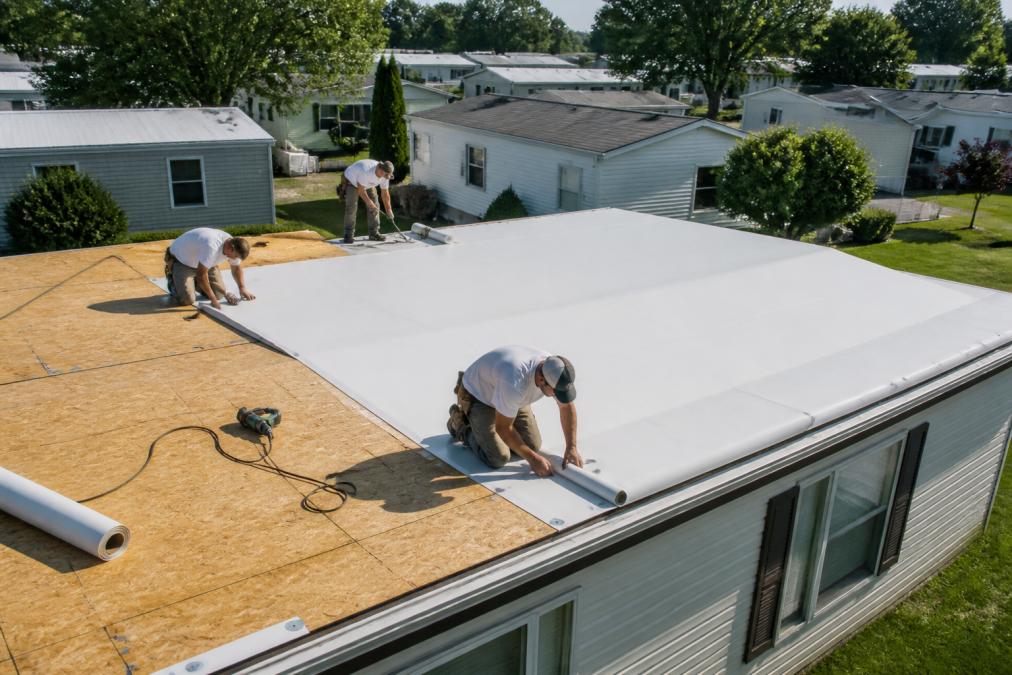
A roof-over installs new roofing material directly over the existing roof without removal. The new membrane (typically TPO or EPDM) is secured to the existing structure. This method is faster and less labor-intensive, reducing immediate costs. No teardown means no disposal fees, no interior disruption, and faster completion, making it viable for tight budgets.
The drawback is hidden risk. If the underlying roof is damaged, wet, or compromised, you seal in moisture and decay, creating conditions for mold and rot. After 5-10 years, trapped water causes premature failure.
A tear-off removes the old roof, exposing the deck and revealing hidden structural damage, wet insulation, or rot. You address these before installing new material on a clean, dry deck, extending lifespan significantly. Tear-off costs 30-50% more upfront due to disposal and labor, but delivers better long-term value for homeowners staying 10+ years.
Roofing Materials for Mobile Homes: Durability and Performance
Material selection shapes your roof's lifespan, maintenance burden, and performance in extreme weather. Mobile homes have three primary options, each with distinct strengths, and each performs differently depending on your regional climate.
Best Roof Coatings for Metal Mobile Homes
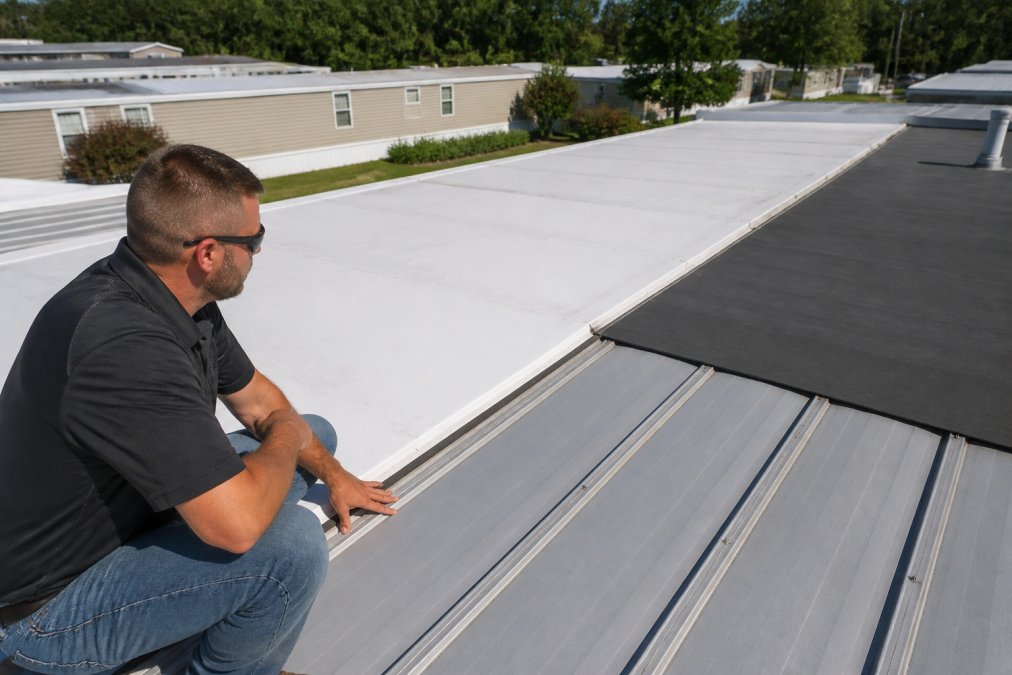
TPO (Thermoplastic Polyolefin) membrane is the most common choice for mobile home roof replacement. It reflects sunlight, reducing cooling costs by 10-15% in hot climates, and resists UV damage. Heat-welded seams provide durability, and installation is straightforward. TPO resists UV damage. However, it becomes brittle below 50°F, making it unsuitable for cold climates where freeze-thaw cycles cause seam separation. In snow-heavy regions, its smooth surface creates safety hazards as snow slides off suddenly.
EPDM (Ethylene Propylene Diene Monomer) rubber is flexible and handles temperature fluctuations well, making it ideal for northern climates with freeze-thaw cycles. It remains pliable in cold weather and typically lasts 20-25 years. The trade-off: it absorbs 10-20% more solar heat than TPO, raising cooling costs in hot climates. In humid regions, inadequate ventilation can trap moisture, causing mold growth.
Metal roofing (aluminum or steel) offers the longest lifespan: 25-30+ years. It resists corrosion in salt-air environments, handles wind loads exceptionally well (ideal for hurricanes), and sheds snow readily. The downside: 40-60% higher upfront cost than TPO, plus need for proper flashing and ventilation to prevent condensation. In coastal areas, aluminum is preferable to steel due to superior corrosion resistance.
Climate-Specific Material Recommendations
Hot, humid climates (Southeast, Gulf Coast): TPO balances cost, performance, and ease of installation. Its reflective surface minimizes cooling costs and resists UV/ozone exposure. Ensure adequate ventilation (ridge vents, soffit vents, or baffle systems) to prevent moisture accumulation and mold.
Cold climates with freeze-thaw cycles (Northeast, Upper Midwest, Mountain West): EPDM is the stronger choice.
Energy Efficiency and Long-Term ROI
A TPO roof in a hot climate can reduce annual cooling costs. Metal roofing offers similar heat reflection but costs more upfront. EPDM provides less energy benefit in hot climates but prioritizes freeze-thaw durability in cold regions.
HUD Code Compliance and Building Permits
Mobile homes built after 1976 must comply with HUD code standards governing roof structure, ventilation, flashing, and underlayment. Key requirements include minimum 1:12 roof pitch for drainage, adequate ventilation to prevent moisture accumulation, and structural integrity of the deck and trusses. Flashing around all penetrations must be sealed and secured.
Signs Your Mobile Home Roof Needs Replacement
Recognizing early warning signs helps you schedule a mobile home roof replacement before an emergency forces your hand. Watch for these indicators.
Installation Process: DIY vs. Professional Help
A mobile home roof replacement is a complex project that involves working at height, understanding structural requirements, and ensuring code compliance. The decision between DIY and professional installation hinges on your skill level, tools, and risk tolerance.
Insurance Claims and Cost Considerations
Storm damage often triggers insurance claims for roof replacement. Understanding how insurance processes claims and how to advocate for appropriate coverage helps you navigate the system effectively and avoid underpayment.
Filing a Claim: Step-by-Step Process
Step 1: Document damage immediately. Photograph and video-record all visible damage: wide shots of overall roof condition, close-ups of torn membrane, missing seams, hail dents, and interior water stains. Photograph the date to establish timing. Do not make repairs before the adjuster inspects.
Understanding the Adjuster's Assessment
An insurance adjuster will inspect the roof and assess coverage and repair costs. Adjusters are trained to minimize payouts, so understanding their process helps you advocate effectively.
Disputing an Adjuster's Estimate
Request a detailed explanation. Ask the adjuster to itemize their estimate and explain discrepancies. Provide your contractor's estimate as evidence of fair market rates.
Mobile Home-Specific Insurance Considerations
Mobile home roofs are assessed differently than site-built homes. Adjusters may be unfamiliar with HUD code requirements, TPO specifications, or specialized mobile home flashing costs. Strengthen your claim by providing HUD code documentation, manufacturer installation guidelines for your roof material, and requesting consultation with a mobile home roofing specialist if your home is older or non-standard.
Cost Breakdown and Budget Planning
Mobile home roof replacement costs depend on size, material, and method. If insurance covers only part of the cost, budget for the difference. Discuss financing or payment plans with your contractor.
Frequently Asked Questions
What's the average cost to replace a roof on a mobile home?
Mobile home roof replacement costs depend on several factors: square footage, material choice, local labor rates, and whether you choose a roof-over or tear-off method. Rather than guess at a price, contact SunPro Contracting for a detailed estimate tailored to your home's specific size and condition. We provide itemized quotes before any work begins.
Can you put a new roof over an existing mobile home roof?
Yes, a roof-over (also called re-roofing) installs new material directly over your existing roof without removal. This method works when your current roof deck is structurally sound and has adequate pitch. However, if the underlying structure is damaged or if local building codes restrict layering, a tear-off becomes necessary. A professional inspection determines which approach suits your home.
Do I need a permit for a mobile home roof replacement?
Most jurisdictions require building permits for mobile home roof replacement, regardless of method. Permit requirements vary by county and local code. Your contractor should handle permit applications and ensure the work meets HUD code standards and local building regulations. Skipping permits can create issues with insurance claims and future home sales.
What are the most durable roofing materials for manufactured homes?
Metal roofing and TPO (thermoplastic polyolefin) membranes offer excellent durability for mobile homes. Metal provides superior corrosion resistance and longevity (20-40 years), while TPO delivers strong weather resistance and energy efficiency. EPDM rubber is another proven option. The best choice depends on your climate, budget, and whether you want to apply roof coatings for added protection.
How do you know when it's time to replace a mobile home roof?
Replace your roof if you see persistent leaks, visible sagging, rust or corrosion spots, missing sections, or if the roof is nearing the end of its typical lifespan. Storm damage, especially after high winds or hail, is another clear indicator. A professional inspection identifies whether repair or full replacement is the right solution.
What is the 25 rule in roofing?
The 25 rule states that if repairs exceed 25% of your roof's replacement cost, replacement becomes the more economical choice. This principle helps homeowners avoid repeated repairs on aging roofs.