 blog
blog
5 Best Roof Coatings for Metal Mobile Homes
Table of Contents
- Why Metal Mobile Home Roofs Need the Right Coating
- Quick Comparison: 5 Best Roof Coatings for Metal Mobile Homes
- 1. Silicone Roof Coating: Best for Ponding Water and UV Resistance
- 2. Acrylic Elastomeric Coating: Best Budget Option for Mild Climates
- 3. Silver Aluminum Roof Coating: Best for Reflectivity and Rust Protection
- 4. Polyurethane Coating: Best for Durability and Foot Traffic
- 5. Liquid Rubber Coating: Best for Seamless Leak Protection
- How to Coat a Metal Mobile Home Roof: Step-by-Step
- Step 1: Inspect and rule out structural problems
- Step 2: Clean the surface completely
- Step 3: Treat rust and replace failed fasteners
- Step 4: Repair seams and penetrations
- Step 5: Prime for adhesion
- Step 6: Apply in thin, even coats
- Step 7: Control weather and moisture
- Safety and when to hire a professional
- Choosing the Right Coating for Your Mobile Home
- Frequently Asked Questions
Last Updated: October 9, 2026
Why Metal Mobile Home Roofs Need the Right Coating
Metal mobile home roofs fail for one main reason: the wrong coating. Mobile home panels are thinner than site-built roofing, so they expand and contract more with temperature swings.
Patching a leak with a rigid sealant buys months, not years. The right coating system handles movement, blocks UV, and keeps water out of the seams and fastener heads where mobile home roofs leak most.
Quick Comparison: 5 Best Roof Coatings for Metal Mobile Homes
This is a ranked shortlist, not a catalog. Each coating earns its place by solving a specific failure mode on thin-gauge metal mobile home panels, movement, ponding water, rust, foot traffic, or seam leaks. The ranking weighs five criteria:
- Flexibility and adhesion on thin metal that expands and contracts more than site-built roofing.
- Water management, how the cured film handles ponding water versus good drainage.
- UV and weather resistance under full sun and storm cycles.
- Seam and fastener performance, whether the coating bridges joints or needs separate reinforcement.
- Applied cost and recoat interval, material coverage, number of coats, and how soon you repeat the job.
| Rank | Coating | Best For | Key Strength | Main Trade-Off | Typical Coats | Recoat Interval |
|---|---|---|---|---|---|---|
| 1 | Silicone | Ponding water, UV | Stays flexible; tolerates standing water | Slippery when wet; demands a clean, dry surface | 2 | Longest of the group |
| 2 | Liquid rubber | Seam and fastener leaks | Seals joints in one seamless membrane | Long cure; strong odor | 2 | Long |
| 3 | Polyurethane | Durability, foot traffic | Tough, scuff-resistant surface | Higher cost; two-part mixing | 2 | Long |
| 4 | Acrylic elastomeric | Mild climates, budget | Low cost; easy water cleanup | Weaker under ponding and freeze-thaw | 2 | Shortest of the group |
| 5 | Silver aluminum | Reflectivity, rust control | Reflects heat; blocks surface rust | Not walkable; lower flexibility | 2 | Moderate |
How to read coverage and cost
Coverage drives your budget, and it varies by coating chemistry and surface texture. A smooth, previously coated panel spreads material further than a chalky, rust-pitted, or heavily seamed roof. Most manufacturers publish a coverage range per gallon at a specified film thickness, and most mobile home roofs need two coats to hit it.
To estimate material, measure your roof footprint in square feet, divide by the manufacturer's stated coverage per gallon, then multiply by the number of coats. Add a waste allowance for seams, penetrations, and touch-ups.
What separates the top three from the bottom two
The top three, silicone, liquid rubber, and polyurethane, stay flexible across wide temperature swings and hold up under standing water or repeated contact. The bottom two, acrylic and silver aluminum, trade durability for cost or reflectivity. If your roof drains well and you're on a budget, acrylic or aluminum can be the right call. If water pools, seams leak, or you walk the roof, spend up on the top three.
1. Silicone Roof Coating: Best for Ponding Water and UV Resistance
Silicone roof coating is a moisture-curing liquid that forms a flexible, rubber-like membrane over a metal roof.
Why it wins on mobile homes: silicone stays flexible across wide temperature swings, moving with thin metal panels instead of cracking, and resists UV degradation better than most options.
Where it falls short: a wet silicone surface is slippery, so plan foot traffic carefully. It also demands a clean, dry, contamination-free surface. Silicone won't bond over dirt, rust dust, or old incompatible coatings.
2. Acrylic Elastomeric Coating: Best Budget Option for Mild Climates
Acrylic elastomeric coating is a water-based liquid that dries into a flexible, breathable film. It's the lowest-cost way to seal and refresh a metal mobile home roof, popular with budget-conscious owners.
Its strengths are practical: acrylic coatings apply easily with a roller or sprayer, clean up with water, and have low odor. They reflect some heat and provide solid weather protection in mild climates without heavy ponding.
The trade-off is durability under stress. Acrylic coatings break down faster under constant standing water and repeated freeze-thaw cycles than silicone or polyurethane. In a hot, storm-heavy climate, expect to recoat sooner.
3. Silver Aluminum Roof Coating: Best for Reflectivity and Rust Protection
Silver aluminum roof coating is an asphalt-based coating filled with aluminum pigment. It reflects solar heat and blocks rust, making it a natural fit for older metal mobile home roofs showing surface corrosion.
The reflective coating does two jobs at once.
Two limits to know. Aluminum coatings are less flexible than silicone or acrylic, so they suit roofs that aren't moving much. And the metallic surface is not built for regular foot traffic.
4. Polyurethane Coating: Best for Durability and Foot Traffic
Polyurethane coating is a two-part liquid system that cures into a tough, scuff-resistant membrane. It's the pick when a mobile home roof doubles as a service area or sees regular foot traffic.
What sets urethane coating apart is abrasion resistance.
The downside is cost and complexity. Polyurethane typically costs more per gallon than acrylic or aluminum, and two-part systems require accurate mixing and a tighter application window. It's a job where experienced hands matter.
5. Liquid Rubber Coating: Best for Seamless Leak Protection
Liquid rubber coating is a thick, flexible coating that cures into a single seamless membrane. It's the strongest choice for leak protection on a mobile home roof riddled with seams and fastener heads.
Metal mobile home roofs leak at the joints.
The catch is cure time and odor. Liquid rubber takes longer to fully cure than acrylic or silicone, and it carries a strong smell during application.
How to Coat a Metal Mobile Home Roof: Step-by-Step
Coating a metal mobile home roof is a prep job with a coating attached. On thin-gauge panels, the seams, fastener heads, and existing finish decide whether the new membrane bonds or peels. Follow these steps in order, treating each as a gate, don't move on until the prior step passes.
Step 1: Inspect and rule out structural problems
Before you buy a drop of coating, confirm the roof is worth coating. From a ladder, look for sagging between supports, soft spots, widespread perforation rust, or separated panels. Coating seals surfaces; it does not restore structure. If you see sagging or soft spots, stop and get a roofing assessment, no coating will fix a failing deck.
Step 2: Clean the surface completely
Dirt, chalk, mildew, and old coating residue are the leading cause of adhesion failure.
- Remove leaves, branches, and standing debris
- Scrub the surface to remove dirt, chalk, and loose old coating
- Treat mildew with a suitable cleaner, then rinse
- Pressure wash at a pressure that won't dent thin panels, then let the roof dry completely
- Confirm the surface is fully dry and clean before any primer or coating
Step 3: Treat rust and replace failed fasteners
Rust is the mobile-home-specific step most guides skip. Scrape loose rust back to sound metal, then apply a rust-inhibiting primer or converter compatible with your chosen coating. Replace any fastener that is backing out, stripped, or corroded, a new coating over a loose screw will leak again. Where panels overlap, check that seams are tight before coating.
Step 4: Repair seams and penetrations
Mobile home roofs leak at joints, not in the middle of panels. Reinforce seams, vents, and pipe penetrations with a compatible seam tape or fabric embedded in the coating, then coat over the reinforcement. This is the step that turns a coating into a waterproofing system rather than a painted surface.
Step 5: Prime for adhesion
Priming improves bond, especially on bare or rusted metal and where the old finish is questionable. Use a primer the coating manufacturer specifies for your substrate, and let it cure per the label before topcoating. Skipping a required primer is a common cause of early peeling.
Step 6: Apply in thin, even coats
Apply the coating in thin, even passes rather than one heavy layer, two thin coats bond and cure better than one thick coat. Work in sections, maintain a wet edge, and respect the recoat window: too soon and the solvent can't escape; too late and the layers may not bond. Buy material based on the manufacturer's stated coverage and your measured roof area, plus a waste allowance for seams and penetrations.
Step 7: Control weather and moisture
Coating chemistry has temperature and moisture limits, and thin metal panels heat and cool fast. Apply within the manufacturer's stated surface-temperature and ambient-temperature range, and never coat when rain is in the forecast or when the roof isn't fully dry. Trapped moisture under a fresh membrane causes blistering and peeling.
Safety and when to hire a professional
Roof work is fall-risk work. Metal mobile home roofs are often low-slope and slick, especially once coated. Use fall protection, secure ladders, and never work alone.
Hire a professional if you see structural sagging, widespread rust-through, or active leaks you can't trace. Coating is a maintenance and waterproofing step, not a repair for a failing roof.
Choosing the Right Coating for Your Mobile Home
Match the coating to your roof's real conditions, not the lowest price on the shelf.
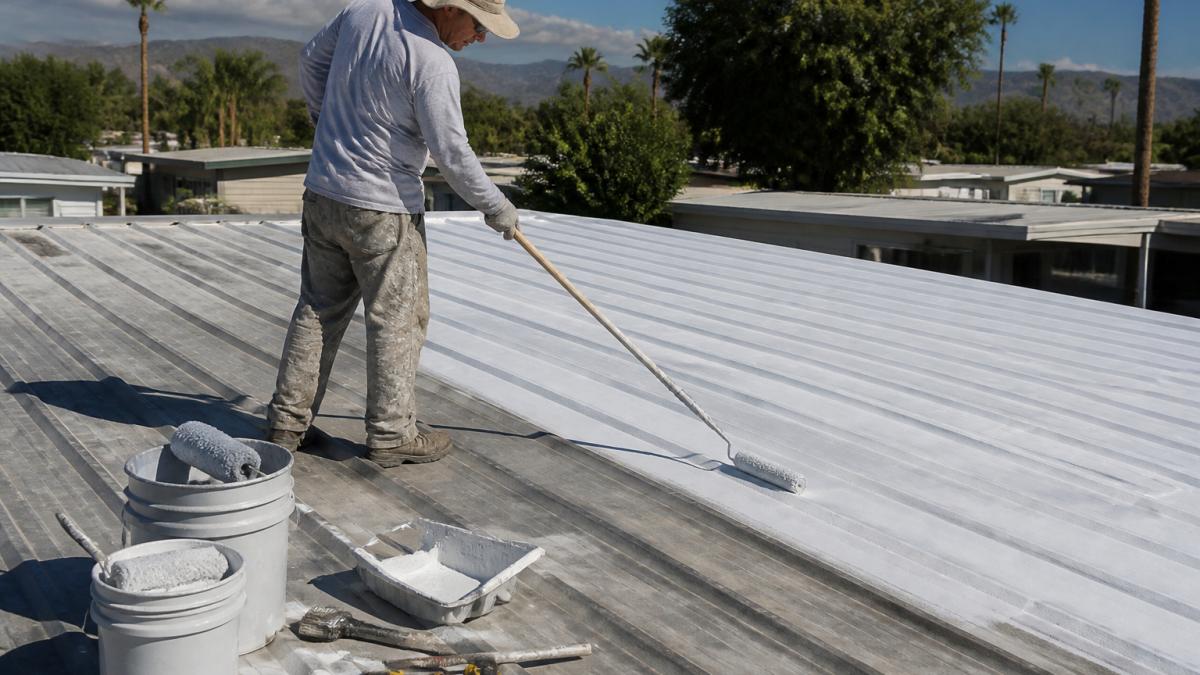
If your roof holds water, choose silicone. If you're on a tight budget with decent drainage, acrylic works. For rust and heat, go silver aluminum. For foot traffic, polyurethane. For stubborn seam leaks, liquid rubber.
If you'd rather not climb a roof in the heat or risk a failed DIY application, that's exactly the work we do.
Frequently Asked Questions
What is the best roof coating for a metal mobile home?
Silicone coating is often the top choice for metal mobile home roofs because it handles ponding water, resists UV damage, and stays flexible in extreme heat. Acrylic elastomeric coatings work well in milder climates at a lower cost, while silver aluminum coatings offer strong reflectivity and rust protection. The right pick depends on your roof condition, climate, and budget.
How long does roof coating last on a metal mobile home?
Silicone and polyurethane coatings typically last 10 to 15 years on a metal mobile home roof when applied over a properly prepared surface. Acrylic coatings generally last 5 to 10 years and may need recoating sooner in high-UV areas. Aluminum coatings can last 5 to 8 years. Longevity depends heavily on surface preparation, coating thickness, and local weather exposure.
Do you need to prime a metal roof before applying roof coating?
Yes, priming is often necessary, especially on bare or rusty metal. A rust-inhibitive primer or bonding primer helps the coating adhere properly and prevents premature peeling. For galvanized or previously coated surfaces, a specialized primer may be needed to ensure compatibility. Skipping primer can cause adhesion failure and shorten the coating's lifespan significantly.
Can you apply silver aluminum roof coating over an existing coating?
Silver aluminum roof coating can go over some existing coatings, but compatibility matters. If the old coating is a silicone-based product, aluminum coating will not adhere properly. Acrylic or asphalt-based coatings are usually compatible after cleaning and priming. Always test a small area first and check the manufacturer's guidelines for recoat compatibility.
A metal mobile home roof only lasts as long as its coating holds. The wrong product, or a rushed application, means another leak and another repair bill. SunPro Contracting LLC handles the full job: inspection, surface preparation, priming, and application of the right coating for your roof's condition, backed by our experience across tile, shingles, and TPO systems. Get started with SunPro Contracting LLC and protect your mobile home roof with a coating that's done right the first time.