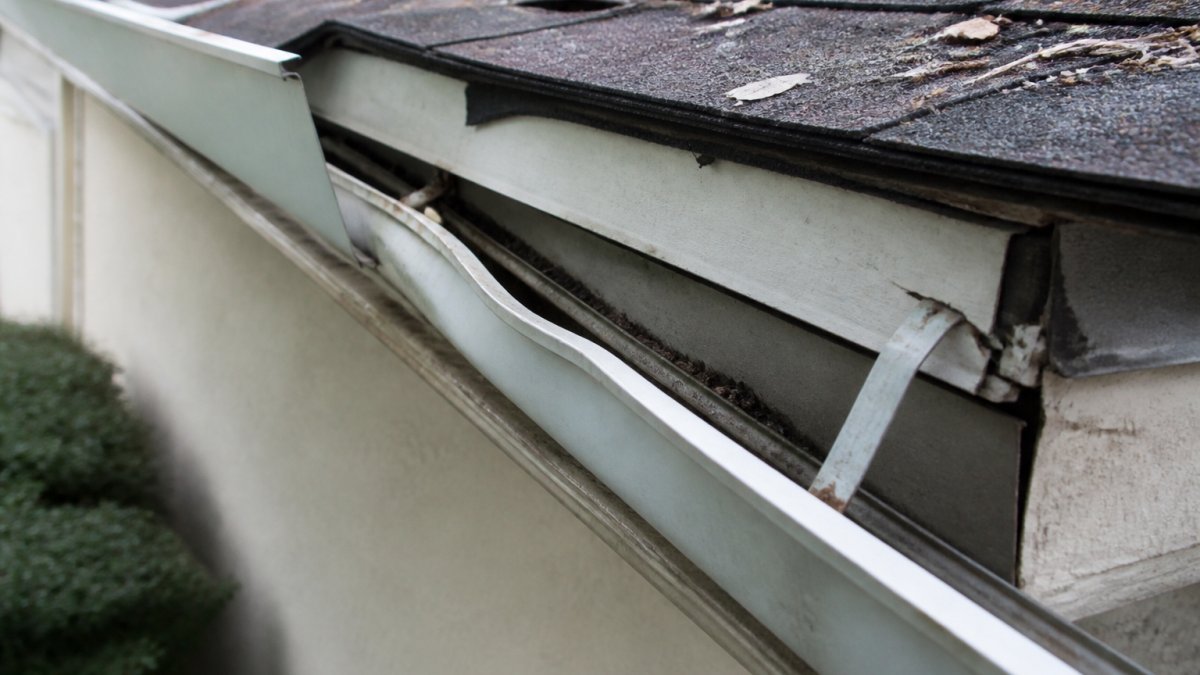
 how-to
Signs of Improper Gutter Installation: 7 Red Flags
Last Updated: October 22, 2026
Quick Summary
Improper gutter installation is one of the most common reasons homeowners face water damage, foundation problems, and costly repairs. Red flags include sagging sections, gutters pulling away from the fascia, leaks at seams, incorrect pitch, overflow during normal rain, and standing water that doesn't drain within minutes.
- Gutters should slope 1/16 inch per 10 feet of run toward the downspout; level or reverse pitch causes standing water and overflow.
- Sagging gutters result from hangers spaced too far apart, wrong bracket types, or fasteners driven into weak spots like between roof rafters.
- Standing water 30 minutes after rain stops is never normal and signals improper pitch, undersizing, or a clog.
- Water stains on fascia, peeling paint, mold on siding, and wet basement spots indicate water getting behind gutters from installation defects.
- Most installation problems appear within the first year; document them with photos and contact the installer within the workmanship warranty period.
Table of Contents
- What Improper Gutter Installation Looks Like
- Visible Signs of Gutter Problems
- Improperly Pitched Gutters and Water Flow Problems
- Gutter Overflow During Rain and Standing Water
- Water Damage and Foundation Issues
- How to Check Gutters Without a Ladder
- Installation Defects vs. Maintenance and Storm Damage
- What to Do When You Spot Installation Problems
- Frequently Asked Questions
What Improper Gutter Installation Looks Like
Improper gutter installation is one of the most common reasons homeowners face water damage, foundation problems, and costly repairs.
A system that protects your home and one that fails often differ by a few critical details: pitch, support spacing, fastener placement, and connection integrity.
This guide covers the seven red flags of improper gutter installation, how to spot each, and when to act.
Visible Signs of Gutter Problems
The easiest way to catch improper gutter installation is to look for visible damage, which often shows within months.
Sagging or Warped Gutter Sections
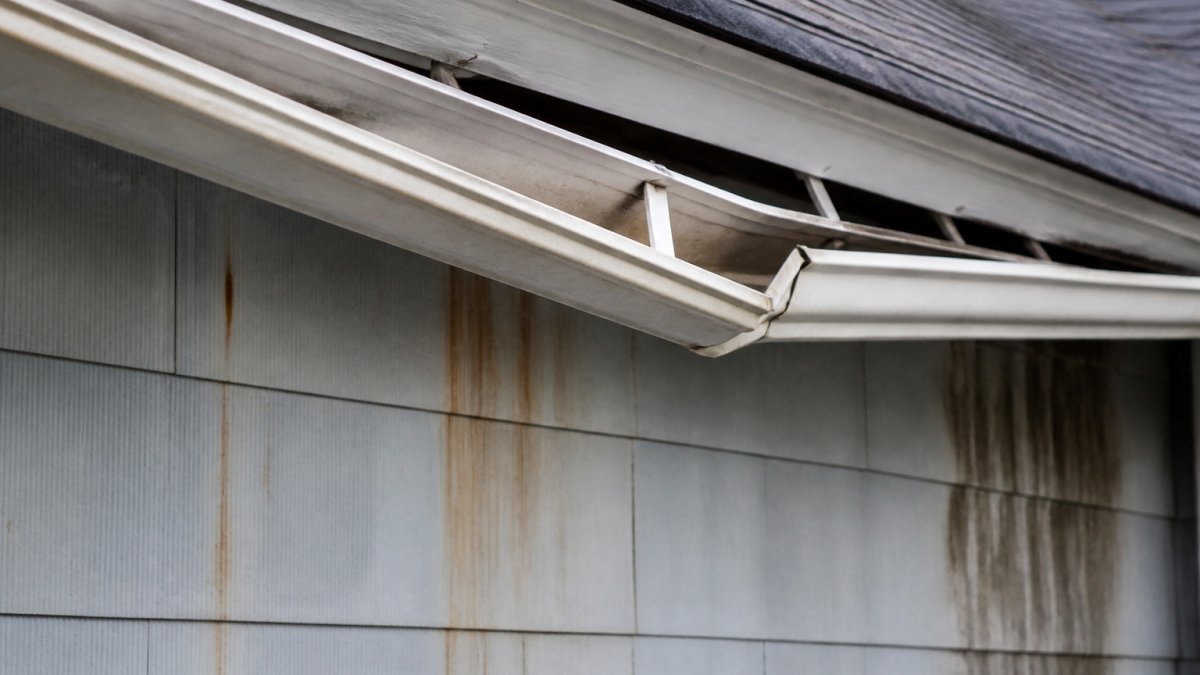
A sagging gutter section is one of the clearest signs of improper gutter installation. Gutters should run straight with a slight, consistent slope toward the downspout.
Sagging happens when hangers or brackets are spaced too far apart, the wrong bracket type was used, fasteners were driven into weak spots (like between roof rafters), or the gutter was undersized for your roof's drainage area.
Gutters Pulling Away From the Fascia
When gutters pull away from the fascia board, water spills behind the gutter and runs down the exterior, causing hidden damage to fascia, soffit, and eventually the wall structure.
Gutters pull away because fasteners weren't driven deep enough or used the wrong gauge, brackets weren't positioned to grip the fascia, expansion and contraction weren't accounted for, or the fascia was already rotted.
Leaks, Rust, Cracks, and Holes
Leaks within the first year usually mean joints weren't sealed properly or material was damaged during installation. Rust appears when improper installation exposes bare metal to standing water or incompatible metals corrode each other.
Common causes include unsealed seams, improper overlap, fasteners that penetrated the gutter bottom without flashing, and incompatible metals (aluminum and steel, for example).
Improperly Pitched Gutters and Water Flow Problems
Pitch is the most consequential measurement in a gutter installation, and the one most often gotten wrong. A gutter that is level, or slopes away from the downspout, will hold water even if everything else is perfect.
The target slope
The trade rule of thumb is 1/16 inch of drop per 10 feet of gutter run toward the downspout, about 1/4 inch total on a 40-foot run, nearly invisible to the eye, which is why it gets missed. Some installers use more slope on long runs or in heavy-rain regions; what matters is that the slope is consistent and in the right direction.
How to verify pitch without guessing
You don't need the roof to get a useful read on pitch. Two methods work:
The string-and-level method (from a ladder, dry conditions only). Tie a string at the high end and the downspout end, pull it taut along the front lip, and check with a line level. The bubble should show a slight, steady tilt toward the downspout; level or wrong-way tilt means wrong pitch.
The water test (from the ground). Run a gentle hose stream into the gutter at the high end for several minutes. On a correctly pitched run, water moves steadily to the downspout and exits within a minute or two. If it stalls, pools mid-run, or backs up, the pitch is off or there's a blockage.
What pitch problems look like in practice
Pitch defects produce recognizable symptoms:
- Standing water 30+ minutes after rain stops. Properly pitched gutters drain within minutes; lingering water is the clearest sign of a pitch problem.
- Pooling mid-run rather than at the low end, often a low spot from a slipped hanger or sagging section.
- Overflow at the high end during moderate rain while the downspout end stays dry, a reverse-pitch signature.
Pitch is only half the story: hanger spacing and downspout sizing
Two related specs determine whether a correctly pitched gutter actually performs:
Hanger spacing. Hangers hold the gutter in line and carry the weight of water, ice, and debris. Spacing too wide lets the gutter sag between hangers, creating low spots that defeat the pitch. Manufacturers publish a maximum for each material and hanger type; exceeding it is a common source of sagging. Field check: sight down the run for a repeating wave pattern.
Downspout capacity and count. A perfectly pitched gutter still overflows if downspouts can't carry the water. Number and size should match the roof area draining to the gutter and local rainfall intensity. A common error is a long gutter with a single downspout at one end, forcing water the full run and overwhelming the outlet in heavy rain.
When pitch is a defect versus normal settling
Not every low spot is a defect. Gutters move with the house, and minor settling over years is normal. The pattern tells the story:
- Multiple low spots within the first year, installation defect (hanger spacing, fastener placement, or initial pitch)
- A single low spot after a storm or heavy snow load, damage or fastener failure
- A gradual sag over many years, normal aging, usually a maintenance item
If you're within the workmanship warranty and see multiple pitch-related symptoms, document them and raise them with the installer before it expires. Pitch problems don't fix themselves, and the damage compounds with every rain.
Gutter Overflow During Rain and Standing Water
Overflow during moderate rainfall signals improper installation. If water spills over the sides during normal rain, the cause is usually gutter size that doesn't match your roof area, too few or too small downspouts, improper pitch slowing water flow, or a clog.
Standing water after rain stops is never normal. Proper pitch means gutters drain completely within minutes; water that sits breeds mosquitoes, promotes algae, and accelerates rust.
Water Damage and Foundation Issues
Gutters exist to protect your foundation and structure. When improper gutter installation fails at that, damage spreads quickly. Watch for water stains on siding, peeling paint near the foundation, mold or mildew on siding or fascia, cracks in the foundation or basement walls, wet spots in the basement after rain, and soil erosion around the perimeter.
How to Check Gutters Without a Ladder
Most gutter problems can be triaged from the ground, a window, or inside the house, no ladder required. A systematic pass beats a casual glance because defects show up in patterns: multiple sections failing at once, consistent overflow along a run, or water in the same spot after every rain.
Step 1: Walk the perimeter from 15-20 feet back
Stand roughly a driveway's width back and sight down the gutter line. You're looking for straightness, not detail: a properly installed run reads as one continuous line with a gentle, consistent drop toward the downspout. Note dips or bows between hangers (spacing too wide or fasteners that missed framing), a gutter that rises then falls (reverse pitch or a low spot), sections sitting lower than their neighbors (slipped hanger or failed fastener), and gaps at the fascia visible as a dark line.
Step 2: Check the fascia line and soffit from below
From the ground, look up at the underside of the gutter and the fascia behind it. Check for water staining or dark streaks on the fascia or soffit (water getting behind the gutter), peeling or bubbling paint (chronic moisture), soft or discolored wood (rot), and gaps wider than a finger between the gutter back and the fascia.
Step 3: Watch a rain event from inside and outside
Pick a moderate, steady rain and observe for 10-15 minutes. Note where overflow starts first (at a seam or run end points to pitch or a joint problem; along an entire run points to undersizing or a downstream clog), whether water sheets behind the gutter and down the siding (a back-of-gutter leak, almost always an installation or fastener issue), whether downspouts discharge strongly, weakly, or not at all, and where water lands at grade, discharge should be carried several feet from the foundation.
Step 4: Check the interior for moisture clues
Inside, check the walls and ceiling nearest the gutter runs, top floor and basement or crawlspace. Look for water stains or tide marks on ceiling drywall near exterior walls, damp or discolored drywall at the top of walls, efflorescence (white powder) or damp spots on basement walls, and musty odors after rain.
Step 5: Check downspout placement and discharge from the ground
Downspouts are where installation errors become foundation problems. From the ground, confirm downspouts are present at the low end of each run and at intervals along long runs, discharge onto splash blocks, extensions, or buried drain lines that carry water at least several feet from the foundation, have secure elbows, and don't empty onto a walkway, driveway, or neighbor's property.
Step 6: Log what you find
Before you call anyone, build a simple record: photos of each problem area taken from the same spot each time, a sketch of the gutter runs with problem locations marked, dates and weather conditions for each observation, and the installation date and installer's name if you have them. This log turns a vague complaint ("the gutters overflow") into a specific one ("the north run overflows at the second seam during moderate rain, and the fascia behind it is stained").
Installation Defects vs. Maintenance and Storm Damage
Not every gutter problem points to improper installation. Knowing the difference tells you whether to demand a fix from the installer or handle maintenance yourself.
Storm damage is sudden and localized: gutters bent or crushed by branches, sections torn away by high winds, holes punched by hail, and downspouts knocked loose.
Timeline and pattern matter: multiple sections failing within months of installation means improper installation; one section after a storm means damage; recurring clogs mean maintenance.
What to Do When You Spot Installation Problems
If you've identified signs of improper gutter installation, here's what to do:
Document the problems. Take dated photos and videos of sagging, gaps, overflow, and water damage, crucial if you need to hold the installer accountable.
Note the timeline. When was the gutter installed, and how long have you noticed problems?
Contact the installer. If the work is recent, explain the problem and request inspection and repair.
Don't delay addressing improper gutter installation. Water damage compounds quickly, overflow becomes foundation damage becomes structural failure.
Improper gutter installation puts your entire home at risk.
Frequently Asked Questions
How can you tell if gutters are improperly pitched?
Improperly pitched gutters don't slope toward the downspout, causing water to pool instead of drain. Look for standing water in sections after rain, or water flowing backward. You can check pitch by observing water behavior during rainfall or by measuring the height difference between the gutter start and downspout end using a level and measuring tape.
What happens when gutters are installed incorrectly?
Incorrect installation leads to water overflow, foundation damage, siding deterioration, and interior water damage. Poor pitch causes standing water that promotes rust and corrosion. Improper bracket spacing or fastening allows gutters to sag or pull away from the house. Over time, water damage can compromise the structural integrity of fascia boards, roof edges, and foundation systems, resulting in costly repairs.
How do you check your gutters without a ladder?
Use binoculars to inspect gutters from the ground, looking for sagging sections, visible debris, rust stains, and gaps at the fascia. Watch gutters during or after rain to see if water overflows or pools. Check downspouts for proper drainage and clear water flow. Inspect siding below gutters for water stains, mold, or paint peeling. If you spot problems, document them with photos and contact a professional to assess whether repairs or replacement is needed.
When should improperly installed gutters be repaired or replaced?
Address installation defects immediately to prevent water damage. Minor issues like loose hangers or small leaks can sometimes be repaired, but persistent sagging, severe rust, or consistent overflow typically require full replacement. If the gutter system is more than 20 years old or shows multiple installation defects, replacement is usually more cost-effective than repairs. Consult a professional to evaluate whether your system can be salvaged or needs to be replaced entirely.