 how-to
Preventing Water Damage From Gutters: A Step-by-Step Guide
Table of Contents
- Why Gutter Maintenance Prevents Water Damage
- Gutter Cleaning Frequency and Seasonal Maintenance
- Step-by-Step Gutter Inspection and Debris Removal
- Detecting and Repairing Leaking Gutters
- Gutter Maintenance Tips for Long-Term Protection
- Gutter Guards and Water Damage Prevention
- Downspout Drainage Solutions and Grading
- Common Mistakes to Avoid
- Frequently Asked Questions
Last Updated: October 15, 2026
Why Gutter Maintenance Prevents Water Damage
Preventing water damage from gutters starts with understanding how gutters protect your home. Working gutters channel rainwater away from your roof, walls, and foundation; when they fail, water pools and seeps where it shouldn't.
Damage happens fast. Overflowing gutters send water onto siding and down foundation walls, where it pools at the base of your home, weakening the foundation, rotting framing, and feeding mold.
At SunPro Contracting LLC, we've seen the cost of neglect: homeowners who skip gutter maintenance often face repair bills that basic upkeep could have prevented.
Gutters fail for three main reasons:
- Clogged gutters block water flow
- Leaking gutters let water escape where it shouldn't
- Loose gutters sag and create low spots where water pools
Each is preventable and fixable, the key is catching issues early.
Gutter Cleaning Frequency and Seasonal Maintenance
Most homes need gutter cleaning at least twice a year, but frequency depends on your tree canopy, roof pitch, and local rainfall. Build a seasonal schedule, then adjust it for your conditions.
A baseline schedule that works for most homes:
- Late spring (after pollen and seed pods drop): Clear fine debris and confirm downspouts flow before summer thunderstorms.
- Early fall (before leaf drop peaks): Clean once the first leaves fall to keep gutters clear going into the wettest stretch of the year.
- Late fall (after the canopy is bare): A second cleaning catches the bulk of the leaf load; skipping it is the most common cause of winter overflow.
- Mid-winter (after any ice or snow event): Inspect for ice dams, sagging, and pulled fasteners once conditions are safe.
Adjust the frequency for your conditions:
- Homes under pines, oaks, or maples may need three to four cleanings per year because needles and seed pods pack tightly and resist flushing.
- Homes with no overhanging trees can often stay on the twice-a-year schedule.
- Heavy summer rainfall regions may need an extra mid-summer check, since one clogged section can overflow during a short storm.
Season-specific actions beyond cleaning:
- Spring: After the last freeze, check for fasteners pulled loose by frost heave and reseat any gutter that has shifted from the fascia.
- Summer: Watch for overflow during the first heavy rain; overflow on a clean gutter usually means a slope or sizing problem, not debris.
- Fall: Trim branches back so they no longer overhang the roofline, reducing next season's debris load.
- Winter: Never chip ice out with a tool, you can crack the gutter or tear it from the fascia. Let ice melt naturally and fix drainage in spring.
Between scheduled cleanings, inspect after every significant storm. A five-minute ground-level check for sagging sections, fascia water stains, or debris at a downspout outlet catches most problems early.
What to document each visit:
- Date and which gutter runs were cleaned
- Standing water or low spots
- Loose or missing fasteners
- Cracks, holes, or seam separation
- Downspout flow test result
This log reveals recurring problem sections, usually a sign the gutter needs re-pitching or replacement, not another cleaning.
Gutter guards extend the interval between cleanings but don't remove the need for inspection. They still collect debris on top and let fine material wash in, so check them twice a year.
Step-by-Step Gutter Inspection and Debris Removal
What You'll Need
Before climbing a ladder, gather these items:
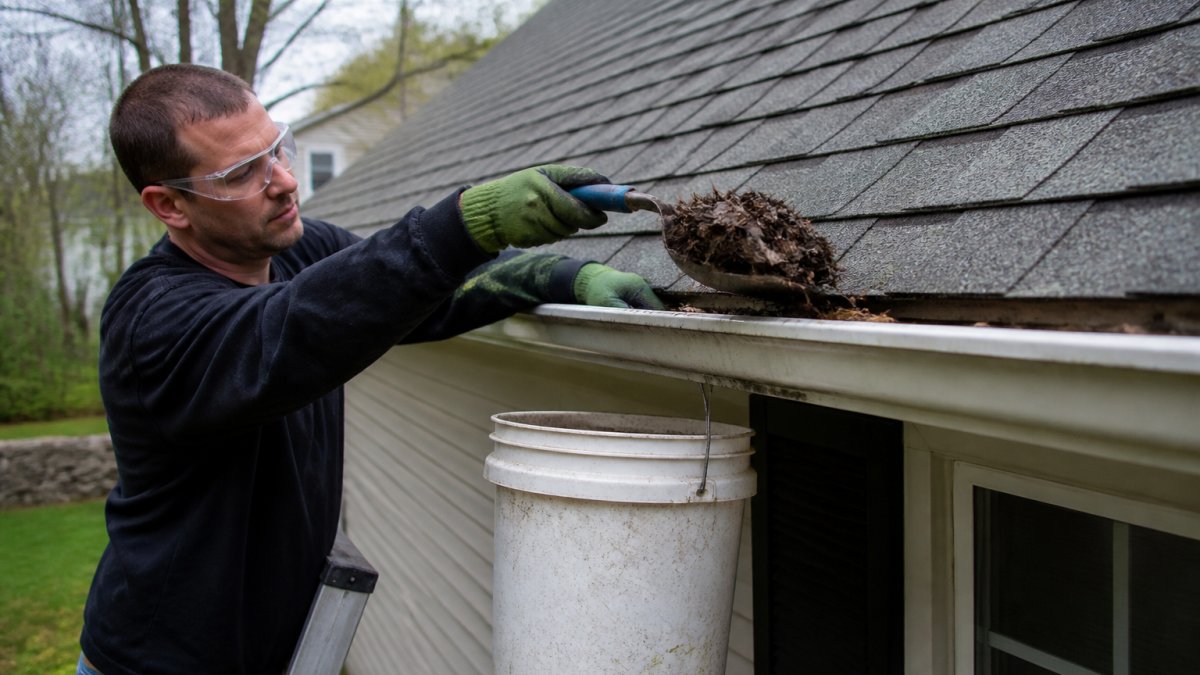
- Sturdy ladder (at least 6 feet tall for single-story homes)
- Work gloves (leather or rubber, water-resistant)
- Gutter scoop or small shovel
- Bucket for debris
- Hose with spray nozzle
- Safety glasses
- Flashlight (for inspecting interior)
Never use a ladder alone. Have someone hold the base or stay nearby.
Inspection and Cleaning Steps
Step 1: Position your ladder safely. Place it on level ground. Lean it against the gutter at a 75-degree angle.
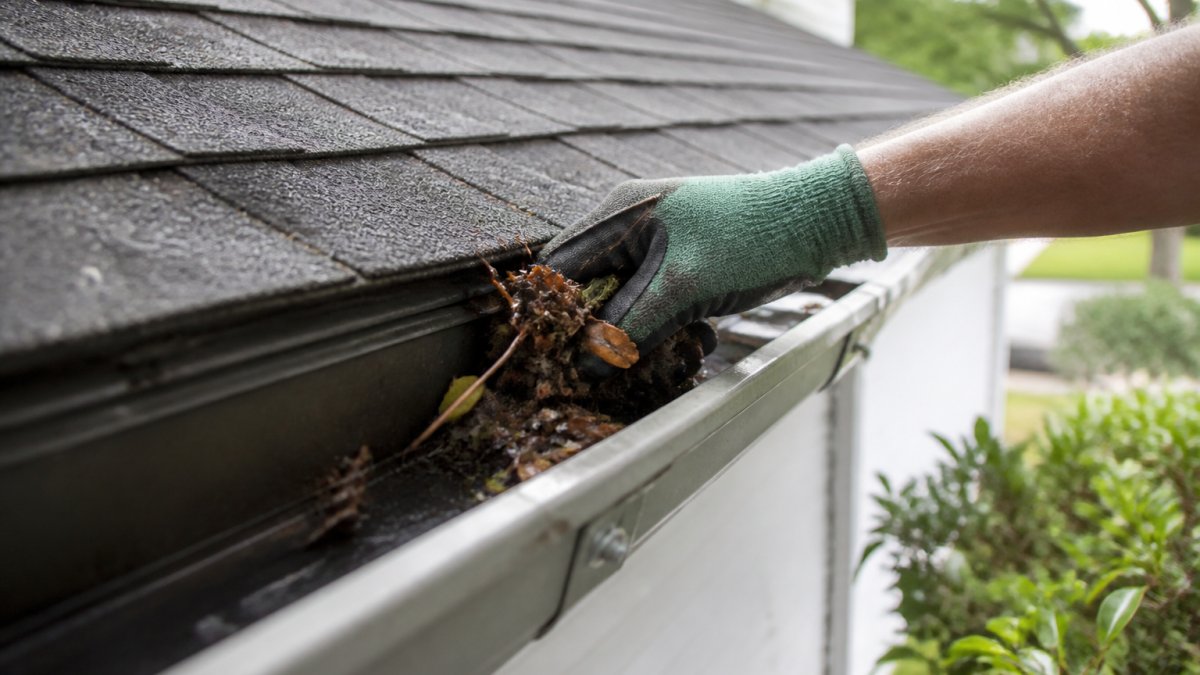
Step 2: Remove large debris by hand. Wearing gloves, scoop leaves, twigs, and dirt into a bucket to avoid clogging downspouts.
Step 4: Check for standing water. If water pools in any spot, the gutter has a dip or sag. Mark these areas for repair.
Step 5: Inspect the gutter interior. With a flashlight, look for cracks, holes, or separation from the fascia.
Step 6: Test the downspout. Flush water down it; if it backs up, the downspout is clogged.
Step 7: Check fasteners. Tighten any loose bolts, brackets, or hangers, loose fasteners let gutters sag and create low spots where water pools.
Step 8: Document problems. Take photos of cracks, holes, or loose sections. This helps when planning repairs or getting estimates.
Detecting and Repairing Leaking Gutters
Leaking gutters are easier to fix than you might think. The first step is finding the leak.
How to find a leak: Run water through the gutter with a hose. Watch for water dripping from the underside or seeping at seams.
Small seam leaks can be sealed with gutter sealant: clean and dry the area, then apply per product directions. Most cure within 24 hours.
Pinhole leaks or small cracks can be patched with a hardware-store gutter patch kit, which includes adhesive patches that seal from the inside.
Larger holes or rust damage usually require gutter replacement, though a single section can be swapped without replacing the whole system.
Gutter separation is another common leak source: if the gutter pulls away from the fascia, water seeps behind it.
Check repaired areas after the next heavy rain. If water still leaks, the repair didn't hold. Professional repair may be needed.
Gutter Maintenance Tips for Long-Term Protection
Consistent maintenance prevents most gutter problems. Practical steps to protect your gutters and home:
Install gutter screens or guards. These block leaves and large debris while letting water through, reducing cleaning frequency and preventing overflow. Choose mesh screens, solid covers, or foam inserts based on your climate and tree coverage.
Trim tree branches above your roof. Overhanging branches drop leaves and twigs directly into gutters; trimming cuts debris and storm damage.
Clean gutters before winter. Starting winter clean reduces ice dam risk, ice dams form when water backs up behind ice and seeps under shingles.
Check gutters after storms. Wind and hail loosen fasteners and pile debris; a quick inspection after severe weather catches problems early.
Keep downspouts clear. Debris can clog downspouts as easily as gutters. Run water through downspouts during each cleaning. Clear any blockages immediately.
Maintain proper gutter slope. Gutters should slope about 1/4 inch per 10 feet toward downspouts. Poor slope lets water pool, causing overflow and leaks; fix it by adjusting fasteners or repositioning the gutter.
Inspect gutter sizing. Standard gutters are 5 inches wide; heavy-rainfall areas or large roofs may need 6-inch gutters. If overflow happens regularly, larger gutters may be necessary.
Gutter Guards and Water Damage Prevention
Gutter guards reduce maintenance but don't eliminate it, worth considering with heavy tree coverage or if you dislike ladders.
How gutter guards work: They sit on top of gutters and block leaves while allowing water through, using mesh screens, solid covers, or foam inserts.
Mesh screens are affordable and easy to install, blocking most leaves but clogging with fine debris like pollen or small twigs, so they need periodic cleaning.
Solid covers direct water into gutters while blocking debris.
Foam inserts fit inside gutters and block debris. They're inexpensive and easy to install. They require regular cleaning and can compress over time.
Important: No gutter guard eliminates all maintenance. Debris still accumulates on top and can wash into gutters during heavy rain.
Guards work best with regular inspection: check them twice a year, clear debris from the top, and confirm water flows through properly.
Downspout Drainage Solutions and Grading
Gutters are only half the system. A gutter that drains perfectly into a downspout dumping water against the foundation defeats the purpose.
How far should downspouts discharge?
A common rule of thumb is to discharge at least 5 to 10 feet from the foundation, but what matters is where the water ends up.
Match the extension to your yard slope:
- Sloping away from the house: A 4- to 6-foot extension is often enough because gravity carries the water away.
- Flat or gently sloping lot: Use a longer extension, a buried discharge line, or a pop-up emitter at least 10 feet out and aimed downslope.
- Lot that slopes back toward the house: A surface extension won't solve it. Use a buried line to a lower point, a dry well, or a French drain that intercepts flow before it reaches the foundation.
Grading the soil:
The ground should slope downward away from the foundation, a commonly cited target is about 6 inches of drop over the first 10 feet.
Downspout extension options:
- Removable surface extensions: Flexible or rigid plastic sections that clip onto the downspout. Inexpensive and easy to reposition for mowing, but can be knocked loose.
- Buried discharge lines: Rigid pipe buried below the frost line or at a consistent downslope, ending at a pop-up emitter or daylight outlet. More work to install, but they keep water away from the foundation year-round.
- Splash blocks: Concrete or plastic blocks that disperse water at the outlet. Useful for very short distances, but they don't move water far enough for most lots.
- Rain barrels or cisterns: Capture roof water for reuse. They reduce discharge volume but must be emptied or overflow-routed so they don't just relocate the problem.
When to add a French drain or dry well:
If water still pools near the foundation after extending downspouts and regrading, a French drain or dry well can intercept and disperse it underground.
Sump pumps:
Homes with basements, crawlspaces, or high water tables may need a sump pump to move collected water out and away.
Test the whole system after any change:
Run water through the gutter and downspout during a dry period and watch where it goes.
Common Mistakes to Avoid
Mistake 1: Ignoring gutter maintenance until problems appear. By the time water damage is visible, significant damage has occurred.
Mistake 3: Assuming gutters drain properly without checking. Visual inspection isn't enough, run water through and watch it flow. Pooling indicates a problem.
Mistake 4: Installing gutter guards and forgetting about gutters. Guards reduce but don't eliminate maintenance. They still need checking and cleaning.
Mistake 5: Discharging downspouts too close to the foundation. Water should exit far from the house; discharging near the foundation guarantees problems.
Mistake 6: Neglecting loose fasteners. Loose fasteners let gutters sag, creating low spots where water pools. Tighten them during each inspection.
Mistake 7: Delaying repairs. A small leak becomes a big one. A loose gutter becomes a sagging one.
Preventing water damage from gutters isn't complicated, but it does require attention.
Frequently Asked Questions
How often should gutters be cleaned to prevent water damage?
Most homes need gutter cleaning twice per year: once in late spring after trees finish shedding pollen and seeds, and again in fall after leaves drop. Homes near heavily wooded areas or with many trees overhead may need cleaning every three months. Heavy rainfall, hail, or storm damage can clog gutters faster, requiring more frequent inspection and cleaning to maintain proper water flow and prevent overflow that causes foundation damage and water leaks.
Can clogged gutters damage a foundation?
Yes. When gutters become clogged with leaves and debris, water overflows instead of flowing through downspouts away from your home. This standing water and runoff pool around your foundation, causing soil erosion, foundation cracks, and basement leaks. Over time, foundation damage from poor drainage becomes expensive to repair. Regular gutter cleaning and proper downspout discharge prevent this by directing rainwater safely away from the structure.
Do gutter guards prevent water damage?
Gutter guards reduce the frequency of cleaning by blocking large leaves and debris, but they don't eliminate maintenance entirely. Some water can still bypass guards during heavy rainfall, and smaller debris may accumulate underneath. Guards work best as part of a complete system that includes regular inspection, proper gutter slope, adequate sizing, and functional downspouts. They're most effective when combined with routine maintenance and professional inspection to catch damage early.
Where should downspouts direct water?
Downspouts should discharge water at least 4-6 feet away from your foundation. The ground should slope gently away from your home to encourage runoff to flow downhill. Extensions, splash blocks, or underground drainage systems help direct water further away. Avoid discharging directly onto your neighbor's property or into low areas where water pools. Proper grading and downspout placement are critical to preventing water from settling near your foundation and causing damage to siding, landscaping, and structural integrity.