 ultimate-guide
Signs You Need Roof Repair: 8 Warning Signs to Know
Table of Contents
- 8 Signs You Need Roof Repair
- Signs of Water Damage in Attic
- How to Inspect Roof for Damage
- Roof Repair vs Replacement Cost: Which Makes Sense?
- DIY vs. Professional Roof Assessment
- Insurance Claim Indicators and Climate-Specific Warning Signs
- Preventative Maintenance Checklist
- Frequently Asked Questions
Last Updated: September 13, 2026
8 Signs You Need Roof Repair
Knowing the signs you need roof repair can mean the difference between a modest fix and a full replacement. SunPro Contracting LLC, a full-service residential and commercial roofing company with over 100 years of combined industry experience, has seen how small problems become expensive ones when homeowners wait too long. Below are eight warning signs, how to inspect your roof safely, and when to call a professional.
1. Missing or Damaged Shingles
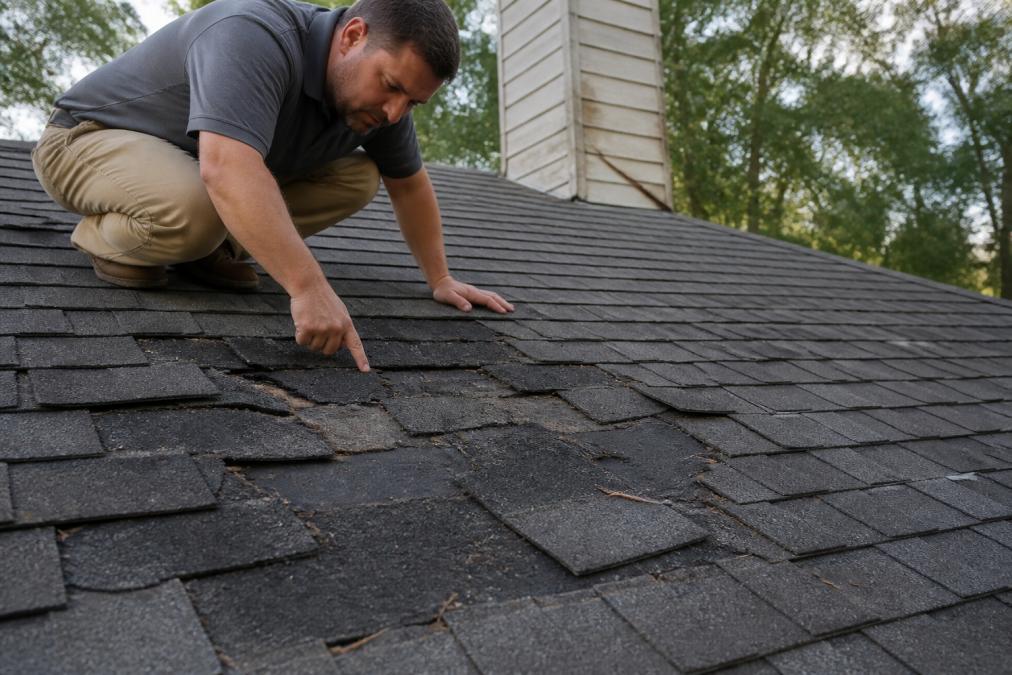
Missing shingles are the clearest sign of roof trouble: even one exposes the underlayment and roof deck to water infiltration. After storms, check the ground and gutters for displaced shingles. One missing shingle is a quick fix; a field of them points to a larger problem.
2. Water Stains and Interior Leaks
Water stains on ceilings or walls mean water has already found a way in. Brown rings, bubbling paint, and discolored drywall are late-stage warnings, not early ones.
By the time a stain appears inside, moisture has typically been traveling through the roof assembly for a while. The U.S. Environmental Protection Agency's guide to moisture control notes that unchecked moisture leads to mold, rot, and structural damage. If you see a stain, trace it upward. The leak source is rarely directly above it.
3. Granule Loss in Gutters
Granule shedding is normal in small amounts, but heavy accumulation signals shingle deterioration. A light scattering after rain is expected; a thick layer of grit at downspout outlets means your shingles are wearing thin and will crack and curl faster.
4. Curling, Cracking, or Buckling Shingles
Curling edges, cracks, and buckling all point to a roof past its prime. Curling means the shingle is drying out; buckling often signals trapped moisture or poor attic ventilation; cracking can follow thermal cycling. Once shingles deform, they no longer shed water properly.
5. Damaged Flashing Around Chimneys and Vents
Flashing, the metal that seals joints around chimneys, vents, and skylights, is one of the most overlooked parts of a roof. When it pulls away, cracks, or corrodes, water slips past it, and these leaks are hard to find because water enters at the chimney and shows up far away. Rust, gaps, or lifted metal at any roof penetration warrants a check.
6. Sagging or Uneven Roof Deck
A sagging roof deck is a structural warning: the support underneath is failing, often from long-term water damage, trapped moisture, or an overloaded roof. Repair may no longer be enough, and a sagging deck raises the risk of collapse, so treat it as urgent and do not walk on it.
7. Moss, Mold, or Algae Growth
Moss holds moisture against the shingles and slowly breaks them down; algae streaks are mostly cosmetic, but moss is not. Moss roots lift shingle edges and trap water, accelerating rot in the roof deck. Keep trees trimmed and debris cleared to reduce how long moisture sits.
8. Roof Age and Lifespan
Roof lifespan depends on material, installation, and climate. If your roof is near the end of its expected service life, even minor damage is worth a professional look, since an aging roof is more likely to need replacement than repair.
Signs of Water Damage in Attic
Signs of water damage in the attic include dark stains on rafters, damp insulation, and a musty smell, which often show up before interior ceiling stains. Check the attic after a heavy rain for:
- Water stains or streaks on the underside of the roof deck
- Dark or compressed insulation, which loses its insulating value when wet
- Rust on nails and metal fasteners
- A musty odor, which points to moisture buildup
Poor attic ventilation traps moisture and damages the roof from the inside out. If your attic feels humid or smells damp, the roof may already be compromised.
How to Inspect Roof for Damage
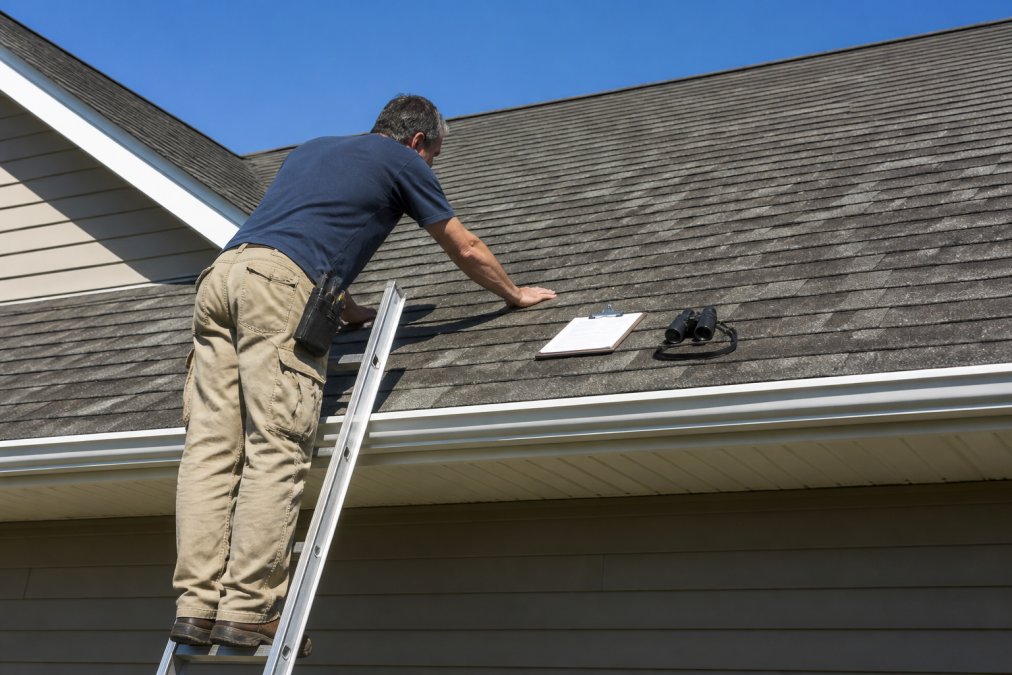
To inspect a roof for damage safely, start from the ground with binoculars, then check the attic. Only go on the roof if it is dry, stable, and you are comfortable with heights. A practical sequence:
- Walk the perimeter and scan for missing, curling, or discolored shingles
- Check gutters and downspouts for granule buildup and debris
- Look at flashing around chimneys, vents, and skylights for gaps or rust
- Inspect the attic for stains, damp insulation, and daylight coming through
- Check ceilings and walls inside for water stains
Roof Repair vs Replacement Cost: Which Makes Sense?
Roof repair vs replacement cost is the decision most homeowners face, and the answer depends on age, extent of damage, and how much life is left. Get an itemized estimate rather than a ballpark.
A useful frame is the 50% rule of thumb: if the repair cost approaches half the price of a new roof, and the roof is past roughly two-thirds of its expected service life, replacement usually wins on total cost of ownership, the repair bill plus the odds of repeat repairs.
Expected Service Life by Material
Lifespan varies by material, installation quality, attic ventilation, and climate, but these ranges are commonly cited by manufacturers and trade sources:
| Material | Typical Service Life | Notes |
|---|---|---|
| 3-tab asphalt shingles | 15-20 years | Entry-level; granule loss accelerates in UV-heavy climates |
| Architectural (dimensional) asphalt shingles | 25-30 years | Most common residential choice; thicker mat, better wind ratings |
| Metal (standing seam) | 40-70 years | Higher upfront cost; fasteners and sealants need periodic service |
| Clay or concrete tile | 50+ years | Underlayment typically fails long before the tile does |
| Wood shakes | 25-40 years | Requires more maintenance; fire and moisture sensitive |
| TPO / single-ply membrane (low-slope) | 15-25 years | Common on flat and low-slope residential sections |
If your roof is near the low end of its range and you face anything beyond a single isolated repair, replacement is usually the better financial call.
How Insurance Changes the Math
Insurance rarely pays for wear and tear, but it often covers sudden damage from a covered peril such as hail, wind, or a fallen limb:
- Wear and tear (aging shingles, granule loss, curling from sun exposure) is a homeowner expense, so the 50% rule and remaining lifespan drive the decision.
- Covered storm damage may fund a full replacement even on a younger roof, since insurers typically pay to restore the roof to its pre-loss condition with matching materials. If matching shingles are discontinued, some policies cover a full slope or full roof replacement rather than a patch.
Before authorizing any repair, check whether the damage is storm-related. Filing a claim after a completed repair can complicate or void reimbursement, because the insurer needs to document the damage in its pre-repair state.
The Decision Matrix
| Situation | Better Choice | Why |
|---|---|---|
| One or two damaged shingles on a roof under 10 years old | Repair | Isolated damage, most of the lifespan remains |
| Damaged flashing or a single leak on a mid-life roof | Repair | Localized problem, fixable without disturbing the field |
| Widespread granule loss or shingles curling across multiple slopes | Replacement | Shingles are worn across the roof, not in one spot |
| Sagging roof deck | Replacement | Structural failure, not surface damage; repair will not restore integrity |
| Roof past 75% of expected lifespan with any significant damage | Replacement | Repeated repairs will erode the cost advantage |
| Storm damage with matching shingles discontinued | Replacement (often insurance-funded) | Patch will not match; insurer may cover full slope |
A common pattern is homeowners who spend on three or four small repairs over five years and still end up replacing the roof, having paid twice. If you are on your second repair in two years, get a full replacement quote before authorizing a third.
The U.S. Federal Emergency Management Agency's guidance on roof damage recommends assessing the full roof, not just the visible damage, before deciding, a point that matters most when storm damage and age-related wear overlap on the same roof.
DIY vs. Professional Roof Assessment
DIY assessment is fine for spotting obvious signs from the ground; professional assessment confirms the cause and the fix. Here is how to inspect safely and where the homeowner's ability to diagnose ends.
What You Can Safely Check Yourself
Staying on the ground eliminates the two biggest risks: falls and causing new damage by walking on compromised shingles. From ground level and inside the attic, you can verify a surprising amount:
- Perimeter scan with binoculars. Look for missing, curling, cracked, or discolored shingles, and any obvious sag along the ridge line.
- Gutter and downspout check. After a rain, look for granule buildup, shingle fragments, or debris.
- Flashing visual check. From the ground or a ladder on stable, level ground, look at chimney, vent, and skylight flashing for rust, gaps, or lifted metal.
- Attic inspection. With a flashlight, check the underside of the roof deck for water stains, dark streaks, rusted nails, damp insulation, and daylight.
- Interior check. Look at top-floor ceilings and walls for brown rings, bubbling paint, or discoloration.
What You Cannot Verify From the Ground
Even a careful ground inspection cannot confirm:
- Deck condition. Soft or rotted sheathing is only reliably found by walking the roof and probing it.
- Underlayment integrity. The layer beneath the shingles can fail while the shingles above still look intact.
- True leak source. Water travels along rafters and decking, so the stain inside rarely sits directly under the entry point.
- Flashing detail at penetrations. Properly sealed step flashing and counterflashing require close inspection at the joint.
- Attic ventilation adequacy. Intake and exhaust balance is a calculation, not a visual guess.
If any of these are in question, call a professional, the diagnosis cannot be made safely from the ground.
Safety-First Inspection Protocol
If you go on the roof, follow this sequence and stop at any step where conditions are not ideal:
- Check the weather and surface. Never walk a roof that is wet, icy, or covered in debris. Wait for a dry, calm day.
- Check your footwear and footing. Soft-soled shoes with grip; stay at least 10 feet from power lines.
- Use the right ladder. A ladder rated for your weight, on level ground, extending at least 3 feet above the roof edge, and secured. The U.S. Occupational Safety and Health Administration's ladder safety guidance applies to homeowners too, three points of contact, no overreaching (osha.gov).
- Stay off steep pitches. Anything steeper than a moderate walkable pitch is not a DIY surface; use binoculars instead.
- Do not walk a sagging roof. If the deck looks or feels soft, get off immediately and call a professional.
- Never go up alone. Have someone on the ground who can call for help.
What a Professional Assessment Adds
A trained inspector walks the roof, probes the deck, checks flashing at each penetration, evaluates attic ventilation, and traces leak paths from the inside out. They can also tell you whether the damage is consistent with a single storm event, which matters if you may file an insurance claim, versus gradual wear and tear.
SunPro Contracting LLC provides itemized estimates before work begins, so you know exactly what you are paying for.
Insurance Claim Indicators and Climate-Specific Warning Signs
Insurance claim indicators and climate-specific signs both matter when deciding whether to file a claim or pay out of pocket.
Insurance claim indicators often include:
- Sudden damage from a single storm event, such as hail or high wind
- Missing shingles concentrated on one side of the roof
- Damage a neighbor's roof also shows after the same storm
- Interior damage that appeared right after severe weather
Document everything with dated photos before any repair begins.
Climate-specific warning signs vary by region. In hot, humid climates, expect algae streaks, moss, and moisture buildup. In freezing winters, ice damming is a major cause of water infiltration, where melting snow refreezes at the roof edge and backs water under the shingles. Wind-driven rain stresses flashing and roof valleys. Match your inspection to your climate.
Preventative Maintenance Checklist
Preventative maintenance keeps a small issue from becoming a claim. A little attention twice a year goes a long way.
- Inspect the roof from the ground with binoculars each spring and fall
- Clear leaves and debris from gutters and downspouts
- Trim tree branches back from the roof surface
- Check flashing around chimneys, vents, and skylights for gaps
- Look in the attic after heavy rain for stains or damp insulation
- Confirm attic ventilation is working to prevent moisture buildup
- Address any single damaged shingle before it spreads
- Schedule a professional inspection if your roof is near the end of its lifespan
SunPro Contracting LLC offers maintenance alongside repairs and installations, the simplest way to stay ahead of problems. Catching issues during a routine check costs far less than an emergency call after a storm.
Roof problems rarely stay small, and the signs are usually there long before the damage is severe. Whether you need a quick repair, a full replacement, or an honest assessment of what your roof actually needs, SunPro Contracting LLC brings over 100 years of combined experience to every job, with expertise across tile, shingles, and TPO roofing. We provide fast, budget-conscious service and itemized estimates so there are no surprises. Contact Us Today to schedule your roof inspection and protect your home before the next storm.
Frequently Asked Questions
What are five signs that my roof needs to be replaced?
Five signs that point to replacement rather than repair: shingles that are curling, cracking, or missing across large sections; granules collecting in gutters; water stains on ceilings or walls; a sagging roof deck; and a roof that has reached or passed its expected lifespan. If you see several of these at once, a full replacement is often more cost-effective than repeated repairs.
How do I know if my roof needs repair or replacement?
The decision usually comes down to age, extent of damage, and cost. If your roof is under 15 years old and damage is isolated, repair is often the better choice. If it is over 20 years old, has widespread shingle deterioration, or has already been patched multiple times, replacement typically makes more financial sense. A professional inspection can confirm which path fits your situation.
What is the average lifespan of a roof?
Asphalt shingles typically last 15 to 30 years depending on quality and climate. Tile roofs can last 50 years or more, and metal roofs often reach 40 to 70 years. In Central Florida, intense sun, heavy rain, and occasional hail can shorten these ranges. Regular inspections and preventative maintenance help you get the full lifespan from your roofing materials.
Can a roof be repaired if it is leaking?
Yes, many leaks can be repaired if caught early. A single leak around flashing, a vent, or a damaged shingle is usually a straightforward fix. However, if the leak has been ongoing and caused rot in the roof deck or attic framing, the repair scope grows. The sooner you address a leak, the more likely a targeted repair will solve it.
How often should I have my roof inspected for damage?
Schedule a professional roof inspection at least once a year, and after any major storm. If your roof is over 15 years old, twice a year is safer. Homeowners can also do a visual check from the ground each season, looking for missing shingles, granules in gutters, and signs of water damage in the attic.