 ultimate-guide
Residential Roof Maintenance Tips: Florida Guide
Table of Contents
- Why Roof Maintenance Matters in Florida
- Signs You Need Roof Repair
- Routine Roof Inspections and Debris Removal
- Preventative Roof Maintenance Schedule
- Material-Specific Roof Care
- Roof Inspection Checklist for Homeowners
- Post-Storm Damage Assessment and Insurance Compliance
- Common Mistakes to Avoid
- Frequently Asked Questions
Last Updated: September 23, 2026
Why Roof Maintenance Matters in Florida
Florida's subtropical climate creates unique challenges for residential roofs. High humidity, intense sun exposure, salt air corrosion near coastal areas, and frequent heavy rainfall accelerate wear on roofing materials. The threat of hurricane season adds another layer of urgency, a roof in poor condition can fail catastrophically when wind speeds exceed 100 mph.
At SunPro Contracting LLC, we understand how roof maintenance and preventative care can help homeowners avoid costly emergency repairs. A roof that receives regular attention lasts significantly longer and performs far better when severe weather arrives. The difference between a well-maintained roof and a neglected one often determines whether your home stays protected or suffers water damage during a storm.
Routine roof maintenance isn't optional in this climate. It's the foundation of protecting your property, maintaining your insurance coverage, and avoiding costly emergency repairs when a storm hits.
Signs You Need Roof Repair
Visual Indicators of Roof Damage
Your roof sends clear signals when it's in trouble. The key is knowing what to look for before minor issues become major problems.
Curling or missing shingles are the most obvious warning signs. Asphalt shingles curl at the edges when they're reaching the end of their lifespan, typically after 15-20 years of exposure to Florida's sun. Missing shingles expose the underlayment beneath, which can't handle direct water exposure. One missing shingle during a heavy rain can lead to water intrusion in your attic within hours.
Granule loss is another critical indicator. Shingles lose their protective granule coating over time, especially in Florida's harsh sun. If you notice granules accumulating in your gutters or a bald spot appearing on shingles, the protective layer is deteriorating. Without granules, shingles lose UV protection and begin breaking down rapidly.
Visible rust spots on metal roofing or flashing indicate corrosion has started. In coastal areas where salt air is present, rust spreads quickly. Discolored patches, staining, or algae growth on tile or shingle roofs suggest moisture is accumulating beneath the surface.
Sagging roof lines are a structural red flag. If your roof dips between supports or appears wavy, the underlying structure may be compromised. This requires immediate professional assessment.
Interior Signs of Water Intrusion
Water damage inside your home often appears before you notice exterior problems. Check your attic regularly for water stains on the underside of roof decking, wet insulation, or mold growth. These signs mean water is actively penetrating your roof system.
Ceiling stains or peeling paint in upper-level rooms indicate water is dripping through. Discoloration typically appears in a concentrated area directly below the leak, though water can travel along rafters before dripping, making the actual leak location different from where stains appear.
Musty odors in your attic or upper rooms suggest moisture accumulation and potential mold growth. Mold thrives in Florida's humid environment and can spread rapidly if the moisture source isn't addressed.
Routine Roof Inspections and Debris Removal
Bi-Annual Inspection Schedule
A bi-annual inspection schedule keeps problems small. Inspect your roof twice yearly: once in spring after winter weather and again in late summer before hurricane season. This timing catches damage early and ensures your roof is ready for the most severe weather.
During inspections, walk the perimeter of your roof if you can do so safely, or view from the ground with binoculars. Look for the visual indicators mentioned above. Pay special attention to roof flashing around chimneys, vents, and skylights, these are common leak points.
Document what you find with photos. If you spot damage, get a professional assessment before attempting repairs. Some damage may be covered by your homeowners insurance, especially if it's storm-related.
Clearing Gutters and Downspouts
Clogged gutters cause more roof damage than most homeowners realize. When gutters back up with leaves and debris, water pools on your roof instead of flowing away. Standing water accelerates deterioration and creates ideal conditions for mold and mildew growth.
Clean gutters at least twice yearly, ideally in spring and fall. Remove leaves, pine needles, and debris by hand or with a gutter scoop. Flush the gutters with water to clear remaining sediment. Check that downspouts direct water at least 4-6 feet away from your foundation.
Gutter guards reduce maintenance frequency but aren't foolproof in Florida. Debris still accumulates, and guards can trap moisture against the gutter itself. If you install guards, inspect gutters more frequently rather than less.
Removing Debris and Leaves
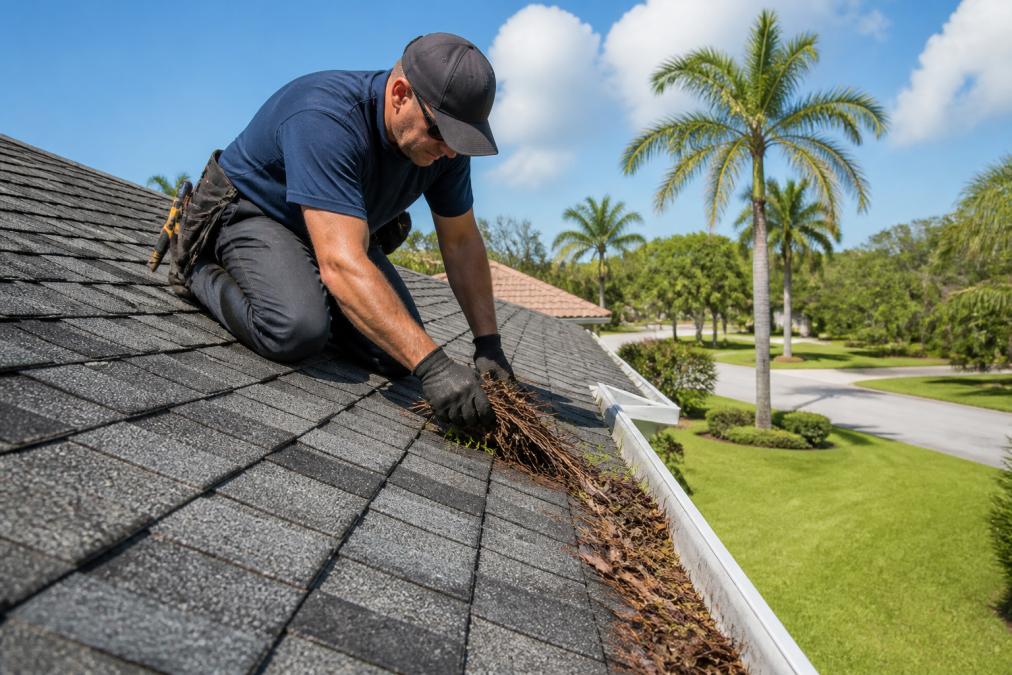
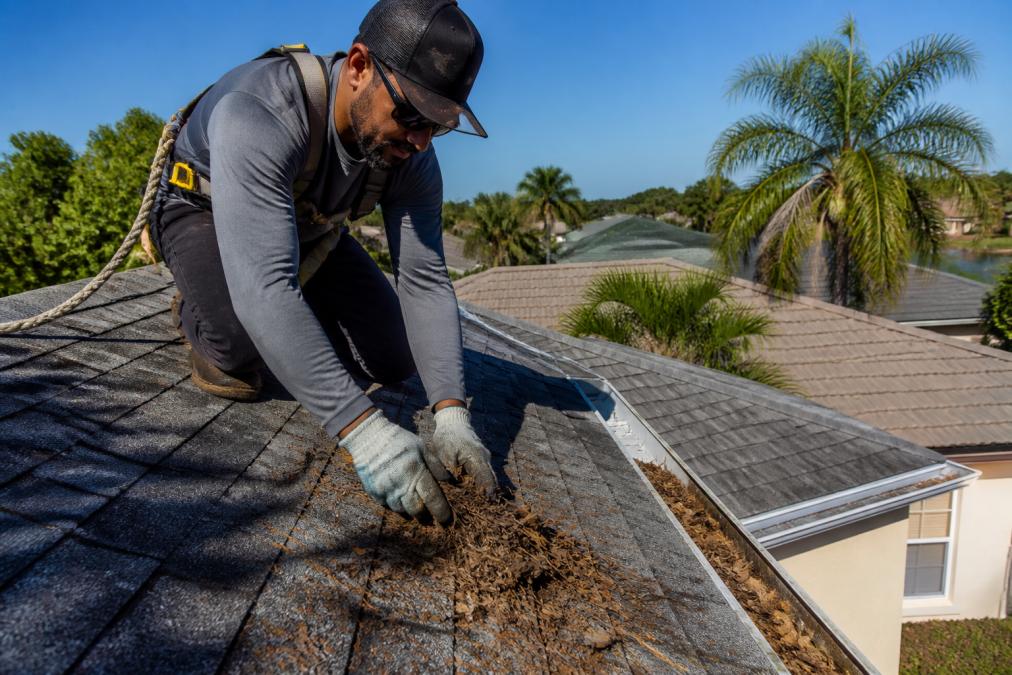
Debris accumulation on your roof is more than a cosmetic issue. Leaves, branches, and pine needles trap moisture against shingles and tile, creating conditions for mold and mildew growth. Debris also blocks water flow, causing pooling.
Remove debris carefully to avoid damaging shingles or tile. Use a soft brush or leaf blower on low setting rather than pressure washing, which can dislodge granules and damage roofing material. Never walk on a wet roof, the risk of slipping and injury is too high.
Preventative Roof Maintenance Schedule
Spring and Summer Tasks
Spring is the ideal time to address winter damage. Check for loose or missing shingles, inspect flashing for gaps, and verify that gutters are clear. Spring weather is generally mild, making it safer to work on your roof.
Summer maintenance focuses on ventilation and algae prevention. Ensure your attic ventilation is unobstructed, poor ventilation traps heat and moisture, accelerating roof deterioration. If algae growth appears on your roof, clean it promptly. Algae retains moisture and can spread across your entire roof system if left unchecked.
Fall and Winter Preparation
Fall is critical for hurricane season readiness. Trim overhanging tree branches that could fall on your roof during storms. Branches should be at least 6-10 feet away from your roofline. Remove debris from gutters and downspouts to ensure water flows freely during heavy rain.
Inspect roof flashing, especially around chimneys and vents. Caulk any gaps or separations you find.
Hurricane Season Readiness
Preventative maintenance before hurricane season isn't just about comfort, it's about survival. A roof that's been properly maintained can withstand wind speeds that would tear apart a neglected roof.
Material-Specific Roof Care
Tile Roofing Maintenance
Tile roofing is popular in Florida and lasts 50+ years with proper maintenance. However, tile requires different care than asphalt shingles.
Asphalt Shingle Care
Asphalt shingles dominate residential roofing in Florida. They're affordable and widely available, but Florida's climate shortens their lifespan compared to cooler regions.
Metal Roofing Upkeep
Metal roofing is gaining popularity in Florida due to its durability and hurricane resistance. Metal roofs can last 40-60 years with minimal maintenance.
Roof Inspection Checklist for Homeowners
Safety Protocols for DIY Inspections
Never attempt roof inspection on a wet roof or in high winds. Wet surfaces are slippery, and wind can knock you off balance. Inspect only when weather is clear and dry.
Step-by-Step Inspection Process
Start from the ground. Use binoculars to examine the roofline, looking for obvious damage, sagging, or visible deterioration. Check gutters and downspouts for debris and proper drainage.
Post-Storm Damage Assessment and Insurance Compliance
Documenting Storm Damage
After severe weather, photograph all visible damage immediately. Take wide shots showing the overall condition and close-ups of specific damage areas. Document damage to gutters, downspouts, flashing, and siding as well as the roof itself.
Insurance-Specific Maintenance Requirements
Your homeowners insurance policy likely includes maintenance requirements. Most policies require that you maintain your roof in good condition. Neglecting maintenance can void your coverage if damage occurs.
Common Mistakes to Avoid
The biggest mistake homeowners make is waiting until problems are visible to address roof maintenance tips and preventative care. By the time you notice damage, significant deterioration has often occurred. Preventative maintenance catches problems early when repairs are simple and inexpensive.
Frequently Asked Questions
What is the 25% rule for roof replacement in Florida?
The 25% rule means that if damage affects 25% or more of your roof's surface, most insurance policies and contractors recommend full replacement rather than repair. This threshold protects your long-term investment, as patching damaged sections alongside newer material creates uneven wear and potential future leaks. Check your insurance policy for specific coverage details.
How often should you inspect your residential roof maintenance in this climate?
Perform bi-annual inspections: once in spring after winter weather and once in fall before hurricane season. After major storms, inspect immediately for damage. Regular inspections catch early signs of wear, mold growth, and water intrusion before they become costly problems. Document findings with photos for insurance purposes.
What are the most common signs you need roof repair after a storm?
Look for missing or curled shingles, exposed underlayment, granule loss, dented metal flashing, and water stains on ceilings or attic insulation. Check gutters for shingle debris. Sagging roof lines indicate structural damage. Salt air corrosion appears as rust spots on metal components. Interior water intrusion is a critical sign requiring immediate professional assessment.
Does regular roof maintenance help with insurance eligibility?
Yes. Many insurers require documented preventative maintenance to maintain coverage. Regular inspections, gutter cleaning, and debris removal demonstrate responsible homeownership. Keep records of maintenance activities and professional assessments. Some insurers offer premium discounts for homes with maintained roofs and proper ventilation, protecting both your roof lifespan and coverage.
What specific materials offer the best high-wind resistance for roofs?
Metal roofing and concrete tile both withstand high winds better than asphalt shingles. Metal roofs resist uplift and impact damage, while tile's weight and interlocking design provide excellent wind resistance. Impact-rated shingles offer improved performance but cost more. Your choice depends on wind exposure, budget, and aesthetic preference. Professional assessment ensures your material matches local wind conditions.
How do I identify early signs of water intrusion in my roof?
Inside, look for water stains on ceilings or upper walls, especially after rain or storms. Check attics for damp insulation, mold growth, or moisture buildup. Peeling paint or discoloration on interior walls can indicate hidden water damage. Outside, examine roof flashing for gaps or separation, and check for missing caulk around penetrations. Address water intrusion immediately to prevent structural damage and mold.