 How-to
Can You Install TPO Over an Existing Roof? What to Know
Last Updated: November 14, 2026
Quick Summary
Yes, in many cases a TPO over existing roof recover works, placing a new TPO membrane over the old roof instead of tearing it off. It works only when the old roof is dry, structurally sound, and flat enough to support the added weight.
- A recover requires a structurally sound deck, dry substrate, stable surface, and proper slope.
- Installing over a wet roof traps water, rusts fasteners, rots the deck, and voids manufacturer requirements.
- One dry, sound existing layer suits a recover; two or more layers or wet insulation call for tear-off.
- On metal roofs, fasten cover board and fill flutes so fasteners reach the deck or a structural member.
- Confirm local code limits on roof layers and get the manufacturer's written approval to keep the warranty valid.
Table of Contents
- TPO Over an Existing Roof: When a Recover Works
- What the Existing Roof Must Meet First
- Existing Roof Inspection Before TPO Installation
- TPO Roof Tear-Off vs Recover: How to Decide
- TPO Over EPDM Roof: What Changes
- TPO Over Metal Roof: Prep and Fastening Rules
- Building Codes and Manufacturer Warranties for a TPO Overlay
- Schedule a Roof Inspection Before You Commit to a Recover
- Frequently Asked Questions
TPO Over an Existing Roof: When a Recover Works
Can you install TPO over an existing roof? Yes, in many cases a TPO over existing roof recover works.
This guide walks through the checks that decide whether a recover is safe or a waste of money.
But first, here's what most guides get wrong: they treat a recover as a simple money-saver. It isn't.
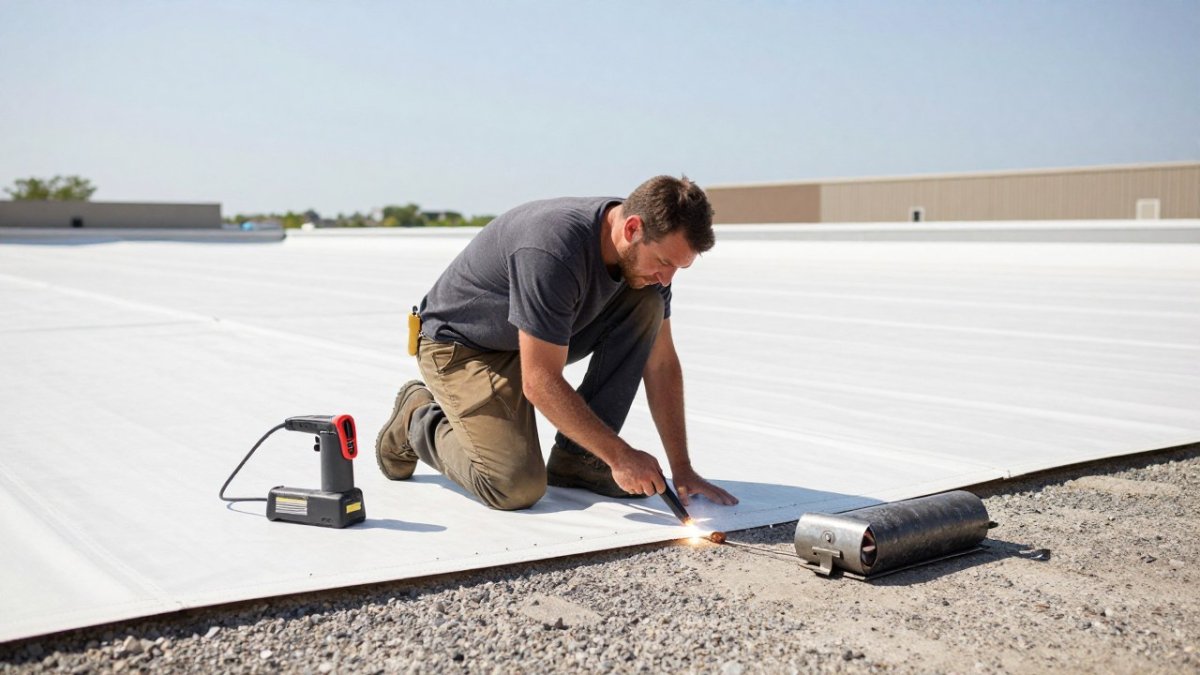
TPO membrane is a single-ply, heat-welded sheet used on flat and low-slope roofs.
What the Existing Roof Must Meet First
A recover only works when the old roof passes three tests: it must be structurally sound, completely dry, and suitable as a base layer. Fail any one, and the overlay becomes a problem you inherit later.
The load matters most. A new TPO layer adds weight to the roof deck, and that deck has a load capacity it cannot exceed. Older buildings sometimes sit near that limit already.
Here is what the existing roof system must meet before anyone rolls out membrane:
- Structural integrity: no sagging, soft spots, or cracked deck panels
- Load capacity: the deck must carry the added membrane and any new insulation
- Dry substrate: no trapped moisture in the old layers
Watch out: installing over a wet roof traps water between layers. That water rusts fasteners, rots the deck, and voids most manufacturer requirements for the new membrane.
Existing Roof Inspection Before TPO Installation
Before any TPO installation, a roof inspection is an important step in planning the project.
We start with a commercial roof inspection checklist so nothing gets skipped, from drainage to flashing. But the checklist is only useful if you know what the readings mean. The section below explains how a moisture survey actually works and how the findings drive the recover-or-tear-off call.
Moisture Survey and Deck Soundness Checks
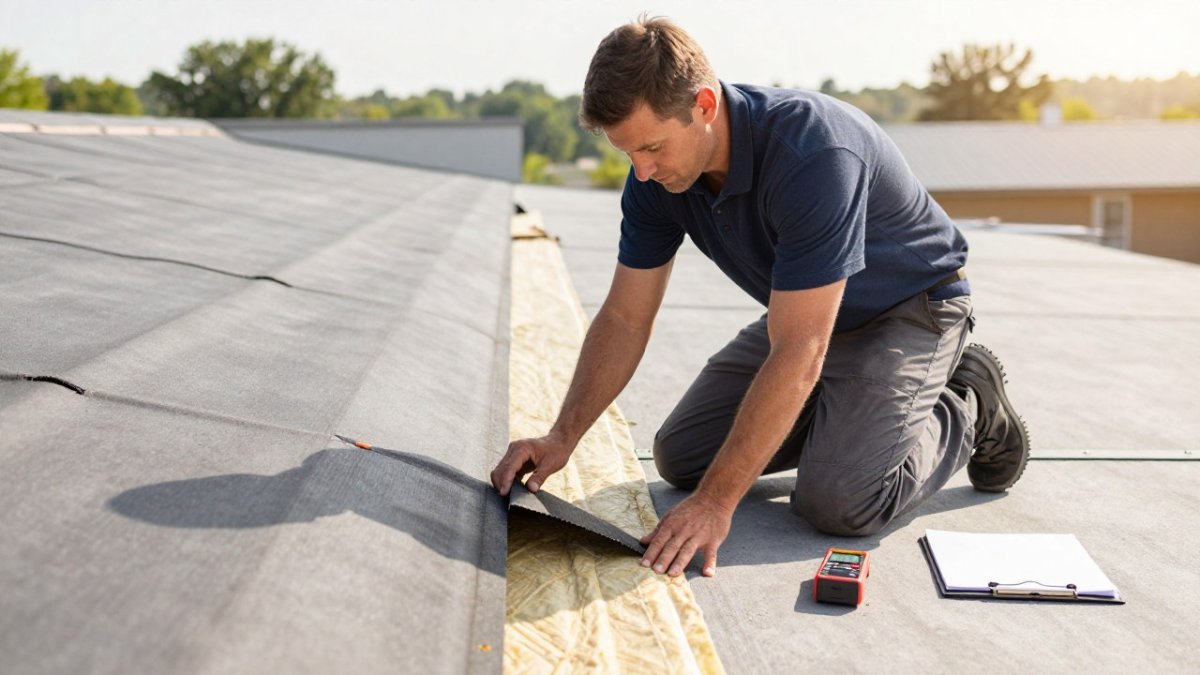
A moisture survey finds water you cannot see from above. The inspector uses a moisture meter and, on larger roofs, infrared scanning to map wet insulation. Wet areas get marked and cut out.
Common moisture survey methods differ, and each one tells you something different:
- Capacitance and impedance meters: handheld meters pressed against the membrane. They read dielectric differences and flag likely wet zones fast. They are a screening tool, not a verdict, metal flashings, fasteners, and wet surface debris can produce false positives.
- Infrared thermography: an infrared camera reads surface temperature differences after sunset, when wet insulation stays warmer longer than dry insulation. It maps the wet area across a large roof quickly. It works best on a clear night with low wind and a dry surface, and it can miss shallow moisture or areas shadowed by equipment.
- Nuclear moisture gauges: these measure hydrogen density in the roof layers and give a direct reading at a single point. They are slower and require handling and calibration, so they are usually used to confirm what a meter or infrared scan flagged.
How Survey Findings Change the Decision
The survey is not just a pass/fail test. It produces a map, and that map points to one of three outcomes:
- Isolated wet spots: cut out and replace the wet insulation, patch the deck if needed, then recover. This is the most common recover scenario on an otherwise sound roof.
- Widespread saturation or wet deck panels: the moisture has spread beyond what patching can fix. Tear-off is the honest answer, because a recover would seal the water in.
- No moisture but a failing surface: if the membrane is blistered, split, or poorly adhered but the insulation and deck are dry, the recover may still work after the loose material is removed and the surface is prepped.
Watch out: a moisture meter reading alone is not proof. Without core confirmation, a contractor can quote a recover on a roof that is wet under the surface, and the trapped water will rust fasteners and rot the deck within a few seasons.
The man is American.
TPO Roof Tear-Off vs Recover: How to Decide
The choice between a TPO roof tear-off and a recover comes down to roof condition and how many layers already exist.
A general rule of thumb is:
| Situation | Better Choice | Why |
|---|---|---|
| One dry, sound existing layer | Recover | Saves time and landfill cost |
| Wet insulation or soft deck | Tear-off | Trapped water must go |
| Two or more existing layers | Tear-off | Codes and weight limits |
| Active leaks at seams | Tear-off | Fix the source, not the surface |
If you are weighing the cost side, our commercial roof replacement cost guide breaks down what a full tear-off and rebuild involves.
A common mistake is choosing a recover to dodge repair costs. That usually backfires. The old problems stay, and the new membrane hides them until they get worse.
TPO Over EPDM Roof: What Changes
Installing TPO over an EPDM roof is possible, but EPDM needs special prep. EPDM is a rubber membrane, and TPO is a thermoplastic.
The old EPDM must be clean, dry, and firmly attached. Any loose or blistered rubber gets cut out and patched first.
- Remove all loose EPDM and old adhesive
- Clean the surface to remove dirt and chalk
- Add a cover board or separation layer where needed
- Mechanically attach or fully adhere the new TPO
Watch out: some adhesives do not bond well to aged EPDM. Check the membrane maker's published rules before assuming a glued-down recover will hold.
TPO Over Metal Roof: Prep and Fastening Rules
A metal roof can take a TPO overlay, but the fastening method changes. Standing-seam and corrugated metal are uneven, so the new membrane needs a flat base.
A typical prep sequence for this type of overlay includes the following steps:
- Fasten cover board over the metal to create a flat surface
- Fill the flutes so fasteners hit solid material
- Secure the TPO with mechanically attached fasteners or adhesive
- Heat-weld all seams and seal every penetration
Fasteners must reach the deck or a structural member, not just the thin metal skin. If they don't, wind uplift pulls the membrane loose. On metal, surface preparation and fastener placement decide whether the overlay holds.
Building Codes and Manufacturer Warranties for a TPO Overlay
Two approvals commonly decide a recover: the local building codes and the membrane maker's warranty terms. The difference is that code approval is a legal minimum and warranty approval is a contractual condition, you need both, and they are verified in different ways.
What the Building Code Actually Governs
Most jurisdictions adopt a model code, the International Building Code (IBC) or the International Residential Code (IRC), often with local amendments. For a commercial recover, the provisions that matter most are:
- Number of roof coverings: the code generally limits how many layers a roof may carry. A common limit is two, but the exact count and how existing layers are counted depend on the adopted code edition and local amendments. A roof already at the limit cannot take another layer without a tear-off.
- Fire classification: the roof covering assembly must meet the required fire classification for the occupancy and construction type. A recover must use a listed assembly, and adding a layer can change the classification.
- Wind resistance: the code sets minimum wind-uplift resistance for the roof covering, and the attachment method, adhered, mechanically fastened, or ballasted, must be designed to meet it. On a recover, the fasteners often have to reach the deck through the existing layers, which affects the design.
- Permits and inspections: many jurisdictions require a permit for a recover and an inspection before the new membrane is closed up. Skipping the permit can void insurance and create a disclosure problem at sale.
Before you sign, confirm:
- The local code allows an overlay on this roof
- The existing layers stay within the limit
- The membrane maker approves the substrate
- The installer is approved to keep the warranty valid
How to Verify Manufacturer Approval
Warranty approval is not a phone call to the manufacturer's general line. It is a documented chain:
- Published specifications: the membrane maker publishes a technical manual or specification sheet listing approved substrates, attachment methods, and any required separation layers or cover boards. The installer should be able to point to the exact page that covers your existing roof type.
- Approved applicator status: many manufacturers warrant their membrane only when installed by an approved or licensed applicator. Ask for the installer's approval letter or listing, and confirm it is current.
- Project-specific review: for unusual substrates or large roofs, the manufacturer may require a project review before issuing a warranty. That review can add time to the schedule.
- Warranty exclusions: read the exclusions. Trapped moisture, inadequate deck attachment, and ponding water are commonly excluded, which means a recover over a wet roof may leave you with a membrane and no coverage.
Watch out: a manufacturer's general product warranty is not the same as a system warranty for a recover. If the installer cannot produce the manufacturer's written approval for your specific existing roof, assume the warranty will not cover the overlay.
Warranties live or die on the installer. Our guide to hiring reliable roofing contractors covers the questions that protect your coverage.
Schedule a Roof Inspection Before You Commit to a Recover
A recover can save real money, but only on the right roof. The only way to know is a proper inspection that checks moisture, deck strength, and code limits before anyone quotes a price.
At SunPro Contracting LLC, we bring over 100 years of combined experience to every roof we assess. If you are also exploring coating options, you can review the roof coatings we offer as an alternative to a full overlay.
Don't guess on a roof this important. Contact us today for a consultation on your roofing needs.
A recover is only as good as the roof beneath it.
Frequently Asked Questions
Can you install TPO over an existing roof?
Yes, in many cases a TPO membrane can be installed over an existing roof as a recover, but only when the old system is dry, stable, and code-compliant. The existing roof must be inspected for moisture, deck damage, and loose material first. If wet insulation or a failing substrate is found, those sections must be removed before any TPO goes down. A recover is not automatic, and the decision should follow an inspection report.
Can TPO roofing be installed over EPDM?
TPO over EPDM roof projects are possible, but they need careful prep. The EPDM surface must be cleaned and any loose seams or blisters repaired or cut out. Many manufacturers require a separation layer or specific fastener pattern over EPDM because the two membranes behave differently. Check the TPO manufacturer's written requirements before the crew starts, since some systems limit or void coverage over an existing rubber membrane.
Does installing TPO over an existing roof affect the warranty?
It can. Most TPO manufacturers issue full-system warranties only when the assembly matches their published specifications, including the number of existing layers, fastener type, and insulation. Some limit coverage when a recover is done over an unknown or aged substrate. Ask for the warranty terms in writing before signing, and confirm the contractor is an approved installer for that membrane brand.
When should an existing roof be torn off instead of covered with TPO?
A tear-off is usually the right call when the existing roof has wet insulation, saturated decking, multiple failed layers, or structural sagging. It is also required when local building codes cap the number of roof layers or when the manufacturer will not warrant a recover. If ponding water or active leaks have gone unaddressed, removing the old system lets the crew find and fix the source instead of trapping it under new membrane.