 How-to
5 Steps to File a Roof Insurance Claim Successfully
Quick Summary
To file a roof insurance claim, first review your policy and deductible, then document the damage with photos and dates. Prevent further harm with temporary repairs, contact your insurer promptly, and submit your evidence in writing to evaluate the settlement.
- Check your policy's dwelling coverage, windstorm deductible, exclusions, and claim deadline before filing.
- Know whether your policy pays actual cash value or replacement cost, since older roofs may pay much less under ACV.
- Photograph the roof from the ground and close up, noting the storm date and interior ceiling stains.
- Keep receipts for temporary repairs, because insurers often reimburse reasonable emergency work.
- Compare the adjuster's estimate line by line against your contractor's estimate before accepting a settlement.
Table of Contents
- Step 1: Review Your Homeowners Insurance Policy and Deductible
- Step 2: Inspect the Roof and Document the Damage
- Step 3: Prevent Further Damage With Temporary Repairs
- Step 4: Contact Your Insurer and Start the Roof Insurance Claim Process
- Step 5: Submit Documentation and Evaluate the Settlement
- How Filing a Roof Claim Affects Your Premiums and When It Is Worth It
- Booking Your Roof Inspection With SunPro Contracting
- Frequently Asked Questions
5 Steps to File a Roof Insurance Claim Successfully
Last Updated: November 19, 2026
Step 1: Review Your Homeowners Insurance Policy and Deductible
Filing a roof insurance claim starts with knowing what your policy actually covers. Many homeowners find out too late that their policy has a higher deductible than they expected. Read your declarations page first, then check the sections on dwelling coverage and exclusions.
Checking Your Policy Type and Coverage
Most homeowners policies cover sudden damage from wind, hail, and falling objects. They often exclude wear, neglect, and gradual leaks. Look for these items in your policy:
- Dwelling coverage: the limit that pays to repair or rebuild the structure, including the roof
- Windstorm or hurricane deductible: often a percentage of dwelling coverage rather than a flat dollar amount
- Exclusions: wear and tear, poor maintenance, and flood damage are common ones
If you cannot find these terms, call your insurer and ask for a copy of your full policy.
Actual Cash Value Versus Replacement Cost
Your policy may pay either actual cash value (ACV) or replacement cost value (RCV). The difference matters a lot for roof claims.
- Actual cash value pays the replacement cost minus depreciation for the roof's age and condition.
- Replacement cost value pays the full cost to replace the roof with similar materials, usually after you complete the repair.
A 15-year-old shingle roof under an ACV policy may pay much less than the cost of a new roof.
The article points out that policy type and deductible structure determine how much a roof claim pays, so these are the key terms to check first.
| Policy term | What it means | Why it matters |
|---|---|---|
| Dwelling coverage | Limit that pays to repair or rebuild the structure | Covers the roof itself |
| Windstorm deductible | Often a percentage of dwelling coverage | Can be higher than a flat amount |
| Actual cash value | Replacement cost minus depreciation | Older roofs may pay much less |
| Replacement cost value | Full cost of similar materials | Usually paid after repair is complete |
| Exclusions | Wear, poor maintenance, flood damage | Can block a claim entirely |
Step 2: Inspect the Roof and Document the Damage
Good documentation makes or breaks a roof insurance claim. Adjusters rely on photos, notes, and dates to decide what is covered.
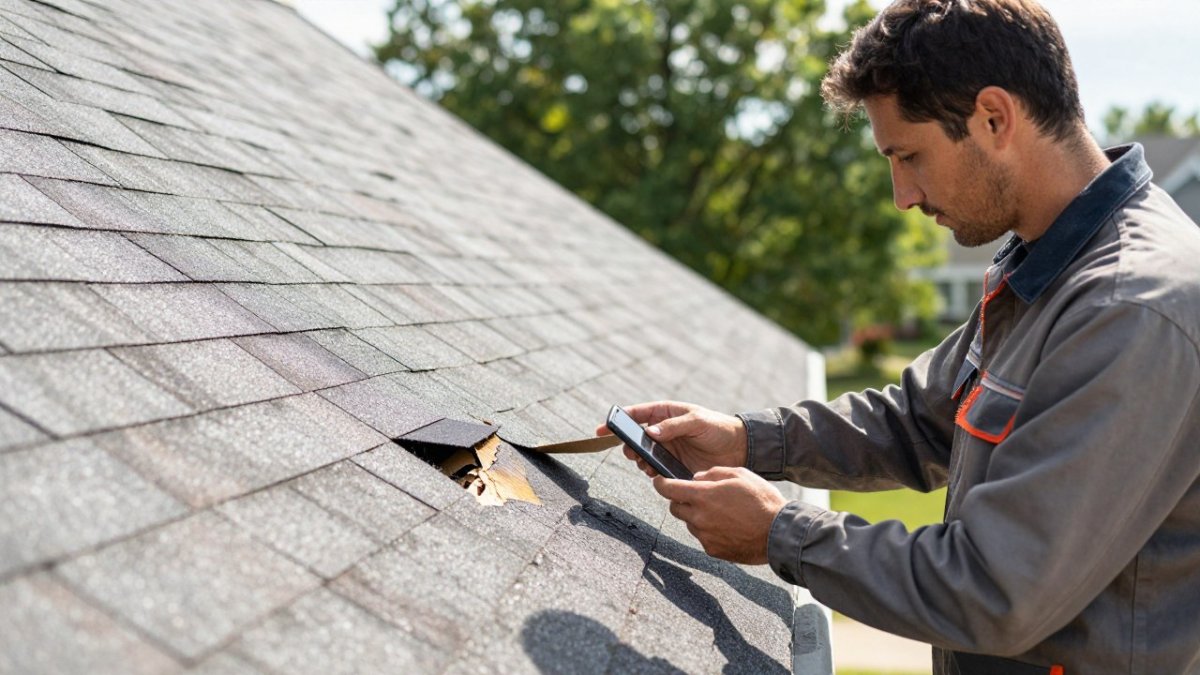
!A homeowner in a work jacket photographing shingle damage on a sloped roof in bright daylight after a storm, with a smartphone held at chest height
Start by photographing the roof and the property from the ground.
Use this checklist to gather your evidence:
- Photos of each damaged area, with a wide shot and a close-up
- Date and time of the storm or damaging event
- Written notes describing each problem you see
Do not climb onto a steep or wet roof. A professional inspection is safer and often more thorough.
Step 3: Prevent Further Damage With Temporary Repairs
Your policy requires you to prevent further damage once a loss occurs. Insurers often reimburse reasonable emergency repairs, so keep every receipt.
Cover exposed areas with a tarp or temporary sealant to stop water from getting in.
Avoid permanent repairs until the adjuster has seen the damage.
Watch out: Some insurers may deny claims if the homeowner did not take reasonable steps to limit damage.
Step 4: Contact Your Insurer and Start the Roof Insurance Claim Process
Call your insurer as soon as you notice storm damage. Many policies require prompt notice, and waiting can weaken your claim. Ask for a claim number and write down the name of the representative you speak with.
Explain what happened in plain terms. Give the date of loss, the cause of the damage, and a summary of what you found. Then schedule an adjuster inspection.
What Not to Say When Filing an Insurance Claim
Your words during the call can affect how the claim is handled. Stick to facts and avoid these common mistakes:
- Do not guess about the age of the roof or the exact cause of damage
- Do not say the damage is minor if you have not had it inspected
- Do not sign a settlement or release before reviewing the full estimate
If you are unsure how to answer a question, say you will follow up in writing. Then do so.
Step 5: Submit Documentation and Evaluate the Settlement
Send your documents to the adjuster in writing and keep copies of everything. Include your photos, inspection reports, repair estimates, and receipts for temporary repairs.
Reading the Adjuster's Estimate Line by Line
The adjuster's report is a scope of loss, not a lump sum. Compare it to your contractor's estimate on these line items, because they are where underpayment usually hides:
- Quantity of shingles or squares: adjusters sometimes measure only the visibly damaged slope rather than the full replacement area, which can leave matching slopes unpaid.
- Underlayment and ice-and-water shield: these are frequently omitted when the adjuster treats the job as a repair rather than a replacement.
- Flashing, vents, ridge caps, and drip edge: small line items that add up, and they are commonly missed on steep or complex roofs.
Recoverable Depreciation and the Second Check
Under a replacement cost policy, the insurer typically holds back depreciation and releases it after you submit proof the work was completed, usually a contractor's invoice and, in some cases, photos of the finished roof. Ask the adjuster in writing: what is the depreciation amount, what documentation releases it, and how long do you have to submit it. A common pattern is a deadline measured in months, and missing it can convert the withheld amount into a permanent loss.
If the Offer Is Low or the Claim Is Denied
A denial or a low offer is not the end of the claim. Work through this evidence-based sequence before escalating:
- Request the written denial or the estimate in writing. You are entitled to the specific policy language and reason relied on, not just a phone call.
- File a supplement. A supplement is a formal request to add missed or underpaid line items, backed by your contractor's photos, measurements, and code citations. This is the single most common way a low offer gets corrected.
- Ask for a re-inspection. A different adjuster or a supervisor visit, with your contractor present, often resolves measurement and scope disputes.
- Use the appraisal clause if your policy has one. Many policies provide for appraisal when you and the insurer disagree on the amount of loss; each side hires an appraiser, and a neutral umpire resolves differences. Read the clause before invoking it.
- Contact your state insurance department. Every state has a consumer services division that takes complaints and publishes complaint ratios; a documented complaint is a real lever and costs nothing.
- Consider a public adjuster or attorney. A public adjuster works for you and is typically paid a percentage of the settlement, so the math only works on larger claims. An attorney is usually the last step, and many work on contingency.
Watch out: do not cash a check marked "full and final" or sign a release while you still believe scope is missing, cashing it can be treated as acceptance of the settlement.
Contact a local roofing contractor for repair estimates so you can compare costs against the insurer's offer before you accept a settlement, and keep every version of the estimate you receive.
How Filing a Roof Claim Affects Your Premiums and When It Is Worth It
Most homeowners ask this question after the damage is already done, but the decision is better made before you pick up the phone. The honest answer is that there is no single national rule: premiums are regulated at the state level, and each carrier files its own rating plan, so the same claim can produce very different outcomes depending on your insurer, your state, and your history.
The Math to Run Before You File
Start with three figures: your deductible, your contractor's repair estimate, and the amount you expect the insurer to actually pay. If the repair cost is at or below your deductible, filing usually costs you more in claim history than it returns in payout. If the repair is well above the deductible, a full replacement after a hail event, for example, the claim is usually worth filing even after a premium increase, because the out-of-pocket gap is large.
A useful rule of thumb many practitioners use: compare the likely premium increase over the next three years against the net payout. If the net payout is several times the three-year increase, file. If they are close, get a second opinion on the repair cost first.
What Actually Drives the Premium Effect
Several factors shape how a claim lands on your rate:
- Claim type: weather claims that hit many homes in an area are often treated differently from claims the carrier considers the homeowner's responsibility, such as maintenance-related leaks.
- Claim history: a first claim is usually treated more leniently than a second or third within a few years. Frequency matters more than a single event to most carriers.
- Whether you are at fault: a sudden storm is not your fault; a roof that failed from deferred maintenance can be characterized differently.
Questions to Ask Your Agent Before Filing
A five-minute call can prevent a costly mistake. Ask: Will this claim count against me if it is denied or withdrawn? Is there a claims-free discount on my policy that I would lose?
Watch out: withdrawing a claim after the insurer has already paid an inspection or issued a payment does not always erase it from your claims history, ask before you file, not after.
When It Is Clearly Worth Filing
Filing is usually the right call when the damage is storm-caused, the repair cost is well above your deductible, the roof is near or past the end of its service life and a replacement is needed anyway, or safety is at risk from an exposed roof. It is usually not worth filing for a small repair, a cosmetic issue, or damage that a maintenance exclusion would likely exclude, in those cases, paying out of pocket preserves your claim history for the event that actually matters.
Booking Your Roof Inspection With SunPro Contracting
Storm damage can get worse every week a roof stays exposed. If you suspect damage, a professional inspection gives you a clear record for your insurer and a repair plan.
SunPro Contracting LLC provides residential and commercial roofing services, including repairs and replacements for shingle, tile, and TPO roofs. Learn about our roofing services or request an inspection through our contact page to schedule a visit.
Frequently Asked Questions
How long does the roof insurance claim process take?
The timeline varies by insurer, the extent of the damage and how quickly you return documents. Many claims move through the adjuster inspection and an initial decision within a few weeks, while larger storm-related claims can take longer when many homes in the same area are reported at once. Insurers have deadlines to acknowledge, investigate and pay claims, and you should check your policy for the deadline to report a loss. Keep a log of every call, email and claim number so you can track progress and follow up promptly if the insurer is slow to respond.
Will filing a roof claim make my homeowners insurance go up?
A claim can affect your premium at renewal, and many insurers look at claim history when setting rates. The increase, if any, depends on your insurer, your policy and the claim amount, and some carriers surcharge only for claims they pay. Before filing, compare the expected repair cost against your deductible, since a small repair may cost you more in future premium increases than it saves. Ask your agent how the insurer treats weather-related claims so you understand the impact before you decide.
What should I avoid saying to a roof insurance adjuster?
Stick to facts: when the damage happened, what you observed and what you have done since. Avoid guessing about the cause, estimating the repair cost or agreeing to a number before the inspection. Do not describe the damage as minor or major without evidence, and do not sign a settlement or release until you have reviewed it. If the adjuster asks something you cannot answer, say you will verify it and follow up in writing.
How do I know if a low settlement offer is fair?
Compare the insurer's estimate line by line against an independent repair estimate from a licensed roofing contractor. Look for differences in the scope of work, material type, the number of squares and whether depreciation was applied correctly under your policy. If the gap is significant, request a reinspection in writing, submit your contractor's estimate and photos, and ask for the insurer's written explanation. You can also contact the Florida Department of Financial Services consumer helpline for guidance on handling disputes.