 how-to
7 Signs a Roof Tarp Is Worth the Cost After Storm Damage
Last Updated: November 2, 2026
Quick Summary
Roof tarping is worth it after storm damage when it stops active water entry while repairs are arranged. It is temporary protection that keeps rain out of your attic, insulation, and ceilings, not a permanent fix. The cost is usually small compared with interior water damage.
- Tarp when water is actively entering the home or the roof deck is exposed.
- A tarp is a stopgap that buys time for claims and scheduling a permanent repair.
- Choose tarp, emergency dry-in, or immediate repair based on the damage's extent.
- Photograph damage and keep all receipts, since emergency tarping is often reimbursable.
- Do not climb a storm-damaged roof; call a licensed roofer if it looks unsafe.
Table of Contents
- What Emergency Roof Tarping Does and Doesn't Do
- When a Roof Tarp Is Worth It: Damage Types and Water Intrusion Risk
- Roof Tarp Cost Versus the Cost of Interior Water Damage
- How Long Can a Roof Tarp Stay On Before It Fails?
- How to Tarp a Roof After Storm Damage Safely
- Roof Tarping Insurance Coverage and Documentation
- Booking Your Emergency Roof Assessment With SunPro Contracting
- Frequently Asked Questions
What Emergency Roof Tarping Does and Doesn't Do
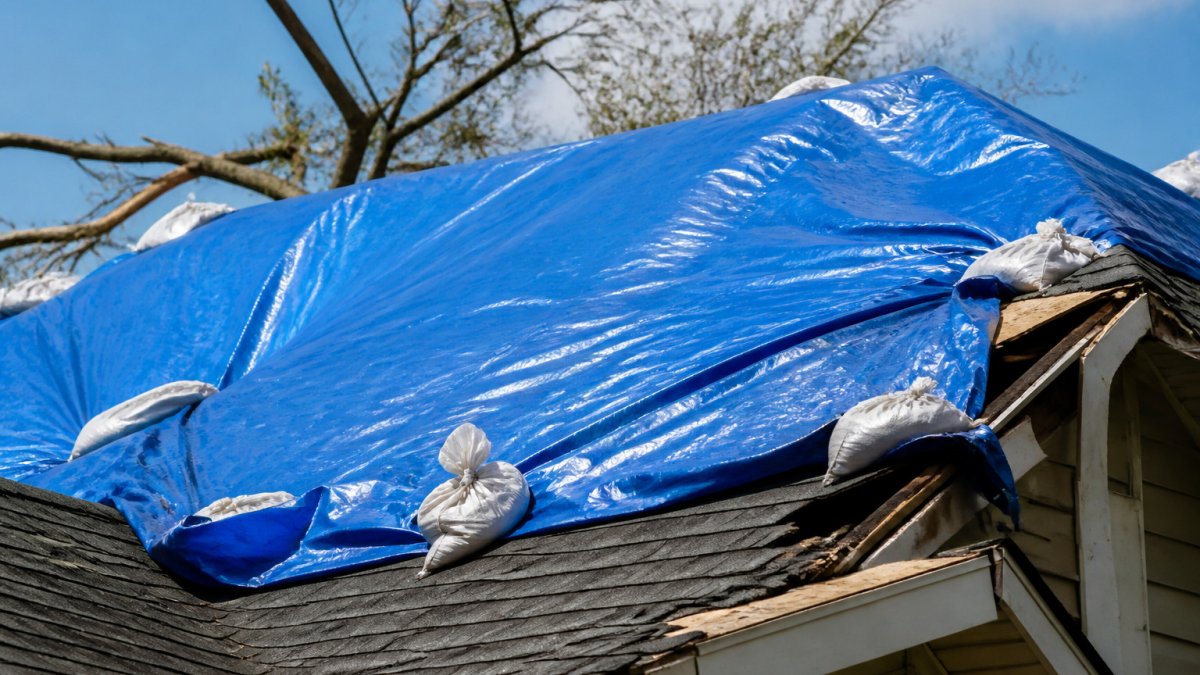
Roof tarping is worth it after storm damage when it stops active water entry while repairs are arranged. A tarp is temporary protection, not a permanent roof repair. It holds back rain and wind-blown debris so the damage does not spread into your attic, insulation, and ceilings.
Emergency tarping works best as a stopgap. It buys time to document damage, file an insurance claim, and schedule a permanent fix. It does not restore the roof's original strength, and it will not stop leaks forever.
Tarping also carries real risk. Storm-damaged roofs can be unstable, and walking on wet, slippery surfaces is dangerous. Restoration professionals generally advise against climbing onto a damaged roof yourself. Many homeowners should call a licensed roofer rather than attempt the job alone.
People often ask whether a tarp is worth it, when the real question is whether it protects the home until a proper repair happens. Keep that distinction in mind as you read.
When a Roof Tarp Is Worth It: Damage Types and Water Intrusion Risk
A roof tarp is usually worth the cost when water is actively getting inside. Missing shingles, a torn underlayment, or an exposed roof deck are the most common reasons to tarp. Each one lets rain reach the structure below. But "worth it" depends on more than whether damage exists, it depends on how severe the damage is, what the forecast holds, whether the roof can be accessed safely, and how soon a permanent repair can happen. Use the framework below to sort your situation into one of three paths.
The three paths: tarp, dry-in, or immediate repair
Path 1, Tarp now. Choose this when the damage is localized (a puncture, a torn section of shingles, a fallen limb's impact point), more rain is forecast within the next few days, and a permanent repair is days to a couple of weeks away. A tarp is the right tool when you need to stop active water entry quickly and cheaply while the claim and repair are arranged.
Path 2, Emergency dry-in. Choose this when a larger portion of the roof is compromised, multiple penetrations, a wide section of lost shingles, or a roof that has partially lost its underlayment across an area. A dry-in uses a more durable membrane and a more systematic anchoring approach than a basic tarp, and it is designed to hold through a longer wait for permanent repairs. It costs more than a tarp but less than a full replacement, and it is the better choice when the repair timeline stretches beyond a week or two.
Path 3, Immediate repair. Choose this when the damage is small enough that a permanent fix can be done now, a handful of missing shingles, a single flashing failure, a minor impact that did not breach the deck. In that case, paying for a tarp and then paying again for the repair is wasted money. Go straight to the repair.
Quick decision checklist
- Water is entering the home right now. Tarp or dry-in today; do not wait for the next storm.
- The roof deck is exposed. Bare wood absorbs water quickly and can rot within days, cover it now.
- More rain is forecast within 48 hours. A tarp matters most before the next storm, not after.
- A tree or debris has punctured the roof. Open holes need covering right away.
- Repairs will take more than a few days. Waiting weeks without protection increases the damage.
- The damage is a few loose granules or minor cosmetic wear. A tarp is probably not necessary; have a roofer inspect and confirm.
- The roof looks unstable or you cannot access it safely. Do not climb up, call a licensed roofer, who will choose between tarp and dry-in based on what they find.
What tips the decision toward professional installation
Even when a tarp is the right path, who installs it matters. A homeowner-installed tarp that loosens in the next windstorm provides no protection and can create a false sense of security. When the roof is steep, tall, or visibly weakened, professional installation is the safer and more durable choice, and it keeps you off a surface that causes a meaningful share of storm-related injuries.
Roof Tarp Cost Versus the Cost of Interior Water Damage
Tarping is inexpensive compared with what water can destroy inside a home. Tarping costs depend on several factors you can control or at least anticipate, and the actual number is only available from a written quote.
What drives the price of a professional tarp
- Roof size and pitch. A steep two-story roof takes longer to access and anchor than a low-slope single-story roof, and labor is the largest line item.
- Access and height. Limited ladder access, landscaping, or a steep drop-off on one side adds setup time and safety equipment.
- Extent of damage. A single missing-shingle patch is a small job; a tree puncture with exposed decking requires more material and more anchoring.
- Material grade. A heavier, UV-stabilized tarp costs more up front but lasts longer than a thin blue poly tarp.
- Emergency timing. After-hours or storm-weekend calls often carry a premium because crews are stretched thin.
What an uncovered leak can cost
Interior damage is where the real money goes. A single storm that pushes water through an unprotected roof can soak attic insulation, stain and sag ceilings, damage drywall, and create conditions for mold growth within days. Insulation often has to be removed and replaced rather than dried in place. Ceiling drywall may need to be cut out and rehung. If water reaches electrical fixtures or wiring, an electrician has to be called before anything else can proceed. None of those costs are capped by the size of the original roof damage, they grow the longer water keeps entering.
Interior repair bills after unnoticed leaking can grow far larger than the cost of a tarp, which is the core of the cost-versus-benefit case for tarping.
How insurance changes the math
Most homeowner policies require you to take reasonable steps to prevent further damage after a covered loss, and emergency tarping usually falls under that duty. That means the tarp cost is often reimbursable as part of the claim, but only if you document it. Photograph the damage before and after tarping, keep every receipt for materials and labor, and save the written estimate. Ask your adjuster whether emergency mitigation is covered separately from the permanent repair, because policy terms vary widely. For the full documentation process, see the insurance section below.
How Long Can a Roof Tarp Stay On Before It Fails?
A roof tarp is a short-term fix. Most tarps are meant to last only a limited period, and they wear out faster in harsh weather. Wind, sun exposure, and standing water all shorten their life.
Plan to replace the tarp or complete the permanent repair as soon as possible. Check the tarp after every major storm. Look for loose anchor points, torn edges, and pooled water. If you see any of these, call a roofer right away.
Ongoing inspection protects the rest of the house. A tarp can slip and let water in without anyone noticing. Regular checks catch problems early. For guidance on keeping leaks from returning once the permanent repair is done, see our guide to preventing roof leaks from recurring.
A tarp is a short-term fix, and its life depends on conditions and regular checks.
| Factor | Effect on tarp | What to do |
|---|---|---|
| Wind | Can loosen anchor points | Check after every major storm |
| Sun exposure | Wears the material down | Replace or complete repair soon |
| Standing water | Adds weight and lets water in | Look for pooling and clear it |
| Loose anchors | Tarp can slip and admit water | Call a roofer right away |
How to Tarp a Roof After Storm Damage Safely
Safety comes first. Do not climb onto a storm-damaged roof unless you have the training and equipment to do it safely. Roofs can be slick, weakened, and hard to see. Many injuries happen during emergency tarping.
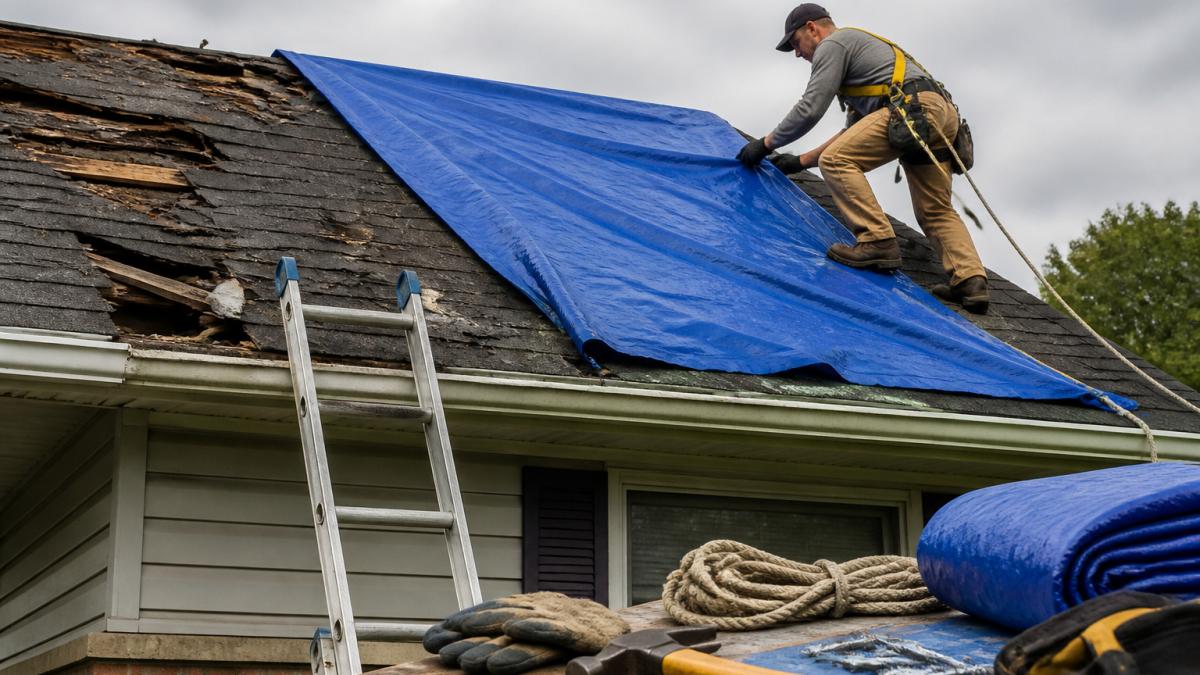
If you decide to tarp the roof yourself, follow these steps:
- Stay off the roof if it looks unstable. Call a licensed roofer instead.
- Gather the right materials. Use a heavy-duty tarp, rope or straps, and sandbags or boards for anchoring.
- Wait for dry, calm weather. Never work on a wet roof or during wind.
- Cover the damaged area with overlap. Extend the tarp well past the damage on all sides.
- Secure the tarp firmly. Anchor it to solid points, not loose shingles or gutters.
- Take photos before and after. Document everything for your insurance claim.
Even when the job looks simple, professional installation is generally safer. For a full storm damage response plan, see our step-by-step storm damage roof repair guide.
Roof Tarping Insurance Coverage and Documentation
Many homeowners ask whether insurance will pay for a tarp. Policies vary, so read yours and speak with your insurer. Many policies require you to take reasonable steps to prevent further damage. Check your policy and speak with your insurer.
Keep good records to support your claim:
- Photos and videos of the damage before and after tarping
- Receipts for the tarp, materials, and any professional work
- A written estimate from your roofer
- Notes of your communication with the insurance company
Do not throw away damaged materials until your adjuster has seen them. Ask your insurer which costs they cover before you commit to repairs.
Booking Your Emergency Roof Assessment With SunPro Contracting
If water is getting into your home, do not wait. SunPro Contracting LLC has over 100 years of combined experience in the roofing and general contracting industry. Our team can assess the damage, advise whether a tarp is the right step, and plan the permanent repair.
Call us to schedule a roof assessment. Contact us for details on our inspection process and estimates.
Contact SunPro Contracting LLC today to protect your home and get a permanent solution in place.
Frequently Asked Questions
How much does emergency roof tarping cost?
Roof tarping costs depend on the roof's size, pitch, and accessibility, and the damaged area. Final pricing depends on the roof's size, pitch, and accessibility, and the damaged area. For current pricing on your roof, contact SunPro Contracting for a quote.
Will homeowners insurance cover roof tarping after a storm?
Coverage depends on your specific policy, deductible, and the cause of damage. Keep receipts, photos of the damage before and after tarping, and a written estimate. Notify your insurer promptly and avoid making permanent repairs before the adjuster has inspected the damage.
Can I tarp a storm-damaged roof myself?
Tarping a roof yourself carries real fall and collapse risks, especially on wet or unstable surfaces. Storm-damaged roofs may have compromised decking or loose materials. If you cannot reach the damage safely from the ground or a stable ladder, call a professional. A licensed roofing contractor can secure the tarp correctly and reduce the risk of injury or further damage.