 blog
Which Roof Material Holds Up Best in Florida?
Last Updated: October 30, 2026
Quick Summary
The best roof materials in Florida depend on your budget, roof structure and installation quality, since heat, humidity, salt air and strong storms all shorten roof life. Wind-rated asphalt shingles suit budget-first projects, standing-seam metal suits storm focus, and tile suits long-term heat control after a structural check.
- Florida's heat, humidity, salt air and storms all wear roofs faster than milder climates.
- Asphalt shingles are used on roughly 80% of roofing projects, per a RubyHome 2026 compilation.
- Standing-seam metal panels have wind ratings up to 180 mph, depending on product and installation.
- Tile is heavy, so older homes may need structural reinforcement before installation.
- Compare roof quotes by assembly, including product approval, underlayment, fastening pattern and deck attachment.
Table of Contents
- Why Florida Roofs Face Harder Conditions Than Most
- Asphalt Shingles: Affordability and Everyday Performance
- Metal Roof vs. Shingle Roof in Florida: How They Compare
- Clay and Concrete Tile: Heat Performance and Weight Considerations
- Best Hurricane-Resistant Roofing Materials for Florida Homes
- Florida Roof Replacement Cost and Total Cost of Ownership
- Roof Lifespan in Florida and Choosing the Right Material for Your Home
- Frequently Asked Questions
Why Florida Roofs Face Harder Conditions Than Most
Florida roofs take a beating from sun, humidity, salt air and some of the strongest storms in the country. Choosing the best roof materials in Florida starts with understanding those conditions.
Heat and ultraviolet exposure break down roofing surfaces over time. Humidity encourages moisture to find its way under shingles and into decking.
The takeaway is simple: a roof material that works in a mild climate may not be the right choice here.
Asphalt Shingles: Affordability and Everyday Performance
Asphalt shingles remain one of the most common roofing materials in the country. A RubyHome's 2026 roofing statistics compilation reports that asphalt shingles are used on roughly 80% of roofing projects, though that figure does not specify a Florida-only scope.
Shingles are often a lower upfront option among roof materials, which is why many homeowners consider them first. Their performance depends heavily on the product grade and how well the installation handles wind uplift and sealing.
A low-cost shingle installed without proper wind-rated sealing can lift in a storm, even if the product itself is solid.
Metal Roof vs. Shingle Roof in Florida: How They Compare
Metal roofing is gaining ground in Florida. A RoofVista Florida roofing guide for 2026 describes standing-seam metal roofing with wind ratings up to 180 mph, though that rating depends on the specific product and installation.
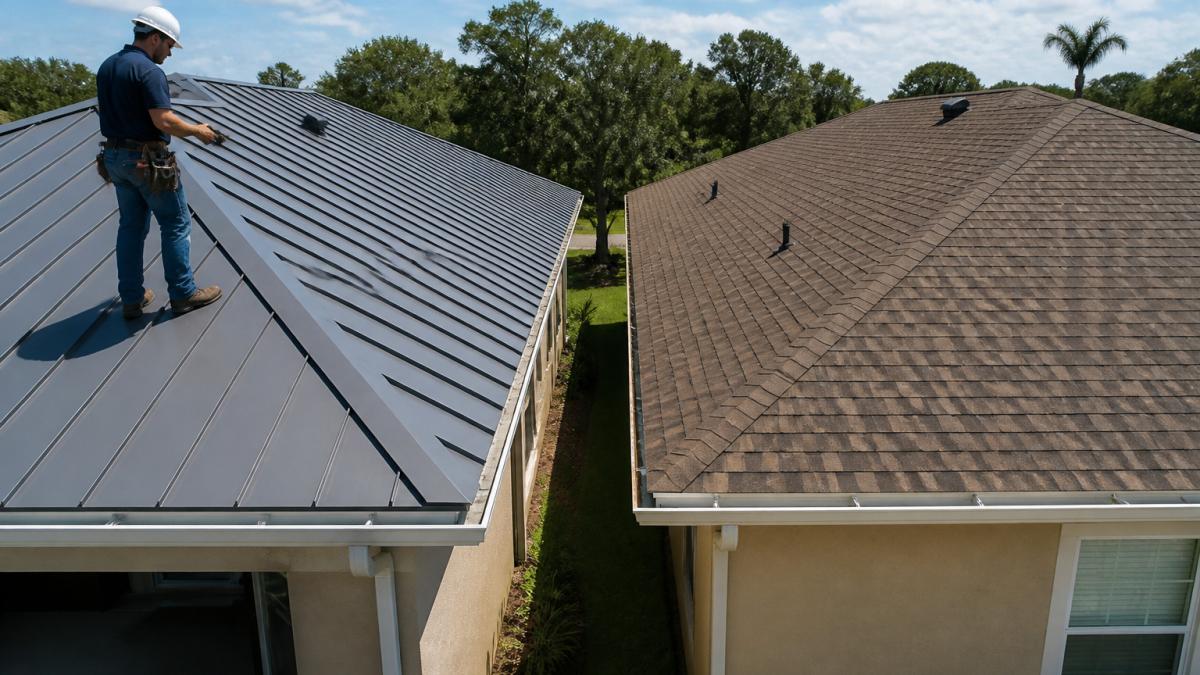
Metal typically sheds wind better than shingles and resists heat reasonably well. It costs more up front, and cheaper panels can dent or corrode in salt-heavy coastal areas.
For most homeowners, the decision comes down to budget, roof pitch, and how long they plan to stay in the home.
Clay and Concrete Tile: Heat Performance and Weight Considerations
Tile is often considered a strong option for heat control and long life. Clay and concrete tile handle sun exposure well and can last decades when installed correctly.
The main concern is weight. Tile is heavy, so the home's structure must be able to support it. Older homes or those built without tile in mind may need reinforcement before installation. A structural assessment is a smart first step.
Best Hurricane-Resistant Roofing Materials for Florida Homes
Hurricane performance is decided by the whole roof assembly, not the surface material alone. Two roofs with identical shingles can perform very differently depending on the deck attachment, underlayment, fastening pattern, flashing and edge metal.
Wind zones and what they mean for material choice
Florida wind requirements vary by location. A material assembly that is acceptable inland may not meet the requirements for a coastal or high-velocity hurricane zone project. Before comparing products, confirm the design wind speed for your address and with your local building department.
Product approval and testing standards
Roof coverings in Florida generally require product approval for the specific assembly being installed. Testing standards you may see referenced include:
Ask your contractor for the approval documentation and the exact assembly it covers, not just the product name. An approval for one fastening pattern or underlayment does not automatically transfer to another.
How the major materials compare under wind load
- Asphalt shingles: Wind-rated products with a high-wind nailing pattern perform well when installed to the manufacturer's spec. The weak points are usually the sealant strip, the starter course and the ridge, so those details matter as much as the shingle itself.
- Standing-seam metal: Mechanically seamed panels with concealed fasteners generally shed wind well and are commonly specified in coastal areas. Performance depends on clip spacing, panel gauge and attachment to the deck; exposed-fastener panels rely on gasketed screws that can back out over time.
- Clay and concrete tile: Tile can meet high-wind requirements when installed with the correct mechanical attachment, depending on the approval. Loose-laid or mortar-only installations are a common failure point in storms.
- Composite and synthetic: Some impact-rated products carry wind approvals, but the approval is assembly-specific. Verify the product approval documentation for your exact roof.
The assembly details that decide storm performance
Most storm damage we see traces back to details rather than the surface material:
- Roof-deck attachment: Re-nailing or re-fastening the deck to current code is often the single biggest upgrade on an older home.
- Underlayment: A secondary water barrier (peel-and-stick or synthetic) matters when wind-driven rain gets past the covering.
- Fastening pattern: Nail placement and pattern per the manufacturer's high-wind instructions; overdriven or misplaced fasteners are a common inspection failure.
- Flashing and edge metal: Drip edge, valley flashing and wall flashing are frequent leak and blow-off points.
- Ridge and hip details: These take concentrated uplift and need the specified ridge vent or hip system.
When you compare quotes, compare the assembly, not just the material. Ask for the product approval number, the underlayment spec, the fastening pattern and the deck attachment method in writing. A mid-grade material installed to a tested assembly usually outperforms a premium material installed to a generic one.
Insurance: verify, don't assume
Many homeowners ask whether a new roof will lower premiums. Discounts depend on the insurer, the policy form, roof age, and the findings of an inspection, and eligibility varies widely. Ask your insurer in writing what credit, if any, applies to the specific product and assembly before you buy, and keep the product approval and inspection report on file.
Florida Roof Replacement Cost and Total Cost of Ownership
Replacement cost depends on roof size, pitch, material, structural needs, tear-off, and local permitting. Rather than quote a single number, it helps to understand the drivers and then compare materials on a total-cost-of-ownership basis.
What drives the installed price
- Roof size and complexity: Squares (100 sq ft each), hips, valleys, dormers and penetrations all add labor and material.
- Pitch and access: Steep or hard-to-access roofs require more labor and safety measures.
- Tear-off and decking: Removing the old roof, replacing rotted decking, and re-nailing the deck to current code add cost but improve performance.
- Underlayment and flashing: A secondary water barrier and new flashing are not optional upgrades in storm country.
- Permits and inspections: Permit fees and inspection requirements vary by jurisdiction and add to the project total.
- Product approval and HVHZ requirements: High-velocity hurricane zone projects can require specific approved assemblies, which affects material and labor cost.
Typical installed cost ranges by material
Pricing depends on roof size, pitch, material, structural needs, and permitting. For current pricing specific to your home, contact SunPro Contracting LLC for a quote.
Premium products generally cost more up front, so the decision should weigh that premium against lifespan, maintenance and any verified insurance credit.
Total cost of ownership: the math that matters
Initial price is only one input. A simple way to compare is to estimate annualized cost:
Annualized cost = (installed cost + expected maintenance and repairs over life − salvage value) ÷ expected service life in years
Lifespan varies by product, installation quality and exposure. Verify expected service life against the specific product's warranty and your exposure, and ask SunPro Contracting LLC to explain the expected service life for the system you are considering.
A cheaper material that needs repairs or early replacement can cost more per year than a pricier one that lasts. Metal and tile often cost more up front but spread that cost over a longer life; asphalt keeps the initial outlay lower but may cycle sooner.
Maintenance and repair budgets
Set aside a realistic maintenance budget rather than assuming a roof is maintenance-free. Common items include:
- Annual or post-storm inspections, especially after named storms.
- Flashing and sealant checks, which are the most common leak sources.
- For tile, replacing broken tiles and checking the underlayment, which has a shorter life than the tile itself.
- For metal, checking fasteners and touch-up of coatings in coastal areas.
Insurance and verification
Insurance credits are not universal. Eligibility depends on the insurer, policy, roof age and inspection findings.
Get itemized quotes that separate material, labor, tear-off, decking, underlayment, flashing and permits. Comparing line items on the same terms is the only reliable way to see which option is actually the better value for your home.
Ask for itemized estimates before work begins so you can compare options on the same terms. Contact SunPro Contracting LLC for a quote tailored to your home.
The article breaks replacement cost into the drivers that move the installed price, so the table below lists them with what each one affects.
| Cost driver | What it affects | Why it matters |
|---|---|---|
| Roof size and complexity | Labor and material | Squares, hips, valleys, dormers and penetrations add cost |
| Pitch and access | Labor | Steep or hard-to-reach roofs need more labor and safety measures |
| Tear-off and decking | Upfront cost | Replacing rotted decking and re-nailing to code improves performance |
| Underlayment and flashing | Material and labor | A secondary water barrier and new flashing are not optional in storm country |
| Permits and inspections | Project total | Fees and requirements vary by jurisdiction |
| Product approval and HVHZ rules | Material and labor | High-velocity hurricane zone projects can require specific approved assemblies |
Roof Lifespan in Florida and Choosing the Right Material for Your Home
Expected lifespan varies by material, installation quality and exposure. Florida's heat, humidity and storms tend to shorten lifespans compared with milder climates, so plan maintenance accordingly.
Here is one way to think about the choice:
- Budget-first: Wind-rated asphalt shingles with a proper installation.
- Storm-focused: Standing-seam metal, with attention to fasteners in coastal areas.
- Long-term appearance and heat control: Tile, after a structural check.
If you want a roof that holds up, schedule a roof assessment with SunPro Contracting LLC to see which assembly fits your home. You can also review our roof coating options and a residential roof maintenance checklist to extend the life of whatever you choose.
Why Florida roofs wear faster is worth understanding before you buy. Our Florida roof maintenance guide covers the conditions that matter most here.
Contact SunPro Contracting LLC today to find the roof material that fits your home, your budget and Florida's storm season.
Frequently Asked Questions
What type of roof holds up best in a hurricane?
Standing-seam metal roofing and properly installed concrete or clay tile are among the materials most often recommended for high-wind conditions in Florida. Wind ratings depend on the specific product, fastening, and installation. Roof coverings are generally expected to meet recognized testing standards. Ask any contractor for the product's wind rating documentation and confirm it meets the requirements for your home and jurisdiction before you choose a material.
Which is better for Florida, a metal roof or a shingle roof?
Metal roofs generally offer stronger wind resistance and a longer service life than standard asphalt shingles, while shingles have a lower upfront cost and are installed on the majority of roofs. Shingles remain a common choice because they are affordable and familiar to contractors, but their performance depends heavily on the product class and installation quality. A metal roof often makes more sense if you plan to stay in the home long term. A shingle roof may suit a tighter budget, especially if you choose an impact-resistant or high-wind-rated product.
How long do metal roofs last in Florida?
Metal roofs commonly last several decades in Florida when properly installed and maintained, which is generally longer than standard asphalt shingles. Salt air near the coast can accelerate corrosion, so the metal type, coating, and fastener selection matter. Regular inspections after storms help catch loose panels or damaged seams early. Lifespan estimates vary by product and conditions, so ask SunPro Contracting LLC to explain the specific warranty and expected service life for the system you are considering.
Are tile roofs a good choice for Florida homes?
Tile roofs, including clay and concrete, are well suited to Florida's heat because they reflect sun and help keep attic temperatures lower. They are also long-lasting and widely used across the state. The tradeoffs are weight, which requires the structure to support it, and cost, which is typically higher than shingles. Tile performance in high winds depends on how the tiles are fastened and underlayment is installed. A structural assessment is recommended before choosing tile for an older home or a retrofit project.