 how-to
Commercial Masonry Restoration Services: A Step-by-Step Guide
Table of Contents
- What Is Commercial Masonry Restoration?
- Assessing Your Building's Masonry Condition
- Commercial Masonry Repair Techniques and Methods
- Commercial Brick Repointing and Mortar Joint Restoration
- Masonry Waterproofing and Moisture Control
- Commercial Masonry Maintenance and Prevention
- Planning Your Restoration Project: Timeline, Costs, and Safety
- Frequently Asked Questions
Last Updated: October 12, 2026
What Is Commercial Masonry Restoration?
Commercial masonry restoration is the process of repairing, reinforcing, and preserving brick, stone, and concrete structures on commercial buildings.
At SunPro Contracting LLC, we treat commercial masonry restoration as a strategy that protects your investment and extends building life, covering damage assessment, material removal, unit replacement, repointing, waterproofing, and preventive maintenance.
A patch covers the problem temporarily; genuine restoration solves it.
Assessing Your Building's Masonry Condition
Before planning repairs, you need an honest assessment of what's actually wrong. Skipping this step means addressing symptoms instead of root causes.
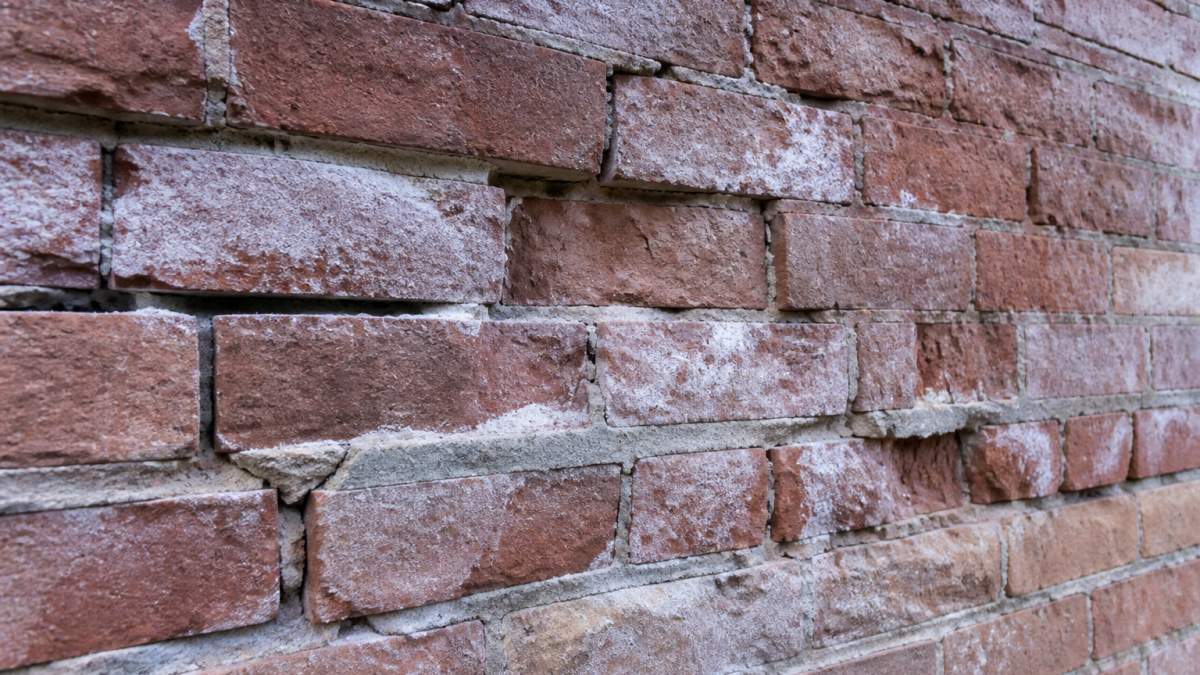
Signs Your Masonry Needs Restoration
Look for these indicators:
- Visible cracks in brick, stone, or mortar joints (wider than 1/8 inch signals structural movement)
- Missing or recessed mortar between units, exposing interior joints
- Efflorescence (white, powdery deposits on the surface) indicating moisture movement through masonry
The most common mistake is waiting until water penetration is obvious inside. By then, damage extends deeper than the facade.
Creating a Repair Prioritization Plan
Not every issue needs fixing at once. Prioritize by structural safety, water intrusion risk, and aesthetic impact across three tiers:
Tier 1 (Address immediately): Structural cracks, missing mortar that exposes interior joints, active water leaks, spalling that's spreading, and any bowing or leaning. These threaten the building envelope and safety.
Tier 2 (Plan within 12 months): Hairline cracks that aren't widening, minor efflorescence, isolated spalling, and worn pointing that's still largely intact.
Tier 3 (Schedule as budget allows): Cosmetic issues like surface discoloration, minor cracks in non-structural areas, and general facade cleaning. These affect appearance more than function.
This lets you allocate budget strategically instead of fixing everything now or ignoring everything.
Commercial Masonry Repair Techniques and Methods
The method depends on damage type, material, and the masonry section's structural role.
Brick and Stone Replacement
When individual units are too damaged to repair, replacement is the only solution, requiring careful material matching to preserve appearance and structural continuity.
The process starts by removing the damaged unit without destabilizing adjacent masonry, chiseling out mortar, removing the brick or stone, and preparing the opening.
Material compatibility matters more than most contractors acknowledge: a harder modern brick beside softer historic brick traps moisture and accelerates deterioration.
Structural Crack Repair
Not all cracks are equal. Hairline cracks (under 1/16 inch) that don't widen are often cosmetic; wider or growing cracks indicate structural movement.
For hairline cracks, low-viscosity epoxy or polyurethane injection stabilizes the crack and prevents water penetration.
Pressure injection of grout or epoxy bonds separated masonry back together, working well for dormant cracks. Active cracks that keep widening require structural reinforcement or acceptance that movement will continue.
Commercial Brick Repointing and Mortar Joint Restoration
Mortar is masonry's sacrificial element, designed to fail before the brick or stone. When it deteriorates, water penetrates the joints and the masonry behind it begins to fail.
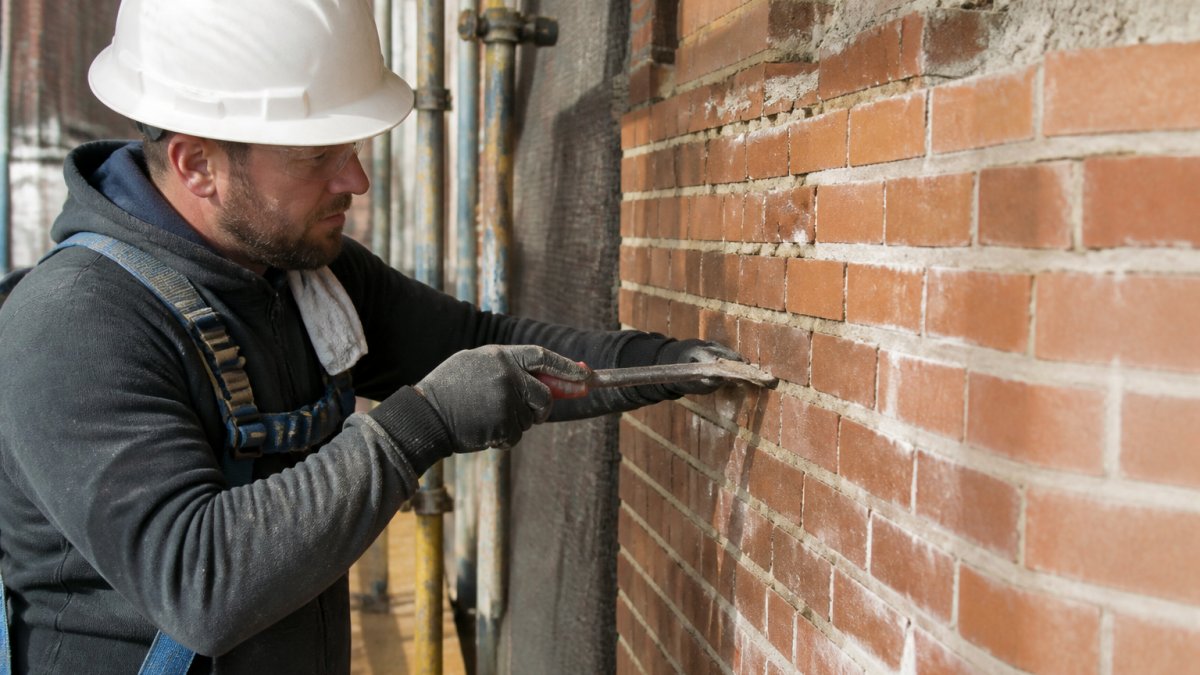
Commercial brick repointing involves removing failed mortar and replacing it with new mortar matching the original in composition, color, and strength.
The process requires:
- Careful removal of deteriorated mortar without damaging surrounding brick or stone (typically 2.5 times the joint width in depth)
- Matching the original mortar composition (lime-based mortars in historic buildings, for example, require lime-based replacement, not modern Portland cement)
- Curing time before the building is exposed to heavy rain or freeze-thaw cycles
Tuckpointing is a variation using matching mortar, sometimes with a contrasting joint filler for visual effect.
Masonry Waterproofing and Moisture Control
Water is masonry's primary enemy. Once it penetrates the facade, it migrates inward, freezes and thaws, dissolves mortar, and corrodes embedded metal.
Waterproofing strategies include:
- Breathable sealers that allow masonry to dry while repelling liquid water (critical for historic buildings and vapor-permeable assemblies)
- Hydrophobic treatments that reduce water absorption without sealing pores completely
- Proper drainage behind the facade (cavity walls with weep holes and flashing that direct water to the exterior)
The most overlooked element is drainage maintenance. A well-designed facade with failed drainage is worse than a poorly designed one with good drainage, weep holes clog, flashing separates, sealers degrade.
Commercial Masonry Maintenance and Prevention
Most competitors treat maintenance as a line item. A scheduled program with defined intervals, trigger thresholds, and a written record is more useful, that record lets you compare bids, justify capital, and prove deterioration is being managed.
A Preventive Maintenance Schedule You Can Actually Run
A workable program has four cadences:
- Quarterly walk-through (visual only, no access equipment): Ground-level scan of the facade, parapet line, chimney, and any wall visible from adjacent roofs. Look for new staining, fresh spalling, vegetation in joints, and bird or rodent activity. Budget 1-2 hours for a mid-rise building. This is a look, not an inspection.
- Annual inspection (close-range, with binoculars or a drone where permitted): Document mortar joint condition, crack widths, flashing terminations, weep hole function, and sealant condition at every transition. Photograph each elevation and note the location of every defect on a simple elevation sketch.
- Five-year condition assessment (hands-on, with access): Tap-test mortar joints with a hammer or screwdriver at representative locations, probe soft joints, and check embedded steel at lintels and shelf angles where corrosion staining is visible. This is the assessment that produces a repair scope and a budget number.
Trigger Thresholds: When a Finding Becomes a Repair
A maintenance program only works if it tells you when to act. These thresholds are common practice, not code requirements, but they give you a defensible decision rule:
- Mortar joints: If a joint is recessed more than roughly 1/4 inch behind the face of the masonry, or if mortar crumbles when probed with a screwdriver, it has reached the end of its service life and should be scheduled for repointing.
- Cracks: Hairline cracks under 1/16 inch that are stable across two inspections are cosmetic. Cracks that have widened between inspections, or that exceed 1/8 inch, warrant a structural review before any cosmetic repair.
- Spalling: Isolated spalled units can be replaced on a routine schedule. Spalling that appears in a horizontal band, often at a shelf angle, lintel, or flashing line, usually indicates embedded steel corrosion and should be investigated, not patched.
Cleaning Intervals and Method Selection
Facade cleaning is not cosmetic, biological growth, atmospheric soiling, and soluble salts all accelerate masonry deterioration. A common interval is every 5-7 years for typical urban or industrial exposure, more often on elevations facing prevailing weather or near soiling sources.
Method matters more than frequency. The wrong method can do more damage in one afternoon than a decade of weather:
- Water washing at low pressure is appropriate for most sound masonry and removes soluble soiling without abrading the surface.
- Chemical cleaning with a masonry-specific detergent is used for biological growth, atmospheric staining, and metallic staining. The product must be matched to the masonry type, acidic cleaners will etch limestone and dissolve the binder in some mortars.
- Abrasive blasting should be avoided on historic or soft masonry. It removes the fired skin of brick, opens the pore structure, and accelerates future water absorption. On many historic buildings it is effectively irreversible.
What Good Maintenance Actually Saves
A small area of failed pointing is a one-day repair with minimal access cost. Once water migrates behind the face and saturates the wall, the same problem becomes a multi-trade repair involving interior finishes, insulation, and possibly embedded steel.
The other benefit is procurement. A property team with a current condition log and documented repair history can solicit competitive bids on a defined scope, compare them apples-to-apples, and defend the capital request internally.
Planning Your Restoration Project: Timeline, Costs, and Safety
A restoration project succeeds or fails on planning before the first scaffold plank goes up. Four variables drive every commercial masonry restoration budget and schedule, scope, access, occupancy, and weather.
What Actually Drives the Cost
Masonry restoration is priced by the unit, not the building. The unit price is set by the work; the total by the scope. Variables that move the number most, in rough order of impact:
- Access method. Ground-level work on a low building is the cheapest possible access. The moment work moves above roughly two stories, you are choosing between scaffolding, mast climbers, and aerial lifts, and that choice can rival the cost of the masonry work itself on a tall or complex facade.
- Extent of damage. Cleaning is priced per square foot of facade. Repointing is priced per linear foot of joint. Unit replacement is priced per unit. A scope that is mostly cleaning prices very differently from one that is mostly repointing, even on the same building.
- Material matching. Standard modular brick and a common mortar mix are commodity items. Matched historic brick, custom-profiled stone, and lime-based mortars formulated to match an original building require sourcing, lead time, and often a mockup, all of which carry cost.
Budgeting for Hidden Damage
On any restoration beyond routine cleaning, some damage isn't visible until the wall is opened: corroded shelf angles and lintels behind spalled brick, deteriorated backup masonry behind sound veneer, and rotted wood blocking at flashing terminations.
A contingency of roughly 10-15% of construction cost is a common planning figure for commercial projects, held by the owner rather than absorbed silently into the contractor's number.
Timeline: What Sets the Calendar
A small repair takes days; a comprehensive mid-rise facade restoration takes months, with the calendar set by factors outside the contractor's control:
- Access installation and removal. Scaffolding on a mid-rise can take a week or more to erect and a similar period to strike. That time is on the schedule whether or not any masonry work happens during it.
- Mockup and approval. On historic or design-reviewed buildings, a mockup panel of cleaning, repointing, and unit replacement is often required and must be approved before production work begins.
- Weather and curing. Mortar must cure under the right conditions. Freezing temperatures, heavy rain, and extreme heat all stop or slow work. Most exterior masonry work is scheduled between spring and fall to keep the curing period out of freeze-thaw cycles.
Access, Safety, and Occupied-Building Planning
Access is the largest planning decision on most commercial restoration projects, and it should account for building operations, not just facade geometry.
Access options and trade-offs:
- Scaffolding provides the most stable work platform and the best protection for workers and the public, but it is the slowest to install, occupies ground-level space, and may require permits that affect sidewalks, parking, or loading zones.
- Mast climbers are efficient on tall, flat facades and reduce ground-level footprint, but they require rigging points and a clear vertical work zone.
- Aerial lifts are fast to deploy and flexible, but they have limited reach around setbacks and cornices, and they require a stable, unobstructed base at ground level.
Safety planning on an occupied building goes beyond worker fall protection. It includes:
- Public protection. Overhead protection, debris netting, and controlled pedestrian routes are required wherever work occurs above an occupied or public area. Sidewalk closures and covered walkways are often part of the permit set.
- Dust and noise containment. Cutting, grinding, and mortar mixing generate silica dust and noise. Containment, wet-cutting methods, and work-hour restrictions are common requirements on occupied buildings.
- Egress and life safety. Stairwells, exit paths, and fire department access must remain clear at all times. This is a code requirement, not a preference, and it constrains where access equipment can be placed.
Bringing It Together
The most reliable way to control cost and schedule on a commercial masonry restoration project is to invest in the assessment phase. A documented condition survey, defined scope with unit quantities, chosen access method, and owner-held contingency give you a project that can be bid competitively, scheduled realistically, and executed without avoidable surprises.
Frequently Asked Questions
What is the difference between masonry repair and masonry restoration?
Repair addresses specific damage like cracks or failed mortar joints to restore function. Restoration is more comprehensive, addressing the overall condition of the masonry structure, including material matching, texture matching, and historic preservation considerations. Commercial masonry restoration often involves multiple repair methods applied systematically across the entire facade or structure to return it to its original condition and durability.
How do I know when my commercial building needs masonry restoration?
Watch for visible deterioration: crumbling mortar joints, efflorescence (white powder deposits), water stains, cracks wider than 1/8 inch, missing bricks or stones, or moisture entering the building. If your commercial building is older than 20 years, annual inspections help catch problems early. Interior water damage, mold, or damp spots on walls are also signs that exterior masonry has failed and needs attention.
What does commercial masonry restoration typically include?
Commercial masonry restoration services cover assessment and condition documentation, mortar joint repointing or tuckpointing, brick and stone replacement where damaged, structural crack repair, waterproofing application, restorative cleaning, and façade rehabilitation. The scope depends on your building's condition and age. A professional assessment determines which services your structure needs to restore integrity, prevent water intrusion, and extend the life of the masonry.
How long does a commercial masonry restoration project typically take?
Timeline depends on project scope, building size, and weather. Small repointing projects on one facade may take 2-4 weeks. Large-scale restoration of a multi-story commercial building can take 3-6 months or longer. Weather delays, material curing time, and occupied-building restrictions add time. Your contractor should provide a detailed schedule during the planning phase and maintain communication if delays occur.
Commercial masonry restoration protects your building's structural integrity and extends its useful life by decades. The challenge is knowing where to start and which repairs to prioritize. SunPro Contracting LLC specializes in comprehensive masonry assessment, strategic repair planning, and expert restoration execution. Contact us today for a detailed evaluation of your commercial masonry and a prioritized restoration plan tailored to your building's specific needs.