 how-to
How to Identify Quality Roof Repairs
Table of Contents
- Understanding What Quality Roof Repairs Look Like
- How to Spot Poor Roofing Workmanship
- Roof Repair Inspection Checklist
- Questions to Ask a Roofing Contractor Before Hiring
- Verifying Contractor Credentials and Warranties
- Red Flags in Repair Quotes and Project Execution
- Frequently Asked Questions
Last Updated: October 4, 2026
Understanding What Quality Roof Repairs Look Like
Quality roof repairs fix the problem permanently, not just temporarily. Too many homeowners deal with the same leak twice because the first contractor cut corners or missed the root cause. Quality repairs address underlying damage, use matching materials, follow manufacturer specifications, and require attention to detail: proper flashing prevents water infiltration, correct shingle adhesion resists high winds, and the right sealant products prevent degradation.
Here's what you should expect to see:
- Shingles laid flat with no curling or buckling
- Flashing sealed tightly with no gaps or cracks
- Underlayment intact and properly secured
- Roof penetrations sealed completely
- No granule loss or visible damage to repaired areas
- Clean work area with debris removed
The most important thing? A reputable contractor stands behind their work with a workmanship warranty. This gives you recourse if problems develop after the repair.
How to Spot Poor Roofing Workmanship
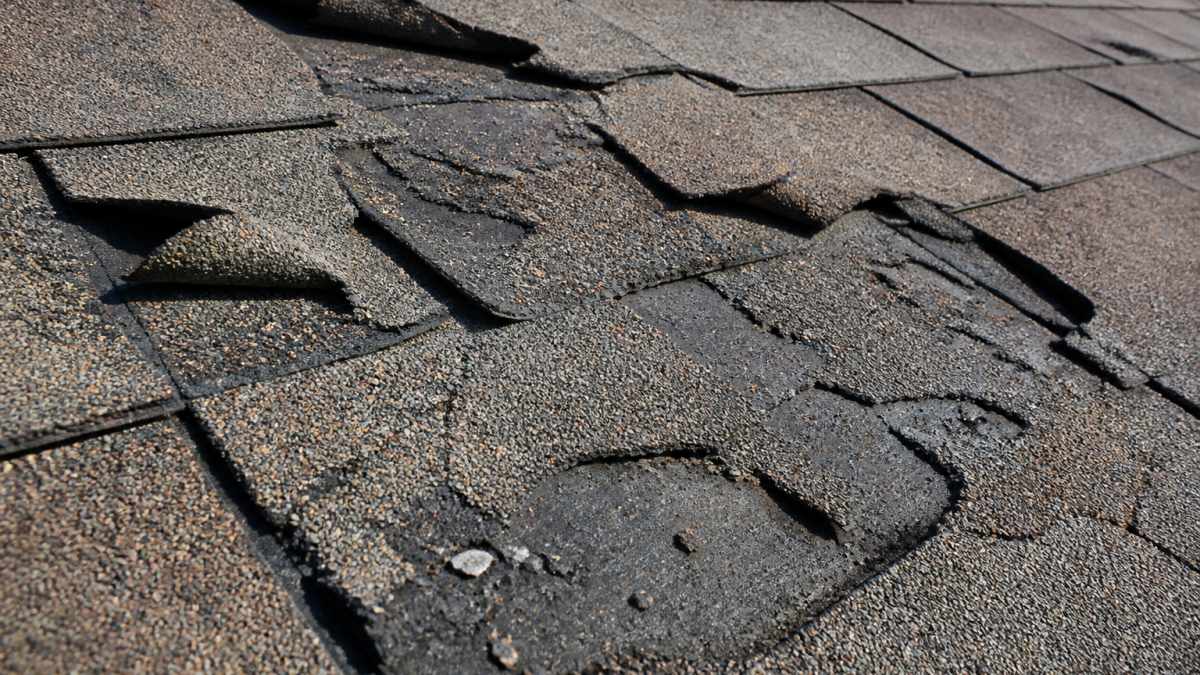
Poor workmanship shows obvious signs: different shingle colors, misaligned rows, or inconsistent sealing signal careless work.
Common Installation Defects
Poor installation shows quickly: incorrectly nailed shingles lift in wind, angled nails puncture shingles and create leak points, and too few nails in wrong spots cause failure.
Look for these specific defects:
- Nails visible on the surface (they should be covered by the shingle above)
- Nails driven at an angle instead of straight
- Shingles not aligned with the rows below them
- Gaps between shingles that should be touching
- Sealant applied unevenly or in the wrong locations
Thermal shock from temperature changes causes seals to crack and shingles to buckle when expansion gaps aren't left.
Material-Specific Red Flags
Watch for these material-specific problems:
- Metal roofing with rust stains or corrosion
- Tile with visible cracks or pieces missing
- Membrane roofing that's wrinkled or separated
- Pipe boots that aren't sealed or are cracked
- Ridge vents that are loose or improperly installed
- Flashing that's bent, dented, or poorly sealed
Poor sealant cracks or separates within months, starting water infiltration.
Roof Repair Inspection Checklist
Inspect immediately after work is done but before final payment to verify the contractor executed the repair to specification.
Material-Specific Quality Standards
Asphalt Shingle Repairs:
- Replaced shingles should be from the same manufacturer and product line as existing shingles (not a generic substitute)
- Shingle color should match within one shade, check in both sunlight and shade, as UV exposure affects appearance
- Nails should be driven at a 90-degree angle, located in the nail strip (the dark band), with heads flush to the shingle surface, not countersunk or protruding
- Sealant (if used) should be applied only where the manufacturer specifies, typically under the shingle tab, not across the entire repair area
- Shingle edges should lay flat with no curling, buckling, or separation from the layer below
- Granule loss should be minimal and only from cut edges, not from the repair area itself
Metal Roofing Repairs:
- Seams should be sealed with a compatible metal roofing sealant (not general-purpose caulk), applied in a continuous bead without gaps
- Fasteners should be stainless steel or coated steel matching the roof system, not galvanized fasteners that will corrode
- Overlaps should be consistent with the original roof pattern and sealed completely
- No visible rust, corrosion, or discoloration at repair seams or fastener locations
- Thermal expansion gaps (typically 1/8 inch) should be visible at panel ends to allow for seasonal movement
Flat Roof (TPO, EPDM, PVC) Repairs:
- Seams should be heat-welded (for TPO and PVC) or mechanically fastened and sealed (for EPDM), with no visible wrinkles, blisters, or separation
- Membrane surface should be smooth with no punctures, cuts, or exposed substrate
- Flashing at penetrations should be sealed with compatible membrane material or sealant, not mismatched products
- The repair patch should extend at least 6 inches beyond the damage in all directions
- No pooling water or low spots that could trap moisture around the repair
Visual Inspection Steps
Follow this sequence:
-
Check material compatibility. Does the repair use the same roofing material as the existing roof? Mismatched materials (e.g., architectural shingles over 3-tab shingles) indicate a patch job, not a proper repair.
-
Examine color and finish matching. Are repaired shingles or panels the same color as the surrounding roof? Check in multiple lighting conditions. Significant color variation signals either poor material selection or UV-aged existing roof that wasn't addressed.
-
Verify fastener placement and finish. For shingle roofs, are nails covered by the shingle above? Visible nails are a sign of improper installation. For metal roofs, are fasteners sealed and corrosion-free?
-
Inspect seals and sealant application. Is sealant applied only where the manufacturer specifies? Excessive sealant or sealant in the wrong locations indicates the contractor doesn't follow specifications. Check that sealant is uniform in color and thickness, not dried out or cracked.
-
Look at flashing and penetrations. Are roof penetrations (vents, pipes, skylights) sealed with flashing that matches the roof material? Pipe boots should be sealed completely with no gaps. Flashing should be bent and installed per manufacturer details, not just caulked over.
-
Check for debris and cleanup. Is the roof clean? Debris, nails, and shingle scraps left behind indicate unprofessional work and can cause future damage. Check gutters and downspouts for debris from the repair.
-
Assess alignment and pattern. Are shingles aligned with the rows below? Do seams line up properly? Misalignment indicates rushed or careless work.
-
Verify structural integrity. Look for sagging, soft spots, or water damage on the roof deck. A quality repair addresses underlying structural issues, not just surface damage.
Documentation and Photos
Take photos from multiple angles before paying: close-ups of the repair and wider shots showing how it blends with the surrounding roof.
Create a detailed record:
- Photos from at least three angles (wide shot, medium shot, close-up of repair)
- Close-ups of all seals, sealant, and fasteners
- Photos of flashing and penetrations
- Notes on any concerns or deviations from the estimate
- Contractor's name, company, license number, and date of completion
Keep these photos with your warranty documentation and repair contract. They protect you if problems develop or the contractor disputes warranty claims.
Questions to Ask a Roofing Contractor Before Hiring
Ask these questions:
-
How long have you been in business? Experience matters.
-
Can you provide references from recent repairs? Call at least three and ask if problems developed after the work.
-
What warranty do you offer on workmanship? Quality contractors back their work with multi-year warranties.
-
Will you provide an itemized estimate? Vague estimates hide quality shortcuts.
-
What happens if the same spot leaks again? Get a written guarantee of free re-repair if the original work failed.
-
How do you handle roof penetrations and flashing? Listen for specific details about sealing these critical areas.
-
What materials do you use? Quality contractors use materials matching your existing roof and meeting manufacturer specifications.
-
Do you handle cleanup? Professional work includes removing debris.
A contractor who answers vaguely or gets defensive is a red flag.
Verifying Contractor Credentials and Warranties
Verify contractors are legitimate. Unlicensed contractors cut corners and disappear when problems develop.
License and Insurance Verification
Check your state's licensing board to verify the contractor is licensed. Ask for proof of current insurance and call the insurance company directly to verify:
- Active contractor license
- General liability insurance (current policy)
- Workers' compensation insurance
- Bonding (if required in your state)
Workmanship Warranty Terms
A quality contractor offers a multi-year workmanship warranty covering installation defects at no cost. Understand the length of coverage (aim for at least 5 years), what's covered (installation defects, not material failures), what's excluded, how to file a claim, and whether it transfers if you sell the home.
Red Flags in Repair Quotes and Project Execution
Suspiciously low quotes usually mean corners will be cut.
Patch Job vs. Structural Repair: What Your Quote Should Say
Patch Job Red Flags (Avoid These):
- "Seal the leak" or "caulk the area" without identifying the cause
- Quotes that propose only sealant application without replacing damaged materials
- Repair limited to the visible leak location without inspecting surrounding areas
- No mention of flashing inspection or replacement
- Vague language like "repair the damaged section" without specifying what's being replaced
- Quotes that don't address water intrusion pathways (e.g., sealing a leak at the roof but not the flashing that caused it)
- Proposal to "patch over" existing damage instead of removing and replacing damaged materials
Structural Repair Red Flags (These Indicate Proper Work):
- Quote specifies what materials will be replaced (e.g., "replace 8 linear feet of step flashing" or "replace 12 damaged shingles")
- Flashing inspection and replacement are included, not just sealant application
- Estimate addresses the root cause, not just the symptom (e.g., "replace damaged underlayment causing water infiltration" rather than "seal the leak")
- Quote includes inspection of roof deck for rot or structural damage
- Contractor specifies materials by manufacturer and product line, not generic substitutes
- Estimate includes removal of old materials and proper disposal
- Warranty covers the repair if the same issue recurs within the warranty period
Red Flags in Quote Language and Pricing
Price significantly lower than other quotes. Unrealistically low bids (30%+ below others) indicate shortcuts.
Vague or incomplete estimates. You need itemized details: quantity of materials, specific brands, labor breakdown, and disposal costs.
Pressure to decide immediately. Pressure tactics like "this price is only good today" are red flags.
Unwilling to provide references. Call at least three and ask if the repair solved the problem permanently.
No written contract. Everything should be in writing: scope of work, materials, timeline, payment schedule, and warranty terms.
Demands full payment upfront. Standard practice is a deposit (25-50%) now and balance on completion.
No cleanup plan mentioned. Professional contractors remove debris and leave the site clean.
Unwilling to discuss warranty. Hesitation or refusal to put warranty terms in writing is a red flag.
No mention of manufacturer warranty preservation. Ask if the repair will preserve your roof's manufacturer warranty.
Red Flags During Project Execution
If you see these issues during work, stop and address them immediately. It's easier to fix problems while the contractor is there.
Visible nails on shingles. Exposed nails indicate improper installation and will cause leaks.
Misaligned shingles. Shingles should follow the rows below. Misalignment indicates rushed or careless work.
Sloppy or excessive sealant. Sealant should be applied in a neat bead only where specified.
Debris left on the roof. Leaving nails, scraps, and old materials indicates unprofessional work and creates hazards.
Damaged surrounding materials. The contractor should protect areas around the repair.
No inspection of underlying damage. If the contractor doesn't inspect the roof deck, they're doing a patch job. Proper repairs include substrate inspection.
Mismatched materials. Watch for different shingle types, colors, or flashing materials being used.
Frequently Asked Questions
How can I tell if my roof repair was done correctly?
A quality roof repair should show no exposed nails, properly sealed flashing and pipe boots, straight shingle alignment with no curling or buckling, and clean worksite debris removal. Check that sealant is applied consistently without gaps, and verify the contractor provided a workmanship warranty. Request a detailed inspection report documenting the work completed and materials used. If the same spot leaks again within months, that indicates poor installation or incomplete underlying damage assessment.
What should I look for in a roof repair inspection checklist?
Your inspection should cover: shingle condition (no curling, blistering, or granule loss), flashing integrity around penetrations, proper underlayment installation, gutter debris removal, ridge vent functionality, and sealant application quality. Document everything with photos taken from multiple angles. Check for water stains in the attic indicating moisture barrier failure. Verify all fasteners are properly seated and sealed. Confirm the contractor cleaned up all debris and haul-away materials as promised.
What questions should I ask a roofing contractor before hiring?
Ask about their licensing and insurance coverage, years in business, references from similar projects, warranty details (workmanship and materials), timeline and crew size, whether they'll provide an itemized estimate before work begins, how they handle unexpected damage discovered during repairs, and their process for managing debris and protecting your property. Request clarification on what's included in the estimate and what costs extra. Ask if they're familiar with your specific roof material type and local building codes.
What are red flags when reviewing a roofing repair quote?
Avoid contractors who provide estimates without an on-site inspection, offer vague line items without material specifications, pressure you to decide immediately, quote significantly lower than other bids without explanation, or won't provide written warranty terms. Be cautious if they request full payment upfront or don't carry liability insurance. Quotes missing details about roof material type, specific repair locations, or labor breakdown suggest the contractor may cut corners. Legitimate contractors provide detailed estimates referencing structural integrity concerns and material-specific repair standards.